Wang Qizheng, Xiong Yucui, Zhang Sheng, Sui Yufei, Yu Cunlai, Liu Peng, Li Heying, Guo Wenjing, Gao Yubo, Przepiorski Aneta, Davidson Alan J, Guo Meijin, Zhang Xiao
State Key Laboratory of Bioreactor Engineering, East China University of Science and Technology, Shanghai, China.
CAS Key Laboratory of Regenerative Biology, Joint School of Life Sciences, Guangzhou Institutes of Biomedicine and Health, Chinese Academy of Sciences, Guangzhou Medical University, Guangzhou, China.
Front Genet. 2021 Feb 10;12:632810. doi: 10.3389/fgene.2021.632810. eCollection 2021.
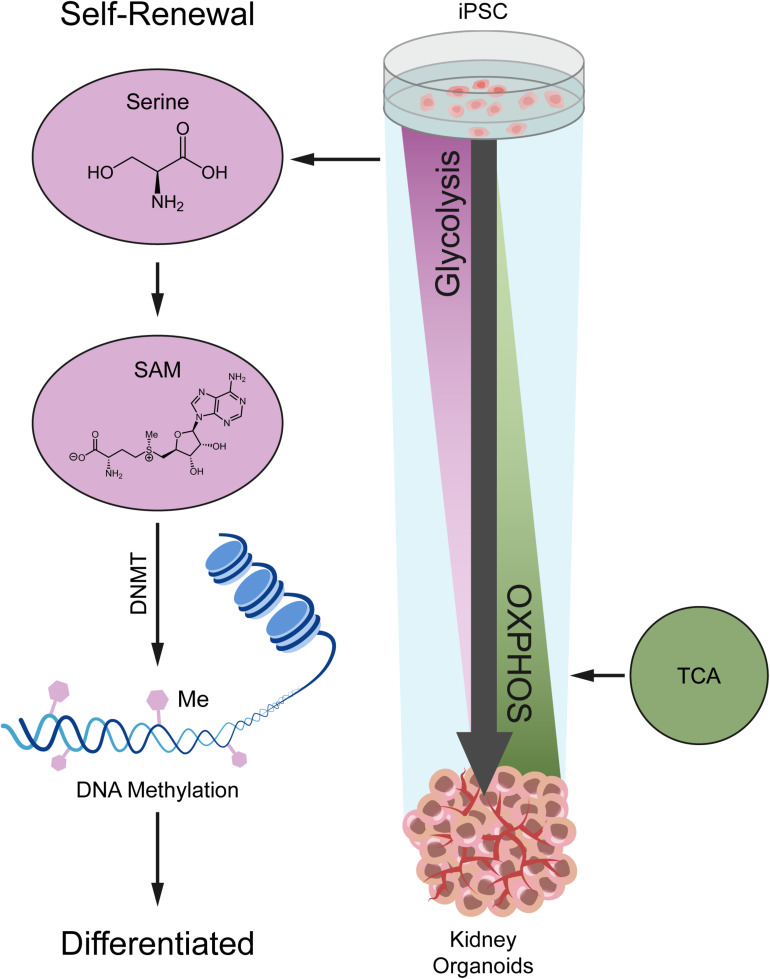
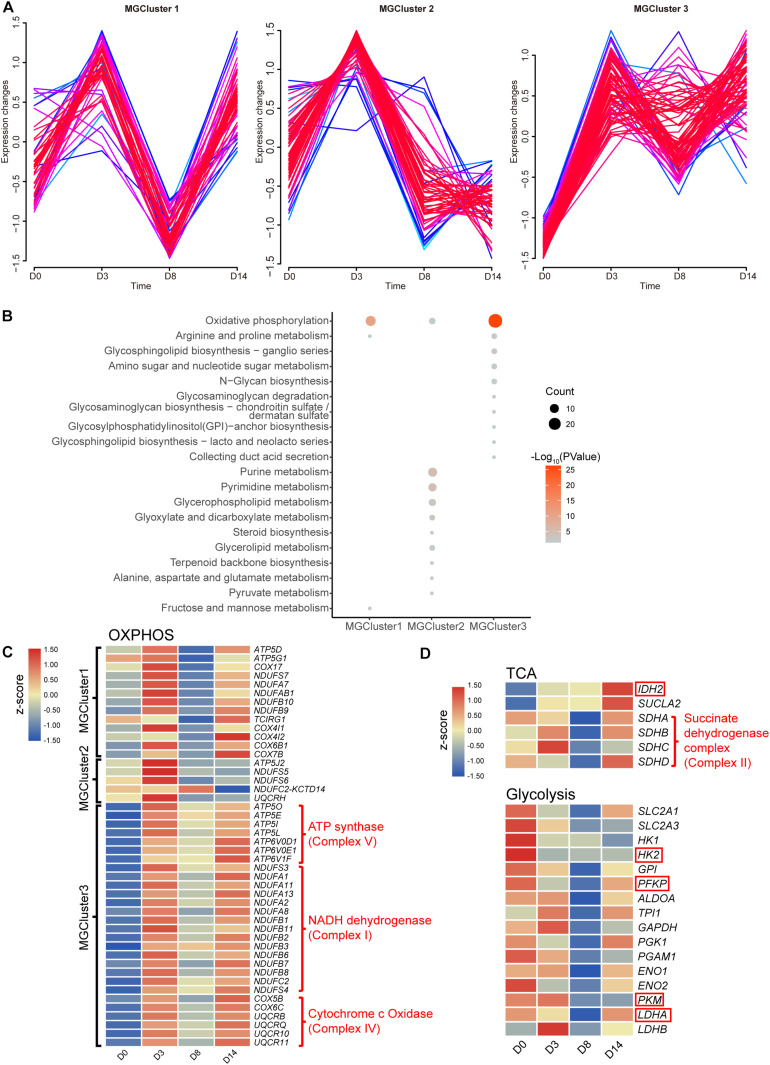
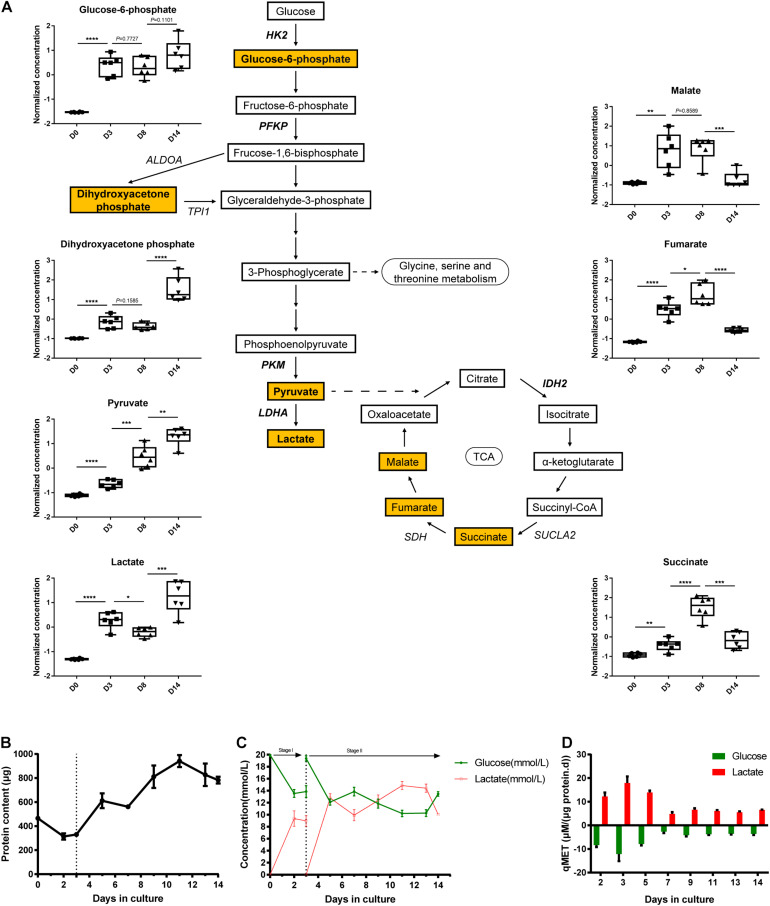
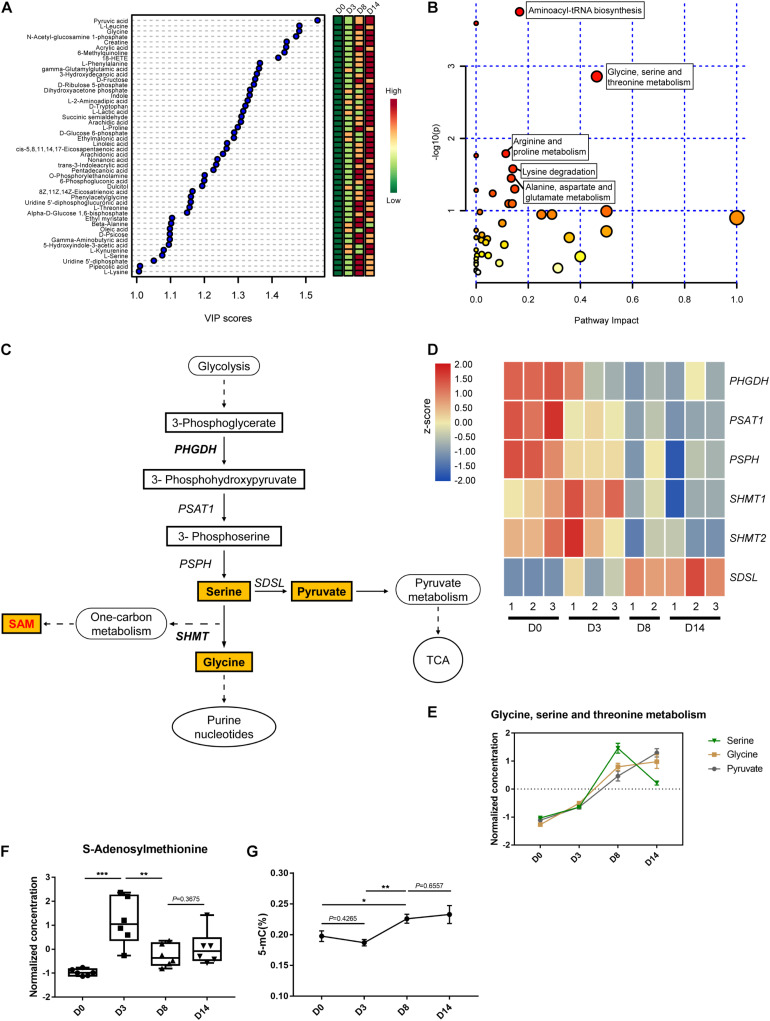
The use of differentiating human induced pluripotent stem cells (hiPSCs) in mini-tissue organoids provides an invaluable resource for regenerative medicine applications, particularly in the field of disease modeling. However, most studies using a kidney organoid model, focused solely on the transcriptomics and did not explore mechanisms of regulating kidney organoids related to metabolic effects and maturational phenotype. Here, we applied metabolomics coupled with transcriptomics to investigate the metabolic dynamics and function during kidney organoid differentiation. Not only did we validate the dominant metabolic alteration from glycolysis to oxidative phosphorylation in the iPSC differentiation process but we also showed that glycine, serine, and threonine metabolism had a regulatory role during kidney organoid formation and lineage maturation. Notably, serine had a role in regulating S-adenosylmethionine (SAM) to facilitate kidney organoid formation by altering DNA methylation. Our data revealed that analysis of metabolic characterization broadens our ability to understand phenotype regulation. The utilization of this comparative omics approach, in studying kidney organoid formation, can aid in deciphering unique knowledge about the biological and physiological processes involved in organoid-based disease modeling or drug screening.
在微型组织类器官中使用分化的人诱导多能干细胞(hiPSC)为再生医学应用,尤其是在疾病建模领域,提供了宝贵的资源。然而,大多数使用肾脏类器官模型的研究仅专注于转录组学,并未探索与代谢效应和成熟表型相关的调节肾脏类器官的机制。在此,我们应用代谢组学结合转录组学来研究肾脏类器官分化过程中的代谢动态和功能。我们不仅验证了iPSC分化过程中从糖酵解到氧化磷酸化的主要代谢变化,还表明甘氨酸、丝氨酸和苏氨酸代谢在肾脏类器官形成和谱系成熟过程中具有调节作用。值得注意的是,丝氨酸在调节S-腺苷甲硫氨酸(SAM)以通过改变DNA甲基化促进肾脏类器官形成方面发挥作用。我们的数据表明,代谢特征分析拓宽了我们理解表型调节的能力。这种比较组学方法在研究肾脏类器官形成中的应用,有助于解读有关基于类器官的疾病建模或药物筛选所涉及的生物学和生理过程的独特知识。