Lu Die, Di Shihao, Zhuo Shuaishuai, Zhou Linyan, Bai Rumeng, Ma Tianshi, Zou Zigui, Chen Chunni, Sun Miaomiao, Tang Jinhai, Zhang Zhihong
Department of Pathology, The First Affiliated Hospital of Nanjing Medical University, 300 Guangzhou road, Nanjing, Jiangsu Province, 210029, China.
Department of Pathology, Changzhou Jintan District People's Hospital, Jintan Affiliated Hospital of Jiangsu University, 16 Nanmen Road, Jintan, Jiangsu Province, 213200, China.
Cell Death Discov. 2021 Mar 1;7(1):41. doi: 10.1038/s41420-021-00419-x.
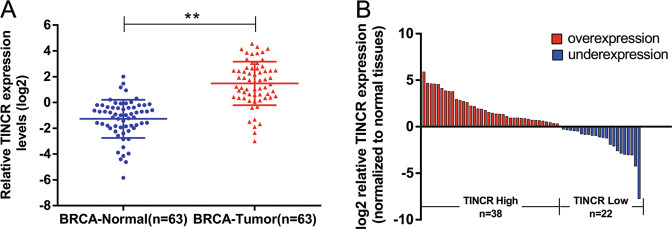
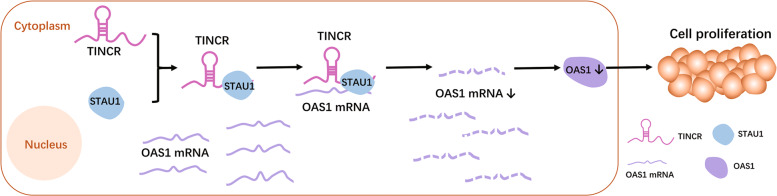
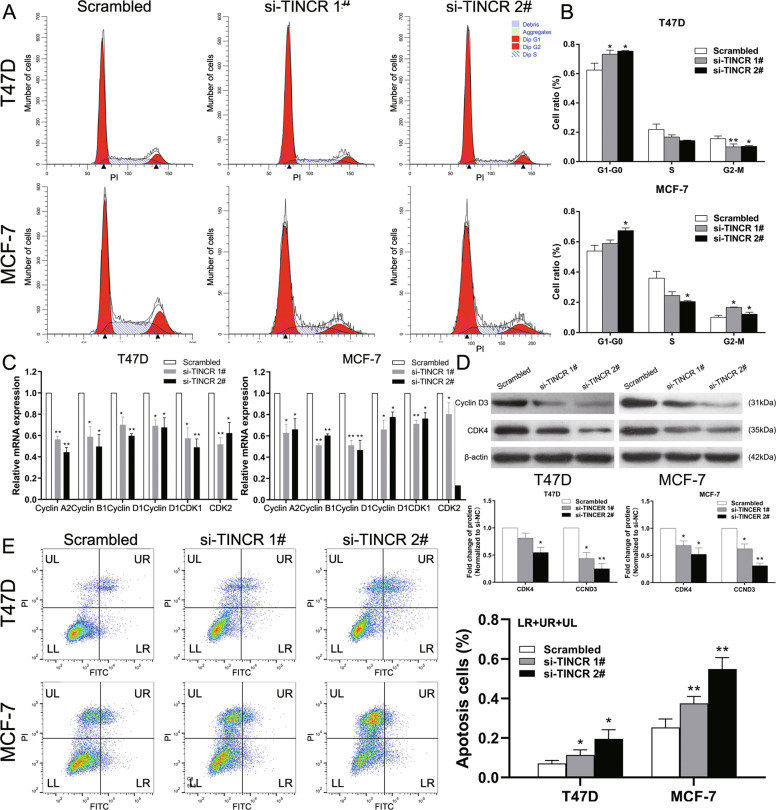
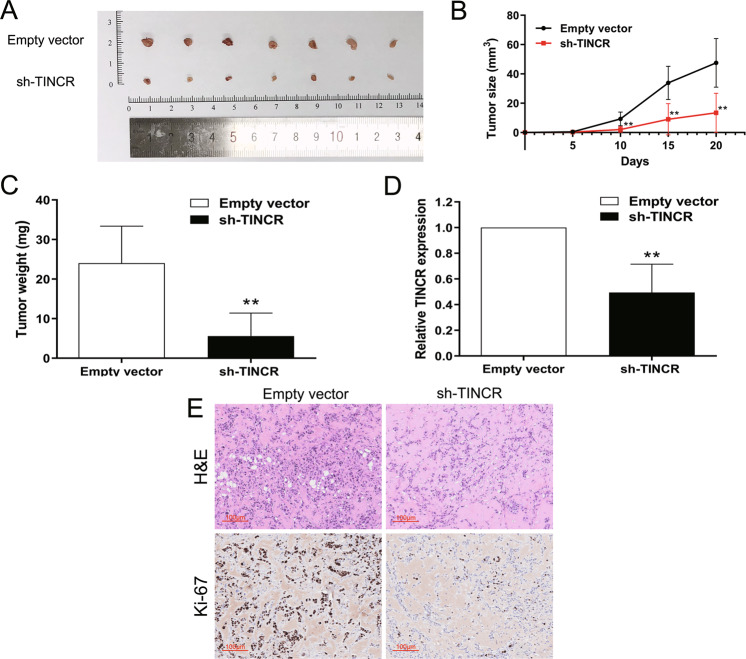
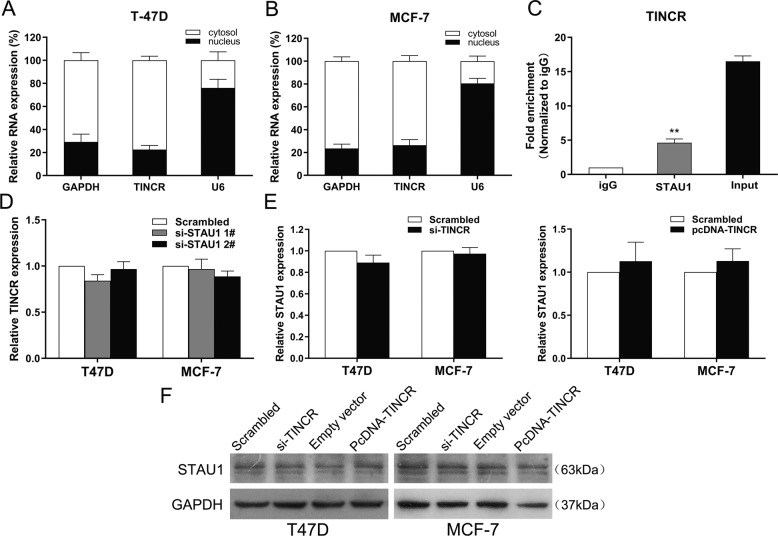
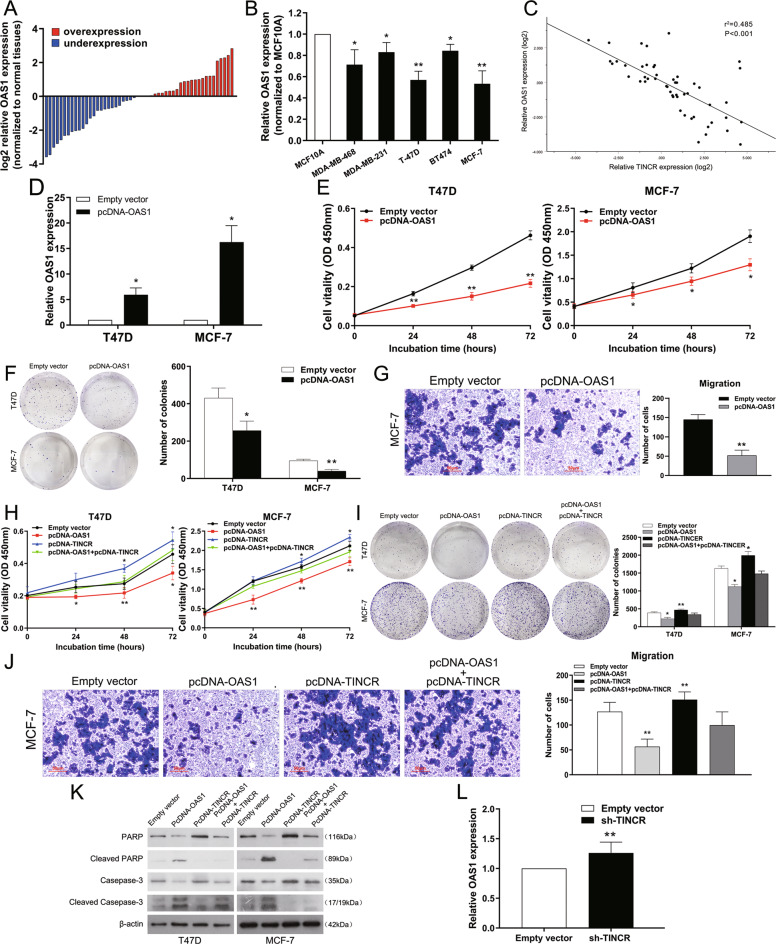
Breast cancer is the leading cause of cancer-related death in women around the world. It is urgently needed to identify genes associated with tumorigenesis and prognosis, as well as to elucidate the molecular mechanisms underlying the oncogenic process. Long noncoding RNAs (lncRNAs) are widely involved in the pathological and physiological processes of organisms and play an important role as oncogenes or tumor suppressor genes, affecting the development and progression of tumors. In this study, we focused on terminal differentiation-induced non-coding RNA (TINCR) (GeneID:257000) and explore its role in the pathogenesis of breast cancer. The results showed that TINCR was increased in breast cancer tissue, and high expression level of TINCR was associated with older age, larger tumor size, and advanced TNM stage. High level of TINCR can promote proliferation and metastasis of breast cancer cells, while downregulation of TINCR induces G1-G0 arrest and apoptosis. Mechanismly, TINCR can bind to staufen1 (STAU1) and then guide STAU1 (GeneID:6780) to bind to OAS1 mRNA (NM_016816.4) to mediate its stability. Thus low level of OAS1(GeneID:4938) can lead to cell proliferation and migration. This result elucidates a new mechanism for TINCR in breast cancer development and provides a survival indicator and potential therapeutic target for breast cancer patients.
乳腺癌是全球女性癌症相关死亡的主要原因。迫切需要鉴定与肿瘤发生和预后相关的基因,以及阐明致癌过程背后的分子机制。长链非编码RNA(lncRNA)广泛参与生物体的病理和生理过程,并作为癌基因或肿瘤抑制基因发挥重要作用,影响肿瘤的发生和发展。在本研究中,我们聚焦于终末分化诱导非编码RNA(TINCR)(基因ID:257000),并探讨其在乳腺癌发病机制中的作用。结果显示,TINCR在乳腺癌组织中表达升高,且TINCR的高表达水平与年龄较大、肿瘤体积较大及TNM分期较晚相关。高水平的TINCR可促进乳腺癌细胞的增殖和转移,而TINCR的下调则诱导G1-G0期阻滞和细胞凋亡。机制上,TINCR可与Staufen1(STAU1)结合,进而引导STAU1(基因ID:6780)与OAS1 mRNA(NM_016816.4)结合以介导其稳定性。因此,低水平的OAS1(基因ID:4938)可导致细胞增殖和迁移。该结果阐明了TINCR在乳腺癌发展中的新机制,并为乳腺癌患者提供了一个生存指标和潜在的治疗靶点。