Department of Microbiology, Radboud University Nijmegen, Nijmegen, The Netherlands.
Soehngen Institute of Anaerobic Microbiology (SIAM), Radboud University Nijmegen, Nijmegen, The Netherlands.
Microbiologyopen. 2021 Jan;10(1):e1175. doi: 10.1002/mbo3.1175.
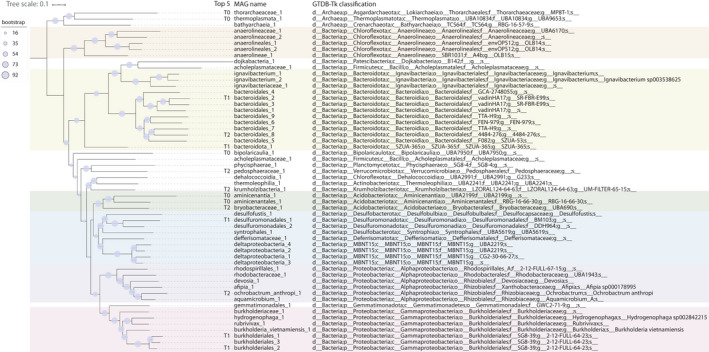
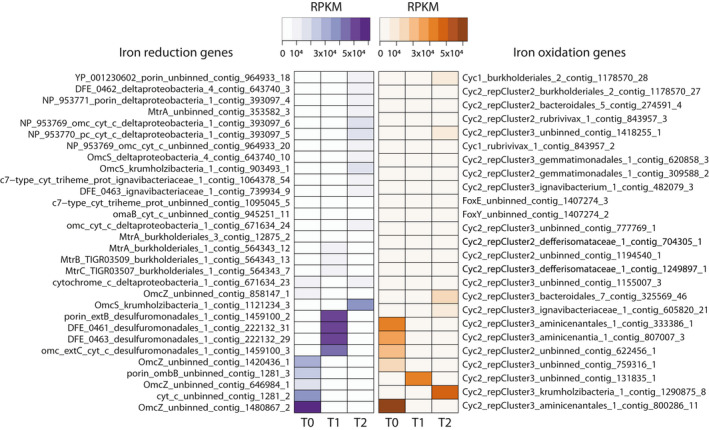
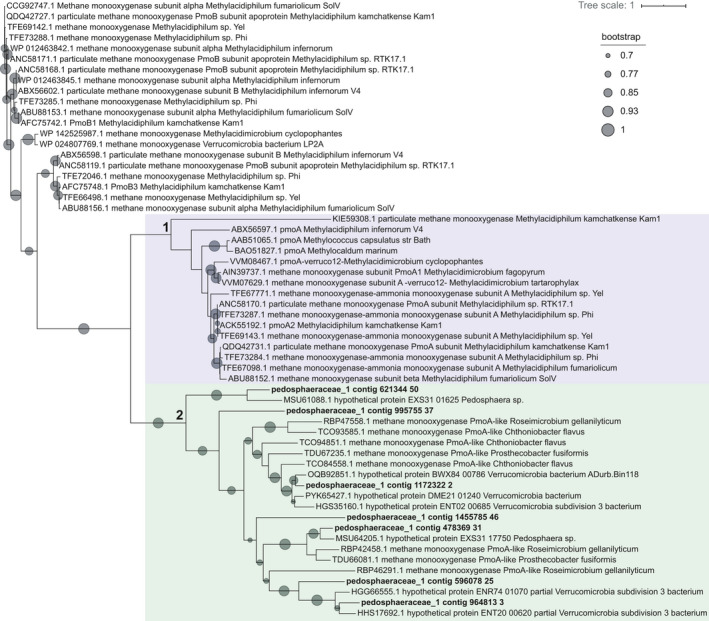
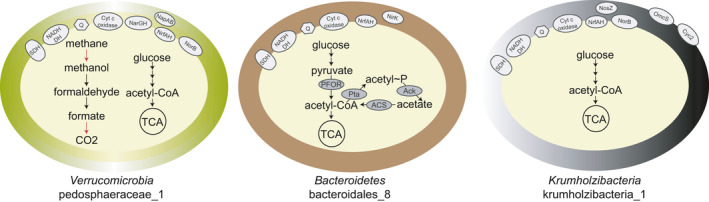
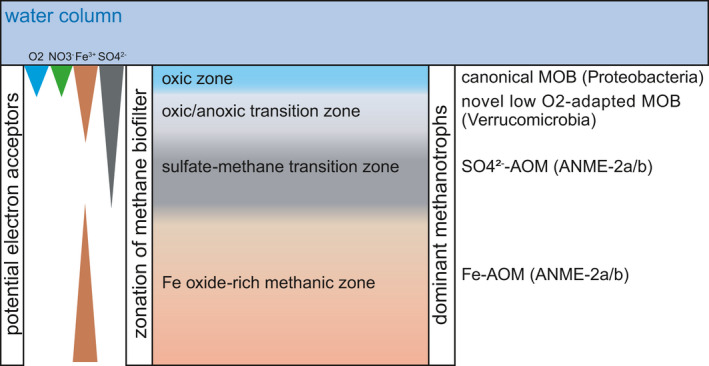
Microbial methane oxidation is a major biofilter preventing larger emissions of this powerful greenhouse gas from marine coastal areas into the atmosphere. In these zones, various electron acceptors such as sulfate, metal oxides, nitrate, or oxygen can be used. However, the key microbial players and mechanisms of methane oxidation are poorly understood. In this study, we inoculated a bioreactor with methane- and iron-rich sediments from the Bothnian Sea to investigate microbial methane and iron cycling under low oxygen concentrations. Using metagenomics, we investigated shifts in microbial community composition after approximately 2.5 years of bioreactor operation. Marker genes for methane and iron cycling, as well as respiratory and fermentative metabolism, were identified and used to infer putative microbial metabolism. Metagenome-assembled genomes representing novel Verrucomicrobia, Bacteroidetes, and Krumholzibacteria were recovered and revealed a potential for methane oxidation, organic matter degradation, and iron cycling, respectively. This work brings new hypotheses on the identity and metabolic versatility of microorganisms that may be members of such functional guilds in coastal marine sediments and highlights that microorganisms potentially composing the methane biofilter in these sediments may be more diverse than previously appreciated.
微生物甲烷氧化是一种主要的生物过滤器,可防止海洋沿海地区的这种强大温室气体向大气中排放更多。在这些区域,可以使用各种电子受体,如硫酸盐、金属氧化物、硝酸盐或氧气。然而,甲烷氧化的关键微生物参与者和机制仍了解甚少。在这项研究中,我们用来自波的尼亚湾的富含甲烷和铁的沉积物接种生物反应器,以研究低氧浓度下微生物甲烷和铁循环。使用宏基因组学,我们在大约 2.5 年后的生物反应器运行后调查了微生物群落组成的变化。鉴定了甲烷和铁循环的标记基因,以及呼吸和发酵代谢,并用它们来推断潜在的微生物代谢。回收了代表新型疣微菌门、拟杆菌门和克鲁姆霍尔兹菌门的宏基因组组装基因组,分别揭示了甲烷氧化、有机物降解和铁循环的潜力。这项工作提出了关于在沿海海洋沉积物中可能属于这些功能类群的微生物的身份和代谢多功能性的新假设,并强调了在这些沉积物中构成甲烷生物过滤器的微生物可能比以前认为的更为多样化。