Doshi Bhavya S, Rana Jyoti, Castaman Giancarlo, Shaheen Mostafa A, Kaczmarek Radoslaw, Butterfield John Ss, Meeks Shannon L, Leissinger Cindy, Biswas Moanaro, Arruda Valder R
Department of Pediatrics, Perelman School of Medicine, University of Pennsylvania, Philadelphia, Pennsylvania, USA.
Divison of Hematology, Children's Hospital of Philadelphia, Philadelphia, Pennsylvania, USA.
J Clin Invest. 2021 Apr 15;131(8). doi: 10.1172/JCI142906.
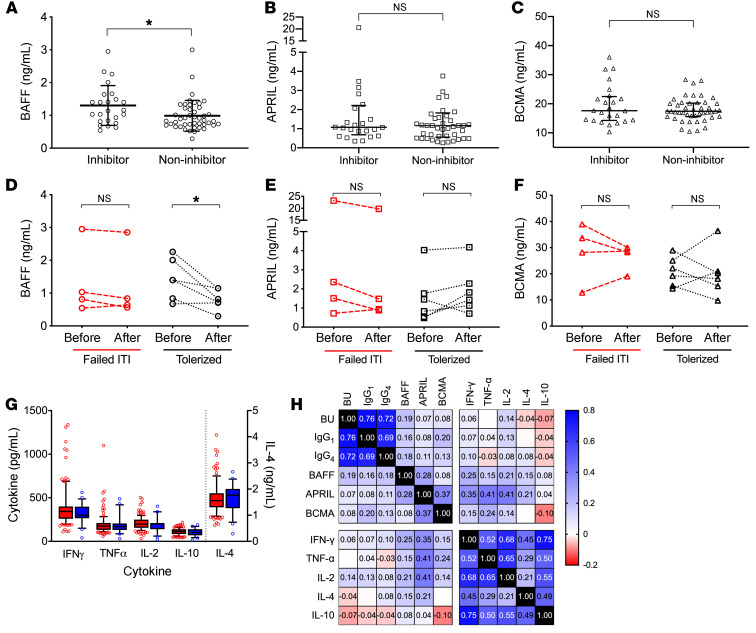
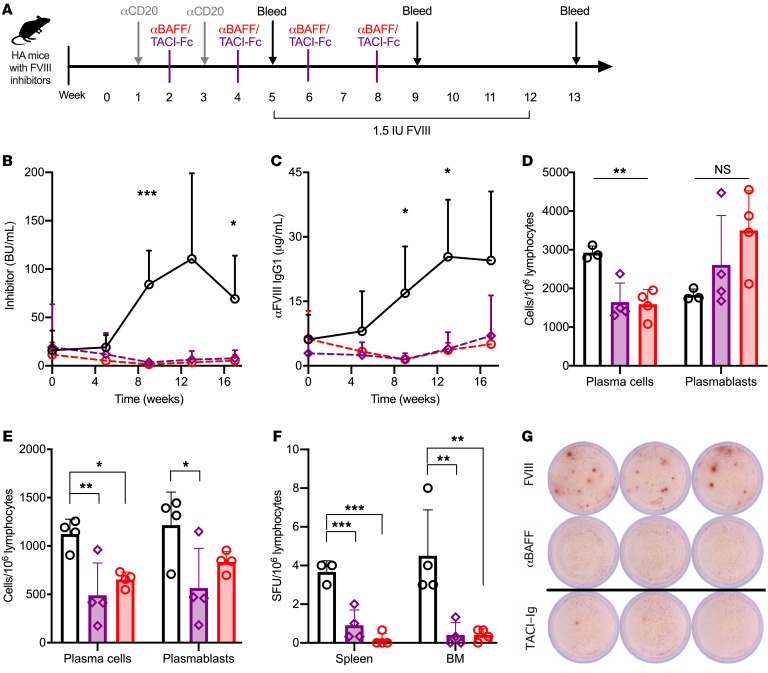
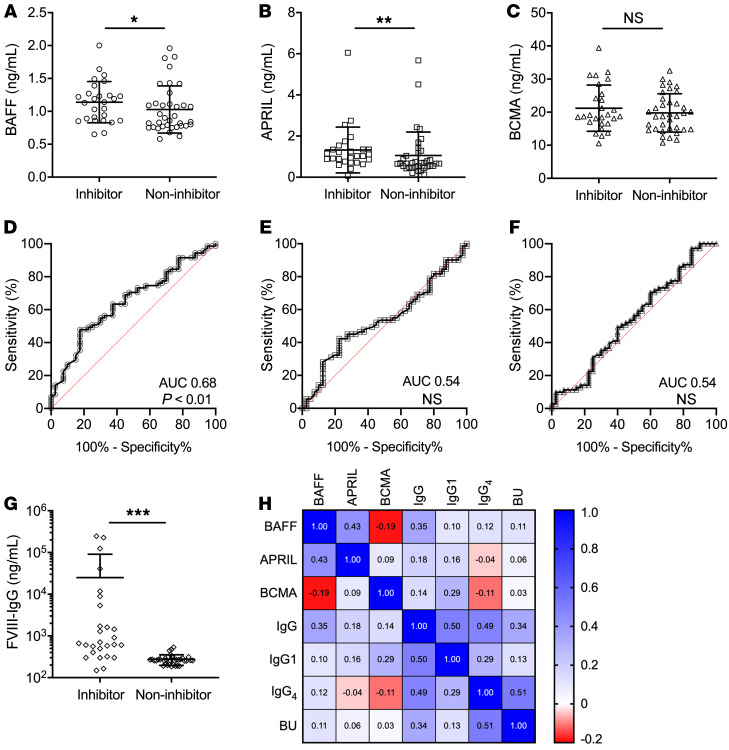
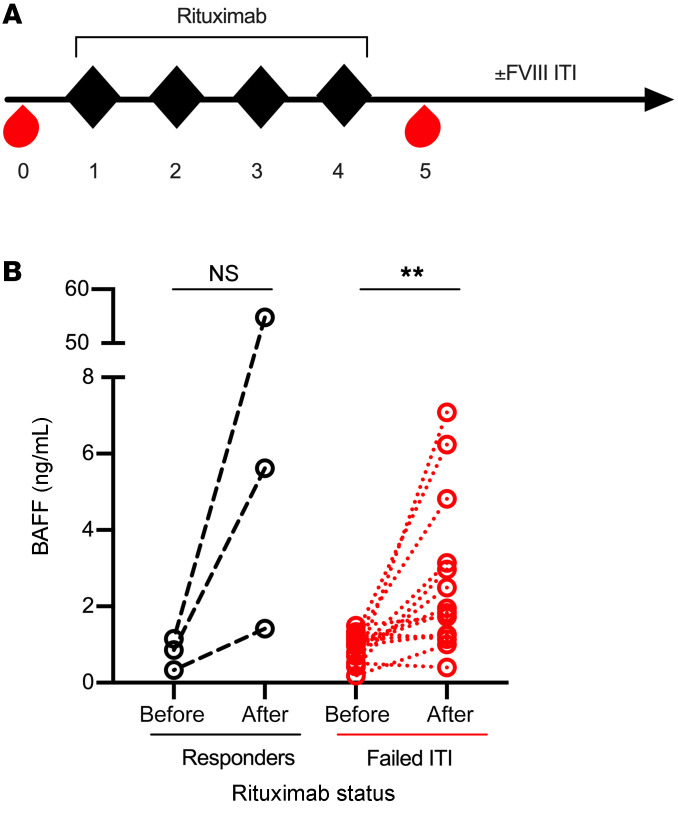
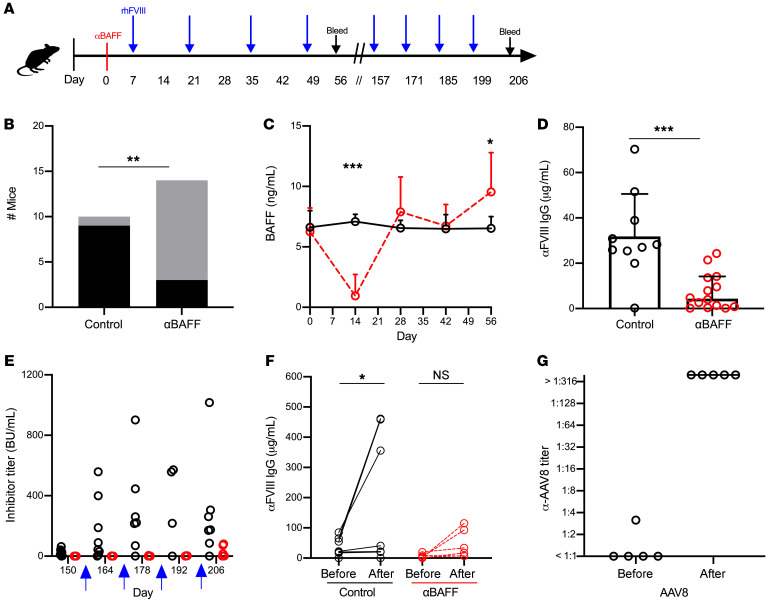
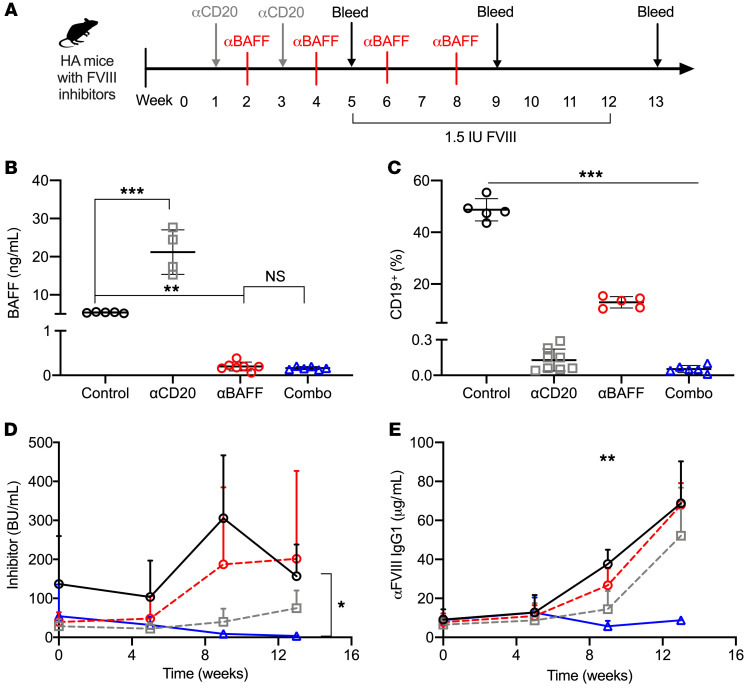
Inhibitors of factor VIII (FVIII) remain the most challenging complication of FVIII protein replacement therapy in hemophilia A (HA). Understanding the mechanisms that guide FVIII-specific B cell development could help identify therapeutic targets. The B cell-activating factor (BAFF) cytokine family is a key regulator of B cell differentiation in normal homeostasis and immune disorders. Thus, we used patient samples and mouse models to investigate the potential role of BAFF in modulating FVIII inhibitors. BAFF levels were elevated in pediatric and adult HA inhibitor patients and decreased to levels similar to those of noninhibitor controls after successful immune tolerance induction (ITI). Moreover, elevations in BAFF levels were seen in patients who failed to achieve FVIII tolerance with anti-CD20 antibody-mediated B cell depletion. In naive HA mice, prophylactic anti-BAFF antibody therapy prior to FVIII immunization prevented inhibitor formation and this tolerance was maintained despite FVIII exposure after immune reconstitution. In preimmunized HA mice, combination therapy with anti-CD20 and anti-BAFF antibodies dramatically reduced FVIII inhibitors via inhibition of FVIII-specific plasma cells. Our data suggest that BAFF may regulate the generation and maintenance of FVIII inhibitors and/or anti-FVIII B cells. Finally, anti-CD20/anti-BAFF combination therapy may be clinically useful for ITI.
凝血因子VIII(FVIII)抑制剂仍然是A型血友病(HA)中FVIII蛋白替代疗法最具挑战性的并发症。了解指导FVIII特异性B细胞发育的机制有助于确定治疗靶点。B细胞激活因子(BAFF)细胞因子家族是正常稳态和免疫紊乱中B细胞分化的关键调节因子。因此,我们使用患者样本和小鼠模型来研究BAFF在调节FVIII抑制剂中的潜在作用。儿科和成人HA抑制剂患者的BAFF水平升高,在成功诱导免疫耐受(ITI)后降至与非抑制剂对照组相似的水平。此外,在通过抗CD20抗体介导的B细胞清除未能实现FVIII耐受的患者中,观察到BAFF水平升高。在未接触过FVIII的HA小鼠中,在FVIII免疫之前进行预防性抗BAFF抗体治疗可预防抑制剂形成,并且尽管在免疫重建后接触了FVIII,这种耐受性仍得以维持。在预先免疫的HA小鼠中,抗CD20和抗BAFF抗体联合治疗通过抑制FVIII特异性浆细胞显著降低了FVIII抑制剂。我们的数据表明,BAFF可能调节FVIII抑制剂和/或抗FVIII B细胞的产生和维持。最后,抗CD20/抗BAFF联合治疗可能在ITI临床治疗中有用。