Institute of Cancer and Genomic Science, College of Medical and Dental Sciences, University of Birmingham, Birmingham B15 2TT, UK.
Open Biol. 2021 Mar;11(3):210004. doi: 10.1098/rsob.210004. Epub 2021 Mar 3.
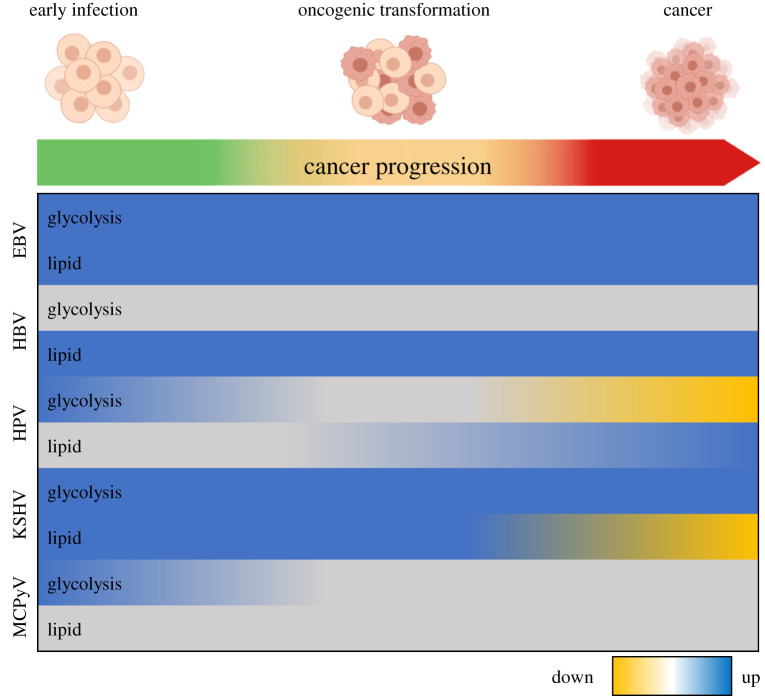
Infections cause 13% of all cancers globally, and DNA tumour viruses account for almost 60% of these cancers. All viruses are obligate intracellular parasites and hijack host cell functions to replicate and complete their life cycles to produce progeny virions. While many aspects of viral manipulation of host cells have been studied, how DNA tumour viruses manipulate host cell metabolism and whether metabolic alterations in the virus life cycle contribute to carcinogenesis are not well understood. In this review, we compare the differences in central carbon and fatty acid metabolism in host cells following infection, oncogenic transformation, and virus-driven cancer of DNA tumour viruses including: Epstein-Barr virus, hepatitis B virus, human papillomavirus, Kaposi's sarcoma-associated herpesvirus and Merkel cell polyomavirus.
在全球范围内,感染导致 13%的癌症,而 DNA 肿瘤病毒占这些癌症的近 60%。所有病毒都是专性细胞内寄生虫,它们劫持宿主细胞的功能来复制并完成生命周期,以产生子代病毒颗粒。虽然已经研究了病毒对宿主细胞的许多操纵方面,但 DNA 肿瘤病毒如何操纵宿主细胞代谢,以及病毒生命周期中的代谢改变是否导致癌变,这些都还不是很清楚。在这篇综述中,我们比较了在感染、致癌转化和 DNA 肿瘤病毒驱动的癌症后,宿主细胞中中心碳代谢和脂肪酸代谢的差异,包括:EB 病毒、乙型肝炎病毒、人乳头瘤病毒、卡波济肉瘤相关疱疹病毒和 Merkel 细胞多瘤病毒。