Lee Michael D, O'Rourke Aubrie, Lorenzi Hernan, Bebout Brad M, Dupont Chris L, Everroad R Craig
Exobiology Branch, NASA Ames Research Center, Mountain View, CA, USA.
Blue Marble Space Institute of Science, Seattle, WA, USA.
iScience. 2021 Jan 29;24(2):102114. doi: 10.1016/j.isci.2021.102114. eCollection 2021 Feb 19.
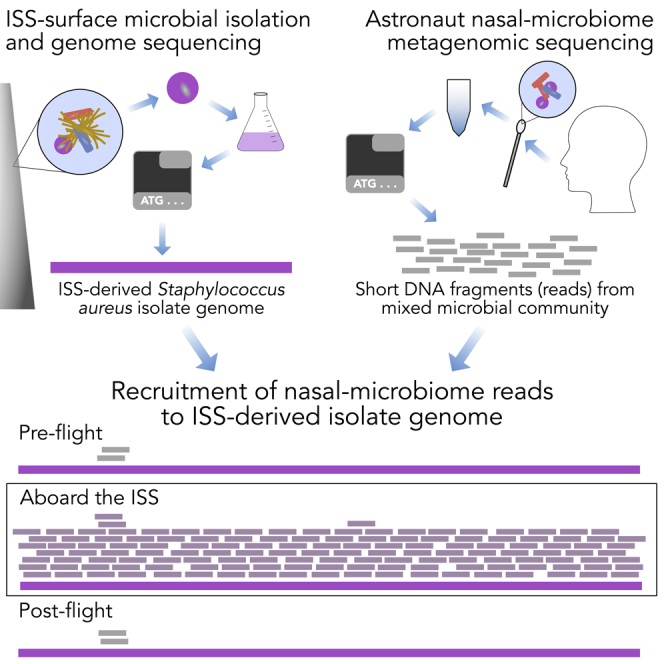
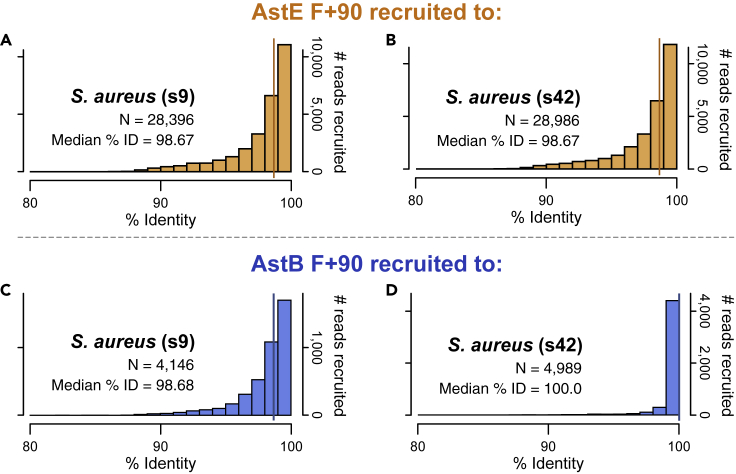
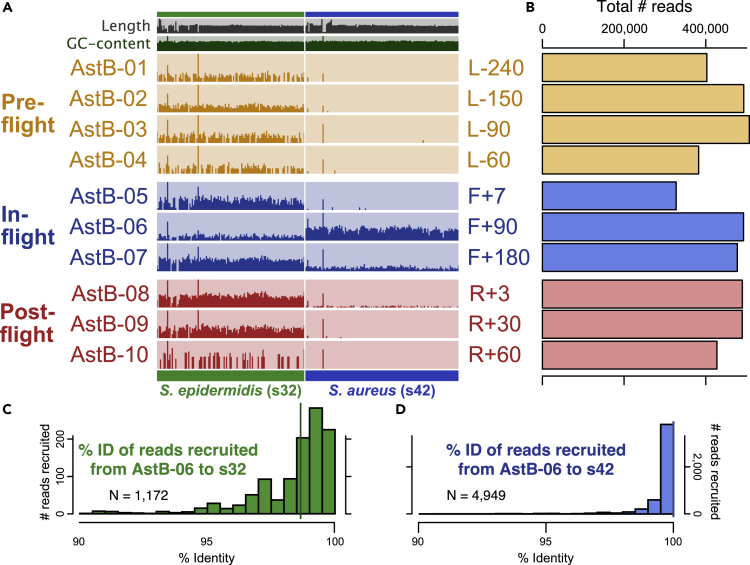
Monitoring microbial communities aboard the International Space Station (ISS) is essential to maintaining astronaut health and the integrity of life-support systems. Using assembled genomes of ISS-derived microbial isolates as references, recruiting metagenomic reads from an astronaut's nasal microbiome revealed no recruitment to a isolate from samples before launch, yet systematic recruitment across the genome when sampled after 3 months aboard the ISS, with a median percent identity of 100%. This suggests that either a highly similar . population colonized the astronaut's nasal microbiome while the astronaut was aboard the ISS or that it may have been below detection before spaceflight, instead supporting a shift in community composition. This work highlights the value in generating genomic libraries of microbes from built-environments such as the ISS and demonstrates one way such data can be integrated with metagenomics to facilitate the tracking and monitoring of astronaut microbiomes and health.
监测国际空间站(ISS)上的微生物群落对于维持宇航员健康和生命支持系统的完整性至关重要。以源自国际空间站的微生物分离株的组装基因组作为参考,从一名宇航员的鼻腔微生物组中招募宏基因组读数,结果显示在发射前的样本中未招募到某一分离株,但在国际空间站上驻留3个月后采样时,该分离株在全基因组范围内被系统招募,中位同一性百分比为100%。这表明,要么是在宇航员驻留国际空间站期间,一种高度相似的菌群定殖在了宇航员的鼻腔微生物组中,要么是它在太空飞行前可能低于检测水平,反而支持了群落组成的转变。这项工作突出了构建来自国际空间站等建筑环境的微生物基因组文库的价值,并展示了一种将此类数据与宏基因组学相结合的方法,以促进对宇航员微生物组和健康状况的追踪与监测。