Razi Drug Research Center, Iran University of Medical Sciences, Tehran, Iran.
Functional Neurosurgery Research Center, Shohada Tajrish Comprehensive Neurosurgical Center of Excellence, Shahid Beheshti University of Medical Sciences, Tehran, Iran.
Pharmacol Ther. 2021 Aug;224:107825. doi: 10.1016/j.pharmthera.2021.107825. Epub 2021 Mar 1.
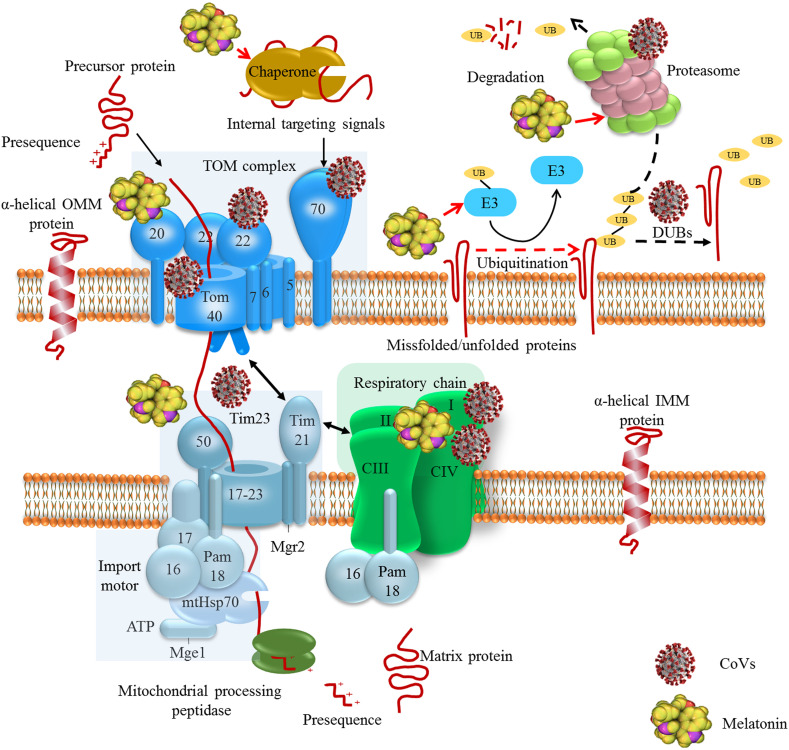
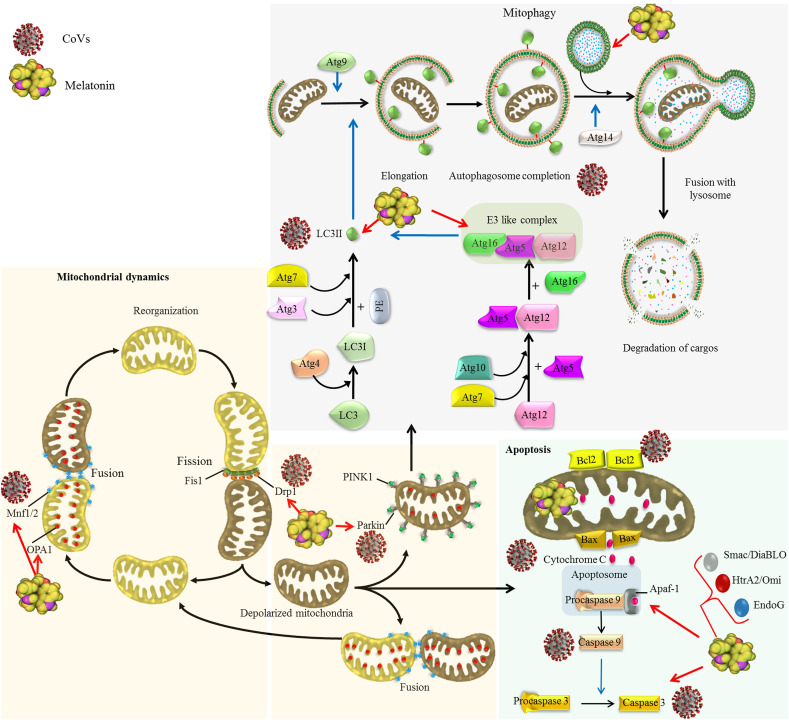
Coronaviruses (CoVs) are a group of single stranded RNA viruses, of which some of them such as SARS-CoV, MERS-CoV, and SARS-CoV-2 are associated with deadly worldwide human diseases. Coronavirus disease-2019 (COVID-19), a condition caused by SARS-CoV-2, results in acute lung injury (ALI)/acute respiratory distress syndrome (ARDS) associated with high mortality in the elderly and in people with underlying comorbidities. Results from several studies suggest that CoVs localize in mitochondria and interact with mitochondrial protein translocation machinery to target their encoded products to mitochondria. Coronaviruses encode a number of proteins; this process is essential for viral replication through inhibiting degradation of viral proteins and host misfolded proteins including those in mitochondria. These viruses seem to maintain their replication by altering mitochondrial dynamics and targeting mitochondrial-associated antiviral signaling (MAVS), allowing them to evade host innate immunity. Coronaviruses infections such as COVID-19 are more severe in aging patients. Since endogenous melatonin levels are often dramatically reduced in the aged and because it is a potent anti-inflammatory agent, melatonin has been proposed to be useful in CoVs infections by altering proteasomal and mitochondrial activities. Melatonin inhibits mitochondrial fission due to its antioxidant and inhibitory effects on cytosolic calcium overload. The collective data suggests that melatonin may mediate mitochondrial adaptations through regulating both mitochondrial dynamics and biogenesis. We propose that melatonin may inhibit SARS-CoV-2-induced cell damage by regulating mitochondrial physiology.
冠状病毒(CoV)是一组单链 RNA 病毒,其中一些病毒,如严重急性呼吸综合征冠状病毒(SARS-CoV)、中东呼吸综合征冠状病毒(MERS-CoV)和严重急性呼吸综合征冠状病毒 2(SARS-CoV-2),与全球致命的人类疾病有关。由 SARS-CoV-2 引起的 2019 年冠状病毒病(COVID-19)导致急性肺损伤(ALI)/急性呼吸窘迫综合征(ARDS),在老年人和有潜在合并症的人群中死亡率较高。多项研究结果表明,CoV 定位于线粒体,并与线粒体蛋白易位机制相互作用,将其编码产物靶向到线粒体。冠状病毒编码多种蛋白;这一过程对于病毒复制至关重要,可通过抑制病毒蛋白和包括线粒体在内的宿主错误折叠蛋白的降解来实现。这些病毒似乎通过改变线粒体动力学和靶向线粒体相关抗病毒信号(MAVS)来维持其复制,从而逃避宿主固有免疫。COVID-19 等冠状病毒感染在老年患者中更为严重。由于内源性褪黑素水平在老年人中常常显著降低,并且褪黑素是一种有效的抗炎剂,因此有人提出,褪黑素通过改变蛋白酶体和线粒体活性在 CoV 感染中可能有用。褪黑素通过抗氧化和抑制胞质钙超载来抑制线粒体分裂。综合数据表明,褪黑素可能通过调节线粒体动力学和生物发生来介导线粒体适应。我们提出,褪黑素可能通过调节线粒体生理学来抑制 SARS-CoV-2 诱导的细胞损伤。