Charité - Universitätsmedizin Berlin, corporate member of Freie Universität Berlin and Humboldt Universität zu Berlin, Department of Psychiatry and Psychotherapy, Charitéplatz 1, Berlin, 10117, Germany.
Charité - Universitätsmedizin Berlin, corporate member of Freie Universität Berlin and Humboldt Universität zu Berlin, Department of Psychiatry and Psychotherapy, Charitéplatz 1, Berlin, 10117, Germany.
J Anxiety Disord. 2021 Apr;79:102377. doi: 10.1016/j.janxdis.2021.102377. Epub 2021 Feb 24.
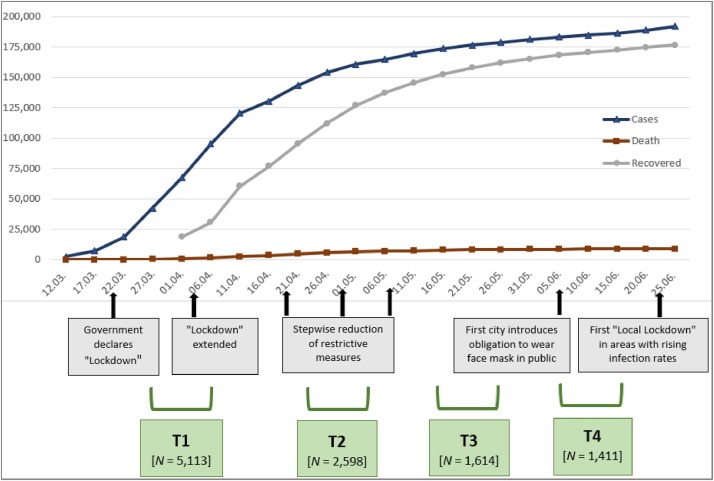
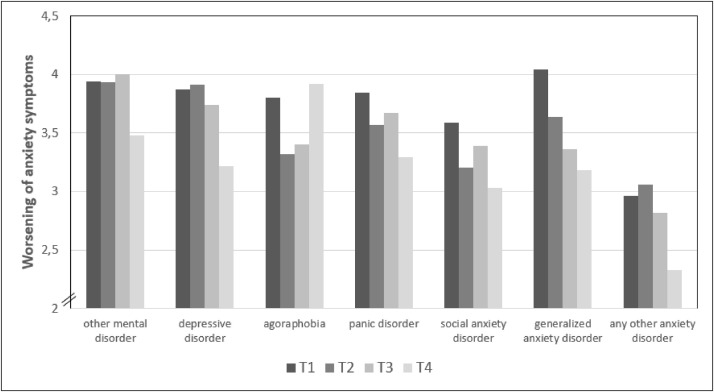
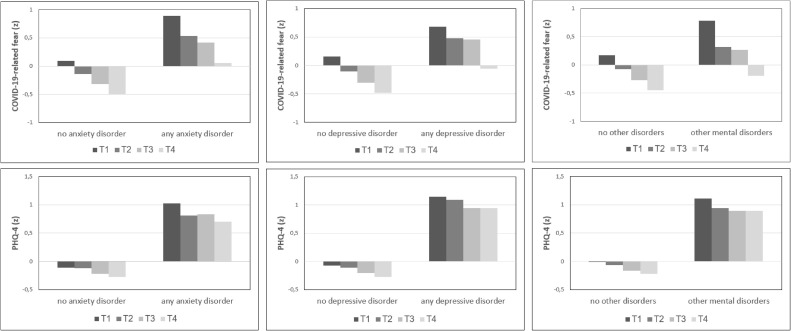
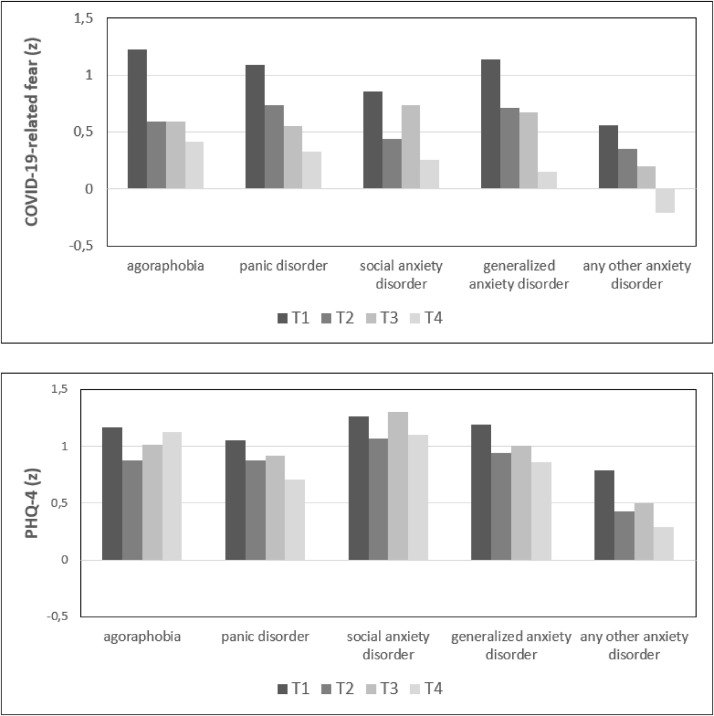
Especially individuals with mental disorders might experience an escalation of psychopathological symptoms during the COVID-19 pandemic. Therefore, we investigated the role of anxiety, depressive, and other mental disorders for levels and longitudinal changes of COVID-19-related fear, anxiety and depressive symptoms during the first months of the COVID-19 pandemic in Germany. In a longitudinal observational design with four assessment waves from March, 27th until June, 15th 2020, a total of 6,551 adults from Germany was assessed. 4,175 individuals participated in one, 1,070 in two, 803 in three, and 503 in all four waves of data collection. Multilevel analyses revealed that across all assessment waves, COVID-19-related fear, anxiety, and depressive symptoms were significantly higher in individuals with vs. without anxiety, depressive, and other mental disorders. All symptoms decreased on average over time, and this decrease was significantly stronger in individuals with vs. without anxiety disorders, and particularly driven by individuals with generalized anxiety disorder. Our findings suggest that individuals with mental disorders, especially anxiety disorders - and in particular those with a generalized anxiety disorder - seem to be vulnerable to experience psychological strain in the context of the pandemic, might likely overestimate potential threat, and should be targeted by preventive and therapeutic interventions.
特别是患有精神障碍的个体在 COVID-19 大流行期间可能会出现精神病理症状的恶化。因此,我们调查了焦虑、抑郁和其他精神障碍在 COVID-19 相关恐惧、焦虑和抑郁症状水平和纵向变化中的作用,这些症状是在 COVID-19 大流行的最初几个月在德国出现的。在一项具有四个评估波的纵向观察设计中,从 2020 年 3 月 27 日至 6 月 15 日,共有 6551 名德国成年人接受了评估。4175 人参加了一次、1070 人参加了两次、803 人参加了三次、503 人参加了所有四次数据收集。多层次分析显示,在所有评估波中,患有焦虑、抑郁和其他精神障碍的个体的 COVID-19 相关恐惧、焦虑和抑郁症状显著高于没有这些障碍的个体。所有症状随时间平均下降,并且在患有焦虑症的个体中下降幅度明显更大,尤其是患有广泛性焦虑症的个体。我们的研究结果表明,患有精神障碍的个体,尤其是焦虑症患者 - 尤其是患有广泛性焦虑症的患者 - 似乎容易在大流行背景下出现心理压力,可能会过高估计潜在威胁,应通过预防和治疗干预来针对这些患者。