Department of Psychiatry, University of British Columbia, Vancouver, British Columbia, Canada.
Department of Psychology, University of Regina, Regina, Saskatchewan, Canada.
Depress Anxiety. 2020 Aug;37(8):706-714. doi: 10.1002/da.23071. Epub 2020 Jul 5.
Research shows that the COVID Stress Scales have a robust multifactorial structure, representing five correlated facets of COVID-19-related distress: (a) Fear of the dangerousness of COVID-19, which includes fear of coming into contact with fomites potentially contaminated with SARSCoV2, (b) worry about socioeconomic costs of COVID-19 (e.g., worry about personal finances and disruption in the supply chain), (c) xenophobic fears that foreigners are spreading SARSCoV2, (d) traumatic stress symptoms associated with direct or vicarious traumatic exposure to COVID-19 (nightmares, intrusive thoughts, or images related to COVID-19), and (e) COVID-19-related compulsive checking and reassurance seeking. These factors cohere to form a COVID stress syndrome, which we sought to further delineate in the present study.
A population-representative sample of 6,854 American and Canadian adults completed a self-report survey comprising questions about current mental health and COVID-19-related experiences, distress, and coping.
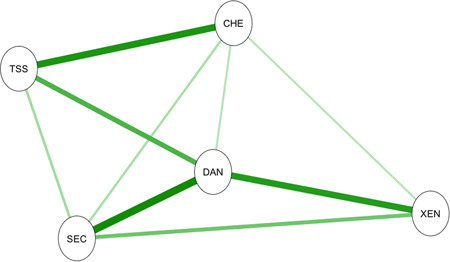
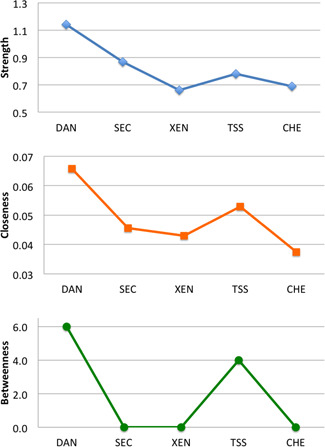
Network analysis revealed that worry about the dangerousness of COVID-19 is the central feature of the syndrome. Latent class analysis indicated that the syndrome is quasi-dimensional, comprising five classes differing in syndrome severity. Sixteen percent of participants were in the most severe class and possibly needing mental health services. Syndrome severity was correlated with preexisting psychopathology and with excessive COVID-19-related avoidance, panic buying, and coping difficulties during self-isolation.
The findings provide new information about the structure and correlates of COVID stress syndrome. Further research is needed to determine whether the syndrome will abate once the pandemic has passed or whether, for some individuals, it becomes a chronic condition.
研究表明,COVID 压力量表具有强大的多因素结构,代表与 COVID-19 相关的困扰的五个相关方面:(a)对 COVID-19 危险的恐惧,包括对接触可能被 SARSCoV2 污染的污染物的恐惧,(b)对 COVID-19 的社会经济成本的担忧(例如,担心个人财务和供应链中断),(c)对外国人传播 SARSCoV2 的恐惧,(d)与直接或间接接触 COVID-19 相关的创伤性应激症状(噩梦、侵入性思维或与 COVID-19 相关的图像),以及 (e)与 COVID-19 相关的强迫性检查和寻求保证。这些因素凝聚在一起形成 COVID 应激综合征,我们试图在本研究中进一步阐述这一综合征。
一个具有代表性的 6854 名美国和加拿大成年人的样本完成了一项自我报告调查,其中包括关于当前心理健康和 COVID-19 相关经历、困扰和应对的问题。
网络分析显示,对 COVID-19 危险的担忧是该综合征的核心特征。潜在类别分析表明,该综合征具有准维度性,包括五个不同严重程度的类别。16%的参与者处于最严重的类别,可能需要心理健康服务。综合征严重程度与先前存在的精神病理学以及在自我隔离期间过度的 COVID-19 相关回避、恐慌性购买和应对困难有关。
这些发现提供了关于 COVID 应激综合征结构和相关性的新信息。需要进一步研究以确定该综合征是否会在大流行结束后减轻,或者对于某些人来说,它是否会成为一种慢性疾病。