Majumdar Sreyashi, Verma Rohit, Saha Avishek, Bhattacharyya Parthasarathi, Maji Pradipta, Surjit Milan, Kundu Manikuntala, Basu Joyoti, Saha Sudipto
Division of Bioinformatics, Bose Institute, Kolkata, India.
Virology Laboratory, Vaccine and Infectious Disease Research Centre, Translational Health Science and Technology Institute, NCR Biotech Science Cluster, Faridabad, India.
Front Genet. 2021 Feb 16;12:637362. doi: 10.3389/fgene.2021.637362. eCollection 2021.
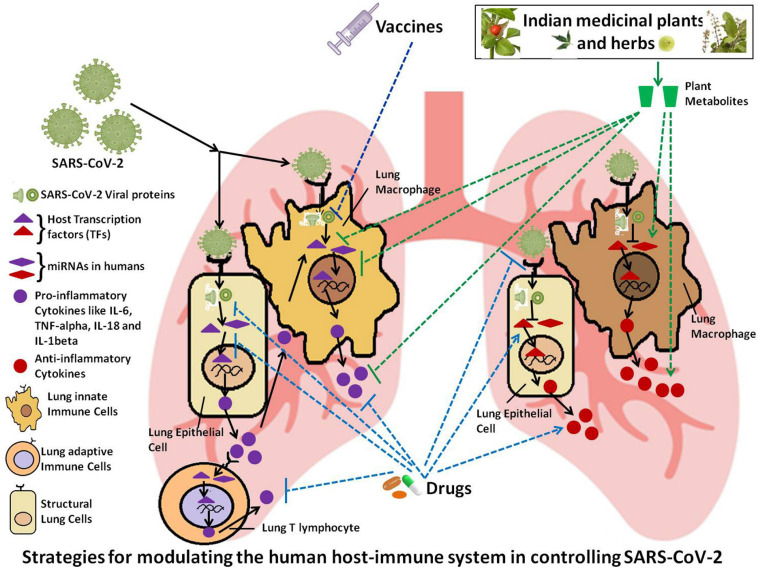
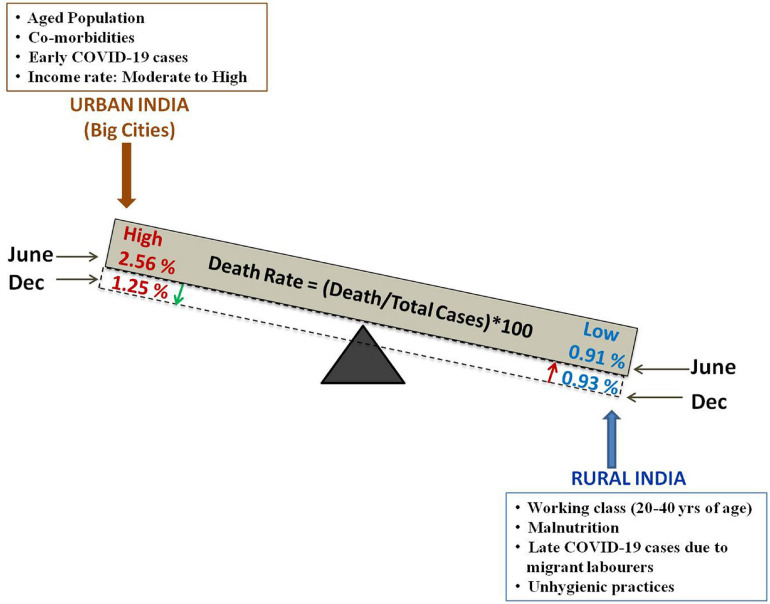
Severe acute respiratory syndrome coronavirus-2 (SARS-CoV-2), the causative agent of coronavirus induced disease-2019 (COVID-19), is a type of common cold virus responsible for a global pandemic which requires immediate measures for its containment. India has the world's largest population aged between 10 and 40 years. At the same time, India has a large number of individuals with diabetes, hypertension and kidney diseases, who are at a high risk of developing COVID-19. A vaccine against the SARS-CoV-2, may offer immediate protection from the causative agent of COVID-19, however, the protective memory may be short-lived. Even if vaccination is broadly successful in the world, India has a large and diverse population with over one-third being below the poverty line. Therefore, the success of a vaccine, even when one becomes available, is uncertain, making it necessary to focus on alternate approaches of tackling the disease. In this review, we discuss the differences in COVID-19 death/infection ratio between urban and rural India; and the probable role of the immune system, co-morbidities and associated nutritional status in dictating the death rate of COVID-19 patients in rural and urban India. Also, we focus on strategies for developing masks, vaccines, diagnostics and the role of drugs targeting host-virus protein-protein interactions in enhancing host immunity. We also discuss India's strengths including the resources of medicinal plants, good food habits and the role of information technology in combating COVID-19. We focus on the Government of India's measures and strategies for creating awareness in the containment of COVID-19 infection across the country.
严重急性呼吸综合征冠状病毒2(SARS-CoV-2)是冠状病毒病2019(COVID-19)的病原体,是一种引发全球大流行的普通感冒病毒,需要立即采取措施加以遏制。印度拥有世界上最大的10至40岁人口群体。与此同时,印度有大量糖尿病、高血压和肾病患者,他们感染COVID-19的风险很高。一种针对SARS-CoV-2的疫苗可能会立即提供针对COVID-19病原体的保护,然而,这种保护性记忆可能是短暂的。即使疫苗在全球范围内广泛成功,印度人口众多且多样化,超过三分之一的人口生活在贫困线以下。因此,即使有疫苗可用,其成功与否也不确定,这使得有必要关注应对该疾病的替代方法。在这篇综述中,我们讨论了印度城乡之间COVID-19死亡/感染率的差异;以及免疫系统、合并症和相关营养状况在决定印度城乡COVID-19患者死亡率方面可能发挥的作用。此外,我们关注开发口罩、疫苗、诊断方法的策略以及靶向宿主-病毒蛋白-蛋白相互作用的药物在增强宿主免疫力方面的作用。我们还讨论了印度的优势,包括药用植物资源、良好的饮食习惯以及信息技术在抗击COVID-19中的作用。我们关注印度政府在全国范围内提高对COVID-19感染防控意识的措施和策略。