Animal Science College, Tibet Agriculture & Animal Husbandry University, Linzhi, China.
College of Veterinary Medicine, South China Agricultural University, Guangzhou, China.
Front Cell Infect Microbiol. 2021 Feb 16;10:610781. doi: 10.3389/fcimb.2020.610781. eCollection 2020.
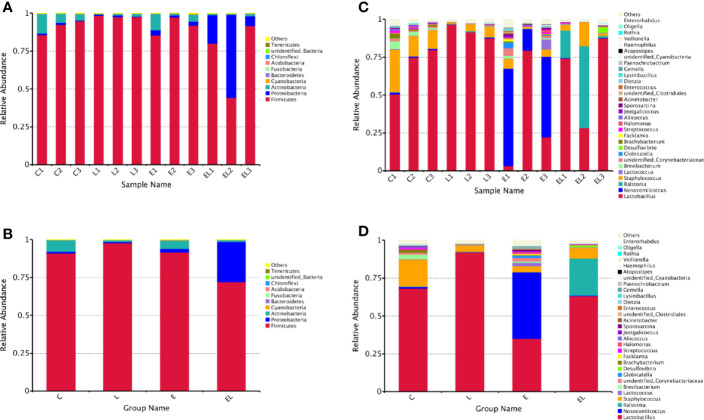
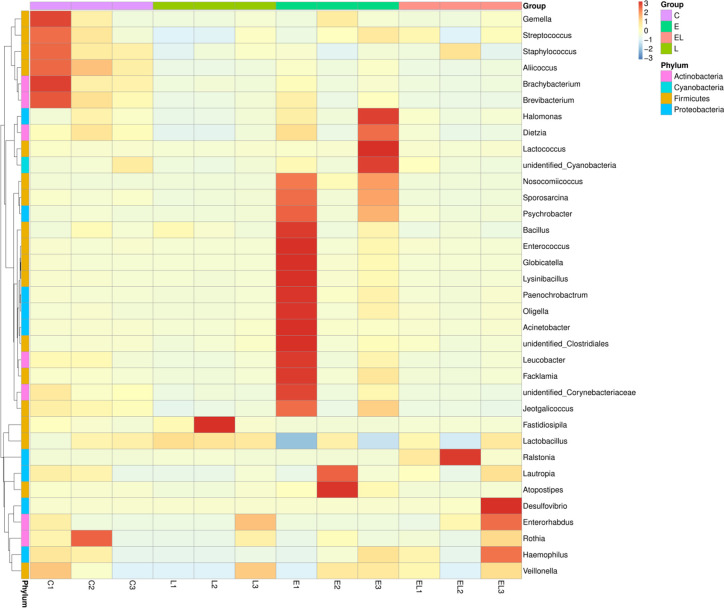
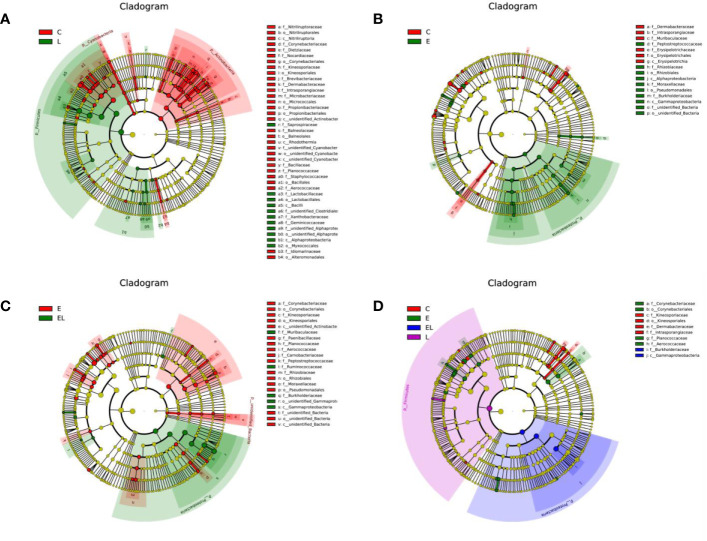
Domestic yaks () are indigenous to the Tibetan Plateau and display a high diarrhea rate due to poor habitat and husbandry conditions. has been shown to exert beneficial effects as antimicrobial, growth promotion, and gut microbiota in humans and/or murine models, but the relevant data regarding isolated from yaks was unavailable. Therefore, this study aimed to investigate the effects of from yaks on the intestinal microbial community in a mouse model and determine whether supplementation contributed in alleviating diarrhea by modulating gut microbiota. A total of 12 ileac samples from four groups were collected for 16S rRNA gene amplicon sequencing of V3-V4 region. Results revealed that although supplementation did not change the diversity of gut microbiota in mice, the proportion of some intestinal microbiota significantly changed. Specifically, the proportion of and in the treated-group (L-group) were increased as compared to control group (C-group), whereas , , , , , , , , , and were significantly decreased in the L-group. In contrast, () infection significantly decreased the proportion of beneficial bacteria such as , , , and , while loads of pathogenic bacteria significantly increased including and . Interestingly, administration could ameliorate the microbial community structure of -induced diarrheal mice by reducing the relative abundance of pathogenic bacteria such as , , , , , , and . Results in this study revealed that supplementation not only improved the gut microbiota but also alleviated diarrhea in mice, which may be mediated by modulating the composition and function of gut microbiota. Moreover, this study is expected to provide a new theoretical basis for the establishment of a preventive and treatment system for diarrhea in yaks.
中国牦牛()是青藏高原特有的品种,由于恶劣的生存环境和饲养条件,其腹泻发生率较高。在人类和/或鼠类模型中,已证明对具有抗菌、促进生长和调节肠道微生物群的有益作用,但有关牦牛来源的相关数据尚不清楚。因此,本研究旨在探讨牦牛来源的对小鼠模型肠道微生物群落的影响,并确定通过调节肠道微生物群来补充是否有助于缓解腹泻。从四组共 12 个回肠样本中收集了 16S rRNA 基因 V3-V4 区的扩增子进行测序。结果表明,尽管补充并没有改变小鼠肠道微生物群的多样性,但一些肠道微生物的比例发生了显著变化。具体来说,与对照组(C 组)相比,处理组(L 组)中的和的比例增加,而、、、、、、、、和的比例在 L 组中显著降低。相反,感染显著降低了有益菌如、、和的比例,而致病菌的负荷显著增加,包括和。有趣的是,给药可以通过减少如、、、、、和等致病菌的相对丰度来改善 - 诱导的腹泻小鼠的微生物群落结构。本研究结果表明,补充不仅改善了肠道微生物群,而且缓解了小鼠腹泻,这可能是通过调节肠道微生物群的组成和功能来实现的。此外,本研究有望为建立牦牛腹泻的预防和治疗体系提供新的理论依据。