National Engineering Laboratory For Animal Breeding and MOA Key Laboratory of Animal Genetics and Breeding, College of Animal Science and Technology, China Agricultural University, Beijing 100193, China.
College of Animal Science and Veterinary Medicine, Xinyang Agriculture and Forestry University, Xinyang, Henan 464000, China.
Poult Sci. 2021 Apr;100(4):100996. doi: 10.1016/j.psj.2021.01.019. Epub 2021 Jan 18.
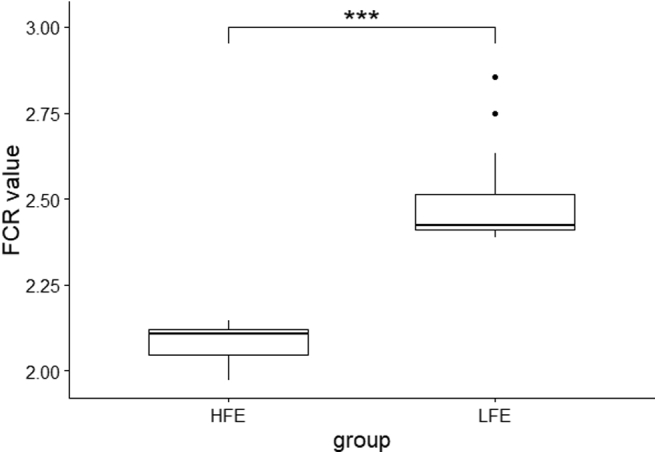
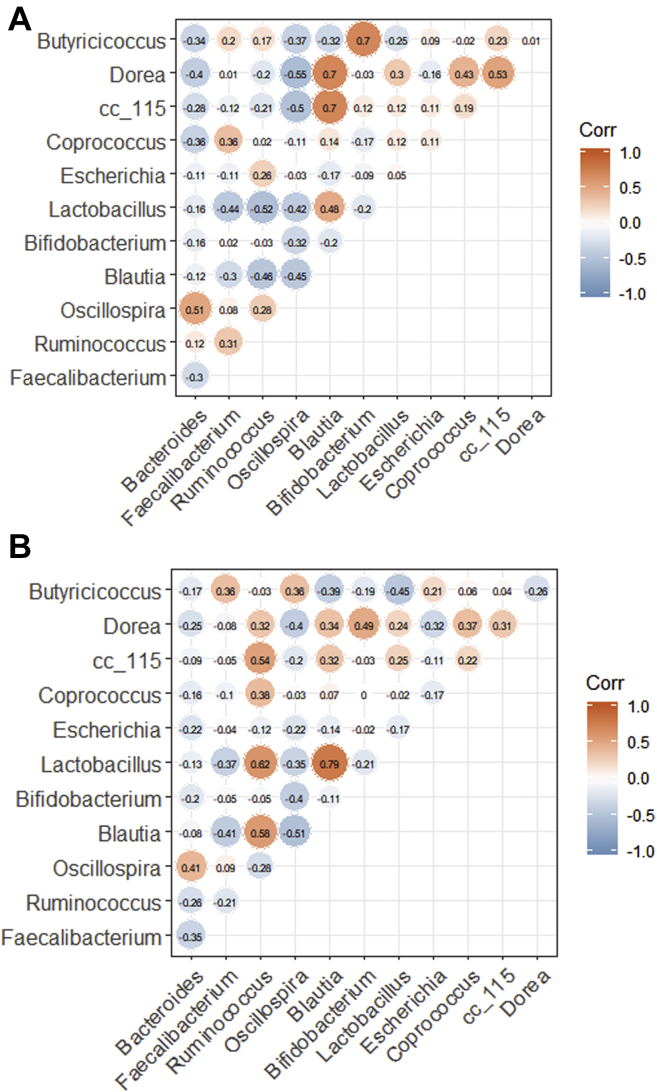
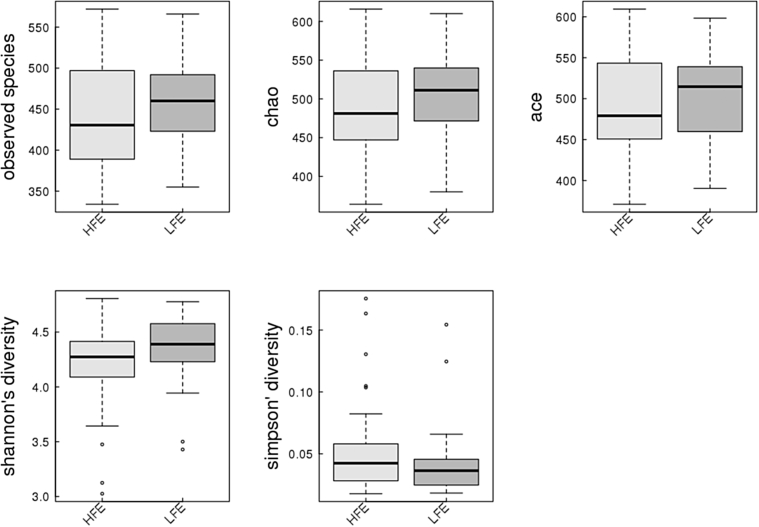
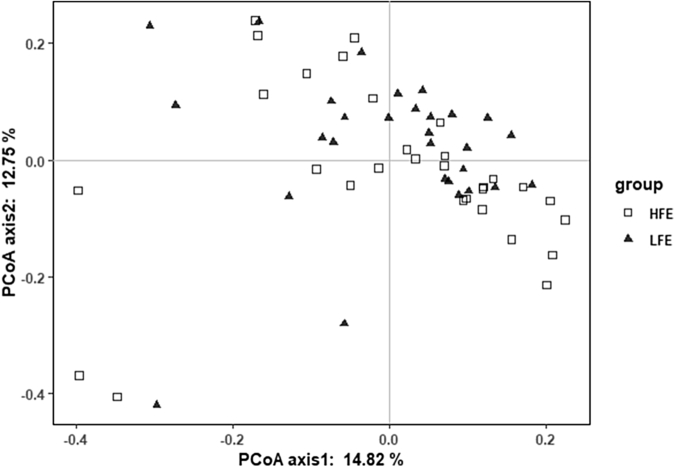
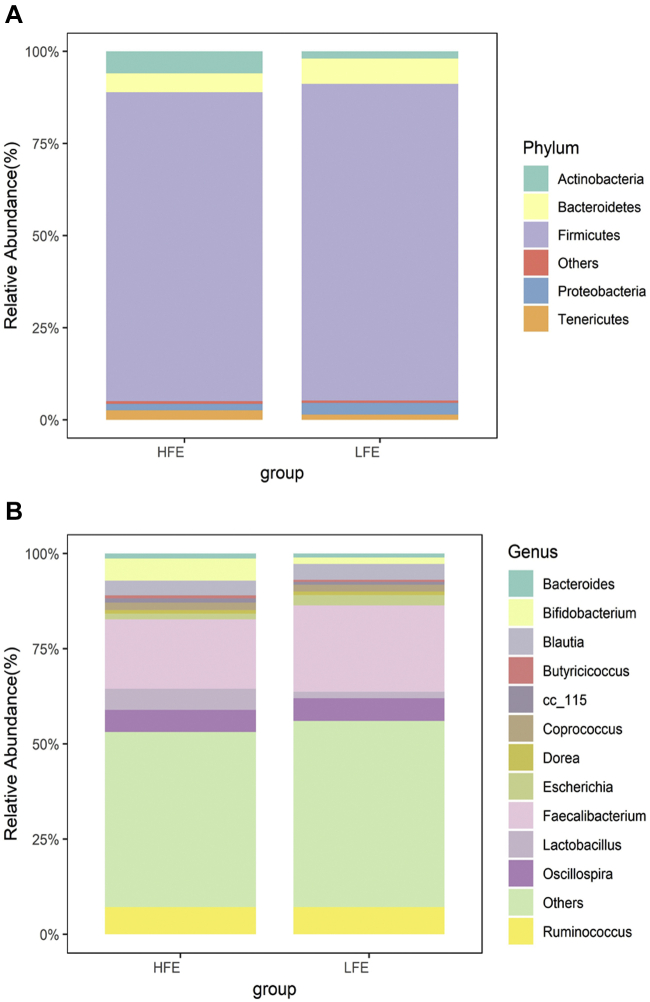
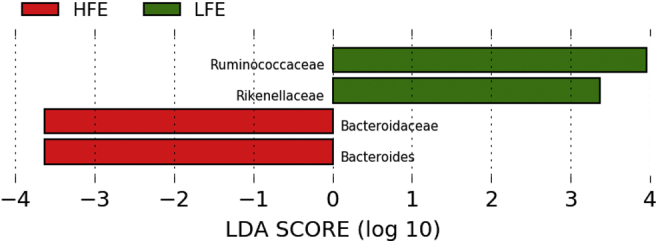
The cecal microbiota plays important roles in host food digestion and nutrient absorption, which may in part affect feed efficiency (FE). To investigate the composition and functional differences of cecal microbiota between high (n = 30) and low (n = 29) feed conversion ratio (FCR; metric for FE) groups, we performed 16S rRNA gene sequencing and predicted the metagenome function using Phylogenetic Investigation of Communities by Reconstruction of Unobserved Species in yellow broilers. The results showed that the 2 groups had the same prominent microbes but with differing abundance. Firmicutes, Bacteroidetes, and Actinobacteria were 3 prominent bacterial phyla in the cecal microbial community. Although there were no differences in microbial diversity, compositional differences related to FCR were found via linear discriminant analysis (LDA) effect size; the genus Bacteroides had a significantly higher abundance (LDA >2) in the high FE (HFE) group than in the low FE group. Furthermore, genus Bacteroides had a negative FCR-associated correlation (P < 0.05). Oscillospira was positively correlated with Bacteroides in both groups, whereas Dorea was negatively correlated with Bacteroides in the HFE group. Predictive functional analysis revealed that metabolic pathways such as "starch and sucrose metabolism," "phenylalanine, tyrosine and tryptophan biosynthesis," and "carbohydrate metabolism" were significantly enriched in the HFE group. The relatively subtle differences in FE-associated cecal microbiota composition suggest a possible link between cecal microbiota and FE. Moreover, Bacteroides may potentially be used as biomarkers for FE to improve growth performance in yellow broilers.
盲肠微生物在宿主食物消化和营养吸收中发挥重要作用,这可能部分影响饲料效率(FE)。为了研究高(n=30)和低(n=29)饲料转化率(FE 的衡量标准)组盲肠微生物群落组成和功能的差异,我们对黄羽肉鸡进行了 16S rRNA 基因测序,并使用未观察到物种的群落重建进行了宏基因组功能预测。结果表明,两组具有相同的突出微生物,但丰度不同。厚壁菌门、拟杆菌门和放线菌门是盲肠微生物群落中的 3 个突出细菌门。尽管微生物多样性没有差异,但通过线性判别分析(LDA)效应大小发现了与 FE 相关的组成差异;在高 FE(HFE)组中,拟杆菌属的丰度明显高于低 FE 组(LDA>2)。此外,拟杆菌属与 FE 呈负相关(P<0.05)。在两组中,颤螺旋菌与拟杆菌呈正相关,而在 HFE 组中,多尔氏菌与拟杆菌呈负相关。预测功能分析表明,“淀粉和蔗糖代谢”、“苯丙氨酸、酪氨酸和色氨酸生物合成”和“碳水化合物代谢”等代谢途径在 HFE 组中显著富集。FE 相关盲肠微生物群落组成的相对细微差异表明盲肠微生物群与 FE 之间可能存在联系。此外,拟杆菌属可能可作为 FE 的生物标志物,以提高黄羽肉鸡的生长性能。