ITAVI, Centre INRA Val de Loire, 37380 Nouzilly, France.
Equipe Biosynthèse et toxicité des mycotoxines, ENVT, UMR Toxalim, Université de Toulouse, F-31076 Toulouse, France.
Toxins (Basel). 2021 Feb 16;13(2):152. doi: 10.3390/toxins13020152.
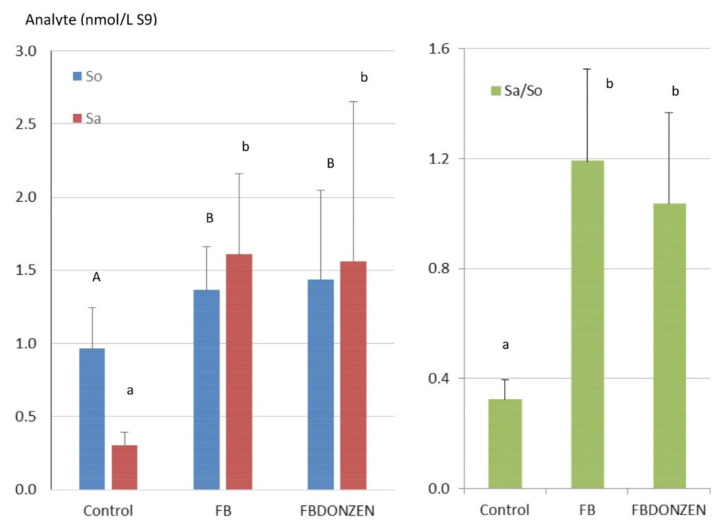
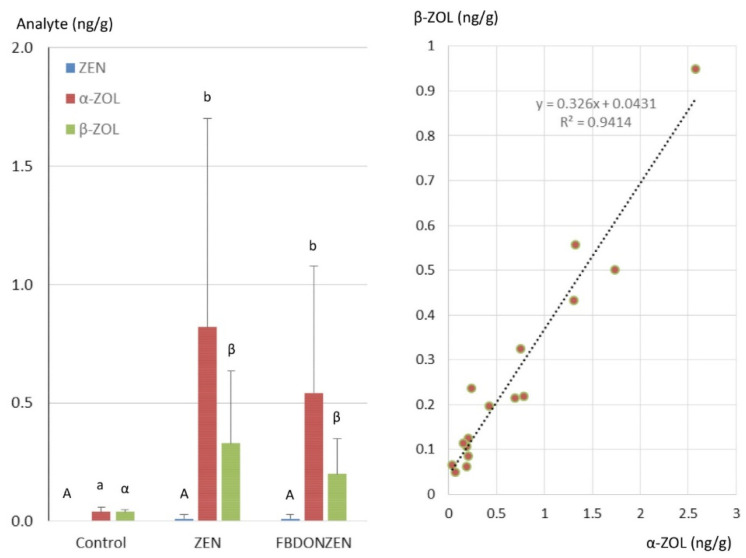
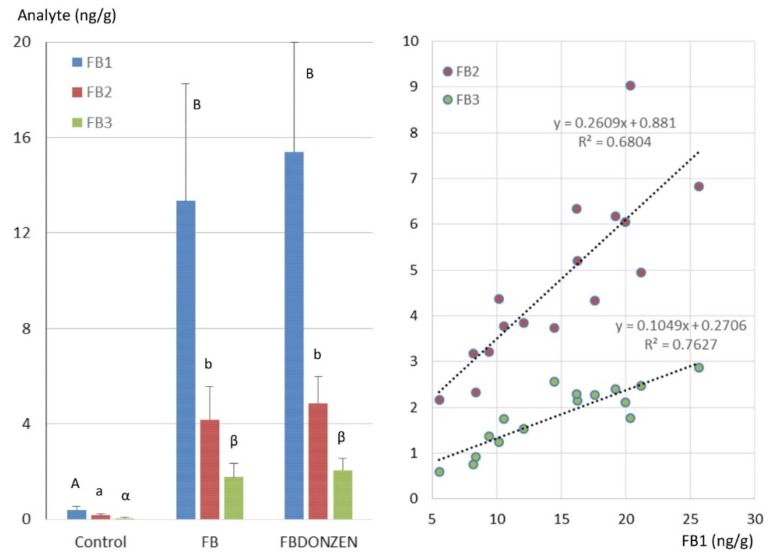
Toxic effects among fumonisins B (FB), deoxynivalenol (DON) and zearalenone (ZEN) administered alone and combined were investigated in 84-day-old ducks during force-feeding. 75 male ducks, divided into five groups of 15 animals, received daily during the meal a capsule containing the desired among of toxin. Treated animals received dietary levels of toxins equivalent to 20 mg FB1+FB2/kg (FB), 5 mg DON/kg (DON), 0.5 mg ZEN/kg (ZEN) and 20, 5 and 0.5 mg/kg of FB, DON and ZEN (FBDONZEN), respectively. Control birds received capsules with no toxin. After 12 days, a decrease in body weight gain accompanied by an increase in the feed conversion ratio was observed in ducks exposed to FBDONZEN, whereas there was no effect on performances in ducks exposed to FB, DON and ZEN separately. No difference among groups was observed in relative organ weight, biochemistry, histopathology and several variables used to measure oxidative damage and testicular function. A sphinganine to sphingosine ratio of 0.32, 1.19 and 1.04, was measured in liver in controls and in ducks exposed to FB and FBDONZEN, respectively. Concentrations of FB1 in liver were 13.34 and 15.4 ng/g in ducks exposed to FB and FBDONZEN, respectively. Together ZEN and its metabolites were measured after enzymatic hydrolysis of the conjugated forms. Mean concentrations of α-zearalenol in liver were 0.82 and 0.54 ng/g in ducks exposed to ZEN and FBDONZEN, respectively. β-zearalenol was 2.3-fold less abundant than α-zearalenol, whereas ZEN was only found in trace amounts. In conclusion, this study suggests that decreased performance may occur in ducks exposed to a combination of FB, DON and ZEN, but does not reveal any other interaction between mycotoxins in any of the other variables measured.
在填喂期间,研究了单独和联合给予伏马菌素 B(FB)、脱氧雪腐镰刀菌烯醇(DON)和玉米赤霉烯酮(ZEN)的毒性作用在 84 日龄鸭中。将 75 只雄性鸭分为 5 组,每组 15 只,在喂食期间每天接受含有所需毒素的胶囊。处理动物接受的饮食毒素水平相当于 20 mg FB1+FB2/kg(FB)、5 mg DON/kg(DON)、0.5 mg ZEN/kg(ZEN)和 20、5 和 0.5 mg/kg FB、DON 和 ZEN(FBDONZEN),分别。对照鸟类接受不含毒素的胶囊。12 天后,暴露于 FBDONZEN 的鸭子体重增加减少,饲料转化率增加,而单独暴露于 FB、DON 和 ZEN 的鸭子对性能没有影响。各组间相对器官重量、生化、组织病理学以及用于测量氧化损伤和睾丸功能的几个变量无差异。在对照组和暴露于 FB 和 FBDONZEN 的鸭子的肝脏中,分别测量到神经酰胺到神经鞘氨醇的比例为 0.32、1.19 和 1.04。暴露于 FB 和 FBDONZEN 的鸭子的肝脏中 FB1 的浓度分别为 13.34 和 15.4 ng/g。ZEN 及其代谢物在共轭形式的酶解后进行测量。暴露于 ZEN 和 FBDONZEN 的鸭子的肝脏中 α-玉米赤霉烯醇的平均浓度分别为 0.82 和 0.54 ng/g。β-玉米赤霉烯醇的丰度是α-玉米赤霉烯醇的 2.3 倍,而 ZEN 仅以痕量存在。总之,这项研究表明,暴露于 FB、DON 和 ZEN 组合的鸭子可能会出现性能下降,但在任何其他测量变量中都没有发现霉菌毒素之间的任何其他相互作用。