Sváb Gergely, Kokas Márton, Sipos Ildikó, Ambrus Attila, Tretter László
Laboratory of Neurobiochemistry, Department of Biochemistry, Institute of Biochemistry and Molecular Biology MTA-SE, Semmelweis University, POB. 262 Budapest, H-1444 Budapest, Hungary.
Department of Neurology, Semmelweis University, POB. 262 Budapest, H-1444 Budapest, Hungary.
Antioxidants (Basel). 2021 Feb 16;10(2):305. doi: 10.3390/antiox10020305.
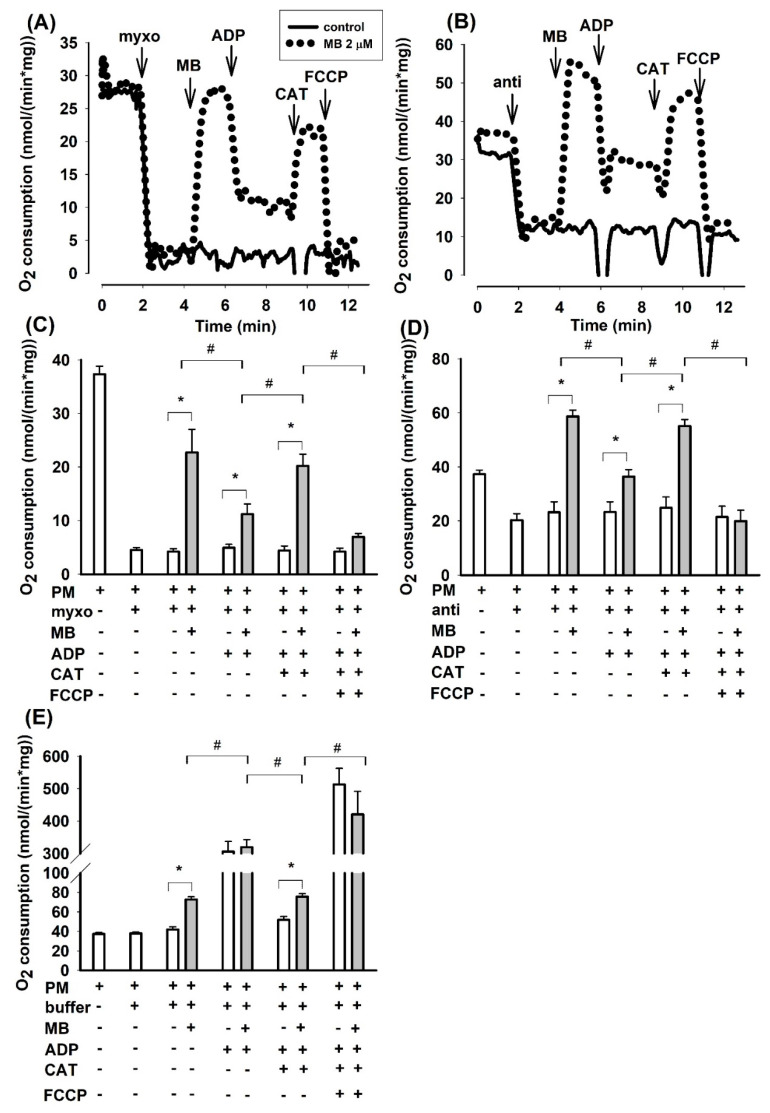
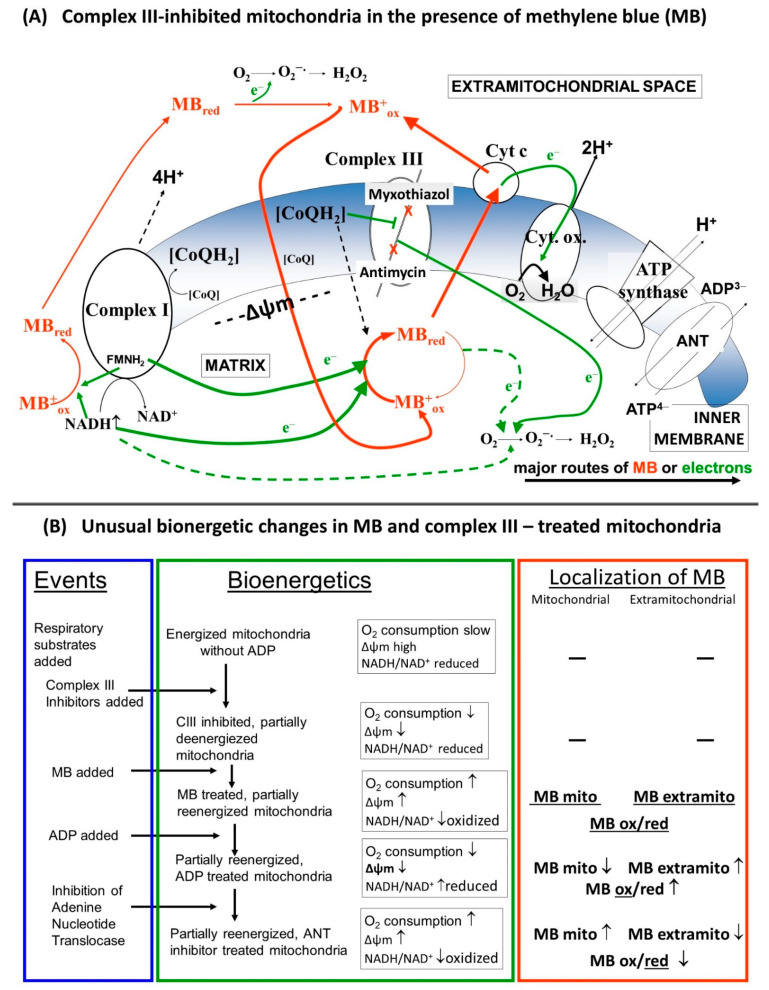
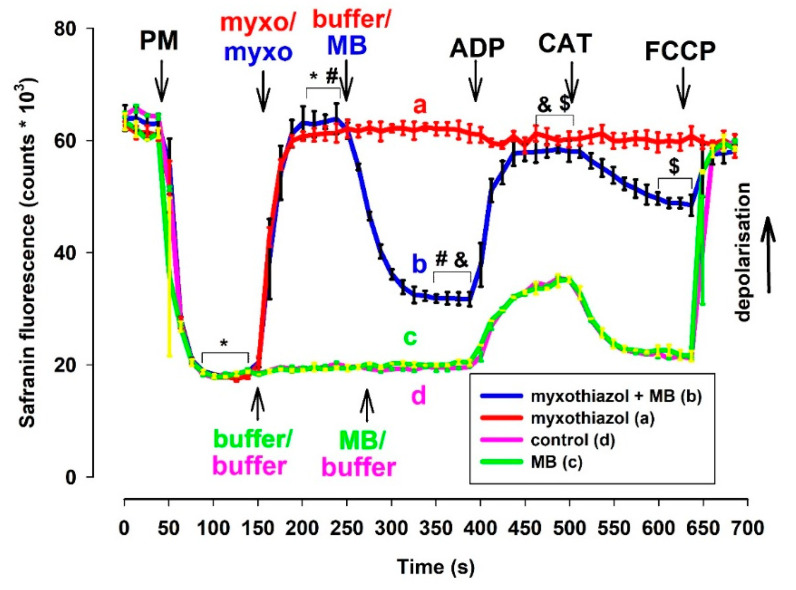
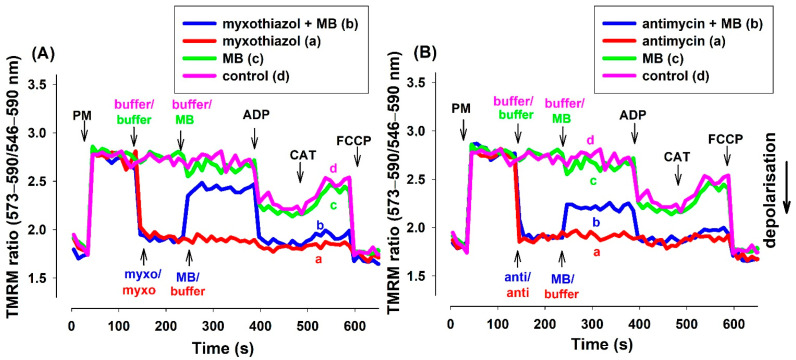
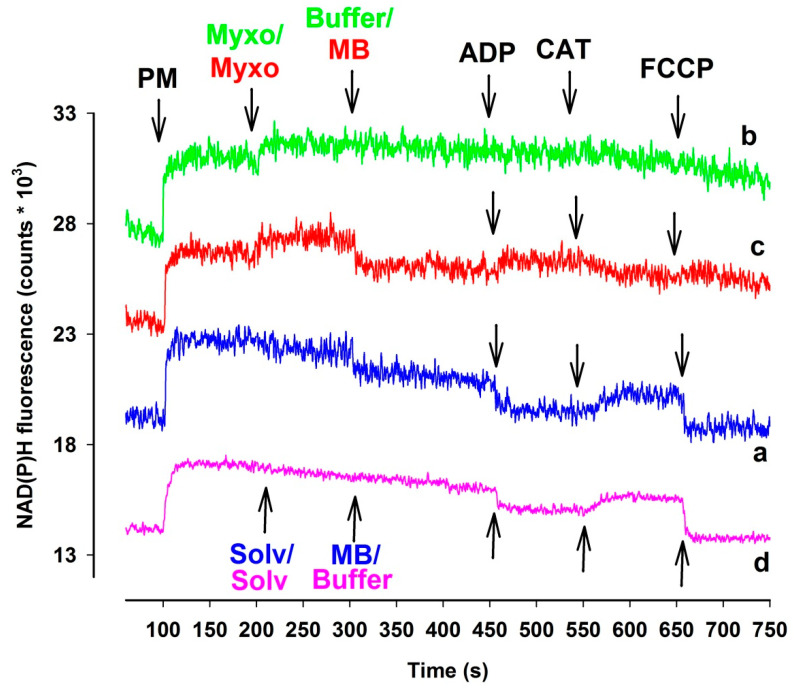
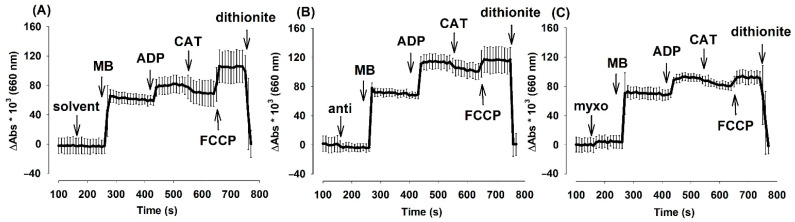
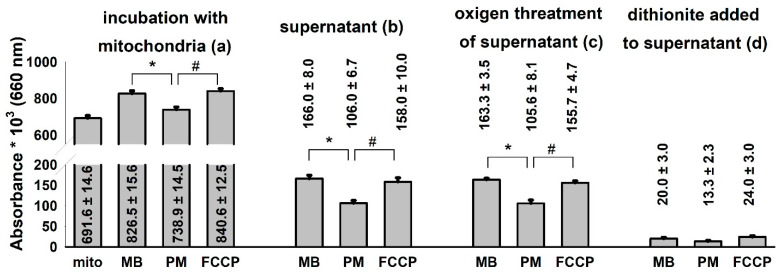
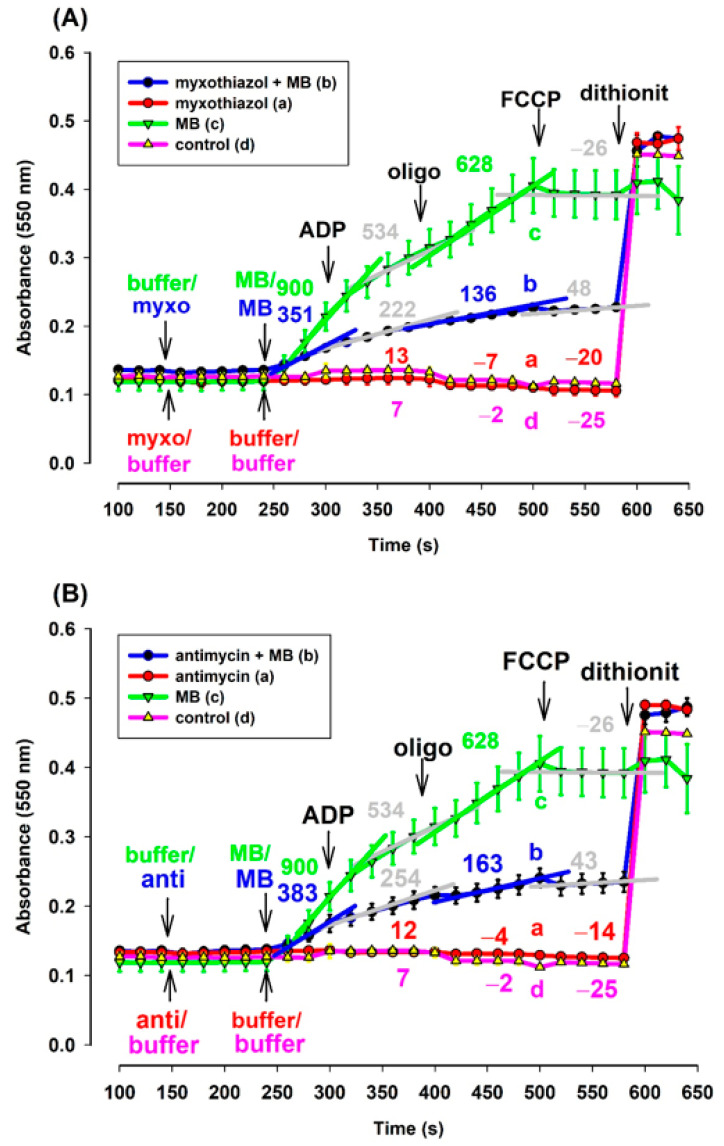
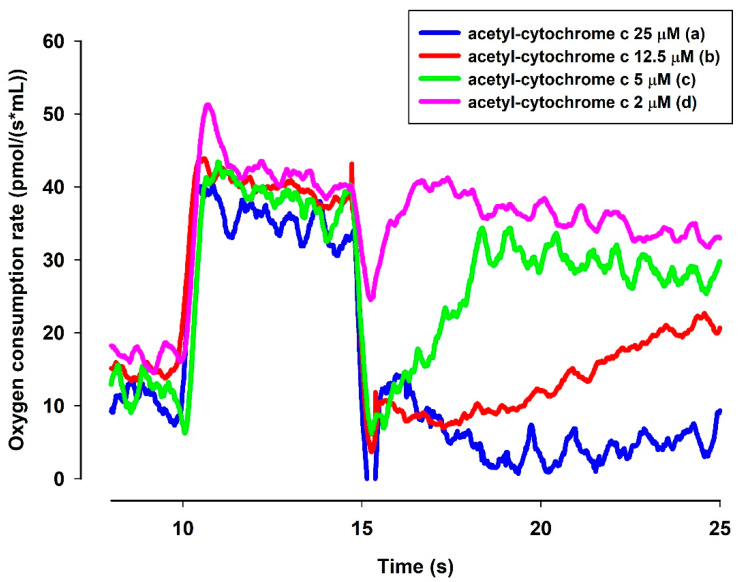
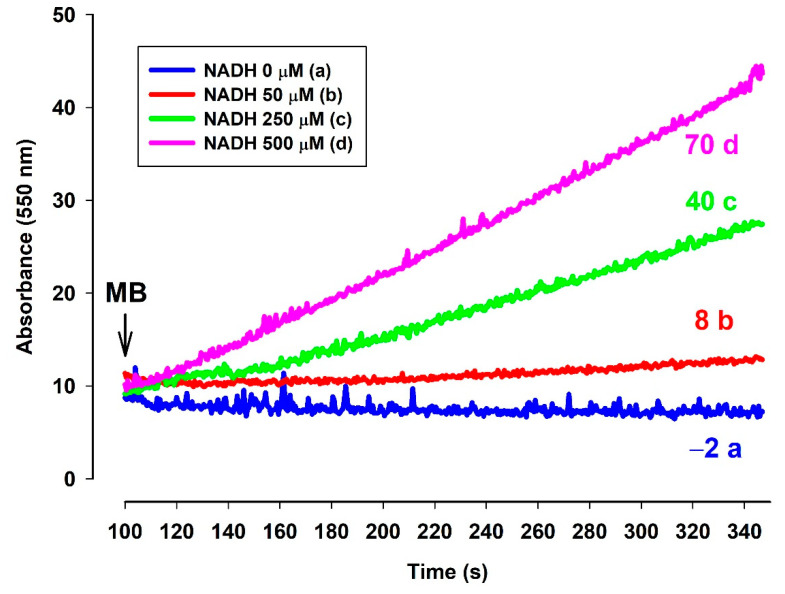
Methylene blue (MB) is used in human therapy in various pathological conditions. Its effects in neurodegenerative disease models are promising. MB acts on multiple cellular targets and mechanisms, but many of its potential beneficial effects are ascribed to be mitochondrial. According to the "alternative electron transport" hypothesis, MB is capable of donating electrons to cytochrome c bypassing complex I and III. As a consequence of this, the deleterious effects of the inhibitors of complex I and III can be ameliorated by MB. Recently, the beneficial effects of MB exerted on complex III-inhibited mitochondria were debated. In the present contribution, several pieces of evidence are provided towards that MB is able to reduce cytochrome c and improve bioenergetic parameters, like respiration and membrane potential, in mitochondria treated with complex III inhibitors, either antimycin or myxothiazol. These conclusions were drawn from measurements for mitochondrial oxygen consumption, membrane potential, NAD(P)H steady state, MB uptake and MB-cytochrome c oxidoreduction. In the presence of MB and complex III inhibitors, unusual respiratory reactions, like decreased oxygen consumption as a response to ADP addition as well as stimulation of respiration upon administration of inhibitors of ATP synthase or ANT, were observed. Qualitatively identical results were obtained in three rodent species. The actual metabolic status of mitochondria is well reflected in the distribution of MB amongst various compartments of this organelle.
亚甲蓝(MB)在多种病理状况的人体治疗中都有应用。其在神经退行性疾病模型中的作用很有前景。MB作用于多个细胞靶点和机制,但其许多潜在的有益作用都归因于线粒体。根据“替代电子传递”假说,MB能够绕过复合体I和III将电子捐赠给细胞色素c。因此,复合体I和III抑制剂的有害作用可被MB改善。最近,MB对复合体III抑制的线粒体产生的有益作用受到了争议。在本论文中,提供了多条证据表明,在使用复合体III抑制剂(抗霉素或粘噻唑)处理的线粒体中,MB能够还原细胞色素c并改善生物能量参数,如呼吸作用和膜电位。这些结论是通过对线粒体耗氧量、膜电位、NAD(P)H稳态、MB摄取以及MB-细胞色素c氧化还原反应的测量得出的。在存在MB和复合体III抑制剂的情况下,观察到了异常的呼吸反应,如添加ADP后耗氧量减少以及施用ATP合酶或ANT抑制剂后呼吸作用受到刺激。在三种啮齿动物物种中获得了定性相同的结果。线粒体的实际代谢状态在MB在该细胞器各个区室中的分布中得到了很好的反映。