Department of Microbiology and Molecular Biology, College of Bioscience and Biotechnology, Chungnam National University, Daejeon 34134, Korea.
Nutrients. 2021 Feb 21;13(2):688. doi: 10.3390/nu13020688.
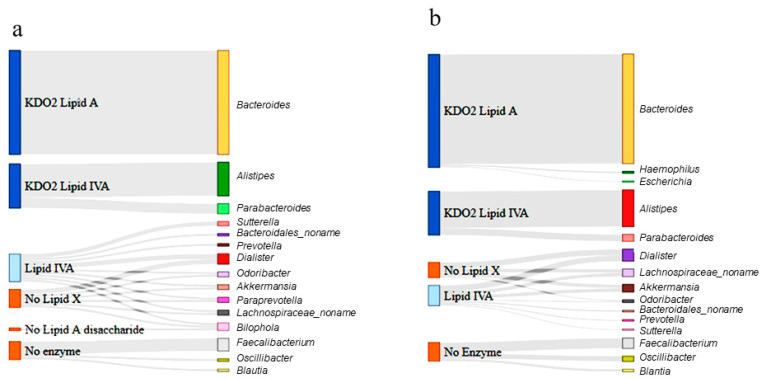
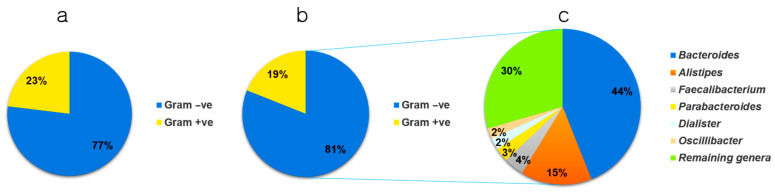
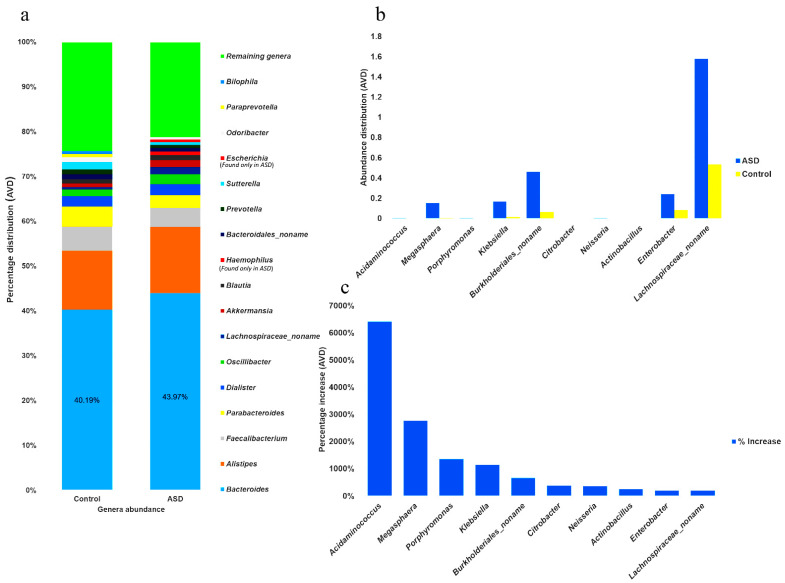
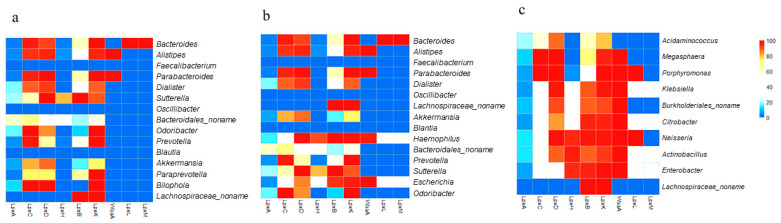
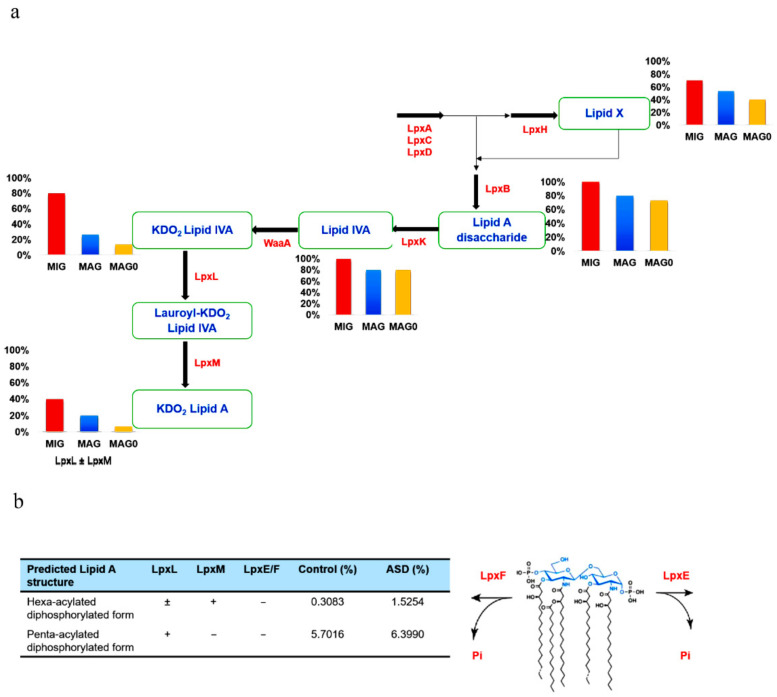
The link between autism spectrum disorder (ASD) and the gut microbiome has received much attention, with special focus on gut-brain-axis immunological imbalances. Gastrointestinal problems are one of the major symptoms of ASD and are thought to be related to immune dysregulation. Therefore, in silico analysis was performed on mined data from 36 individuals with ASD and 21 control subjects, with an emphasis on lipid A endotoxin-producing bacteria and their lipopolysaccharide (LPS) metabolic pathways. Analysis of enzyme distribution among the 15 most abundant genera in both groups revealed that almost all these genera utilized five early-stage enzymes responsible for catalyzing the nine conserved lipid A synthesis steps. However, and , which were significantly more abundant in individuals with ASD than in the control subjects, possess a complete set of essential lipid A synthesis enzymes. Furthermore, the 10 genera with the greatest increase in individuals with ASD showed high potential for producing late-stage lipid A products. Collectively, these results suggested that the synthesis rate of immunogenic LPS end products is likely to increase in individuals with ASD, which may be related to their gastrointestinal symptoms and elevated inflammatory conditions.
自闭症谱系障碍(ASD)与肠道微生物组之间的联系受到了广泛关注,特别关注肠道-大脑轴的免疫失衡。胃肠道问题是 ASD 的主要症状之一,被认为与免疫失调有关。因此,对从 36 名 ASD 患者和 21 名对照受试者中挖掘的数据进行了计算机分析,重点是脂 A 内毒素产生菌及其脂多糖(LPS)代谢途径。对两组中最丰富的 15 个属的酶分布进行分析表明,几乎所有这些属都利用了负责催化九个保守的脂 A 合成步骤的五种早期酶。然而,在 ASD 患者中明显比对照组更为丰富的 和 ,则拥有完整的必需脂 A 合成酶。此外,在 ASD 患者中增加最多的 10 个属具有产生晚期脂 A 产物的高潜力。综上所述,这些结果表明,ASD 患者免疫原性 LPS 终产物的合成率可能会增加,这可能与其胃肠道症状和炎症升高有关。