Ntymenou Sofia, Tsantzali Ioanna, Kalamatianos Theodosis, Voumvourakis Konstantinos I, Kapaki Elisabeth, Tsivgoulis Georgios, Stranjalis George, Paraskevas George P
Department of Neurology, Evangelismos Hospital, 10676 Athens, Greece.
2nd Department of Neurology, School of Medicine, "Attikon" University General Hospital, National and Kapodistrian University of Athens, 12462 Athens, Greece.
Brain Sci. 2021 Feb 15;11(2):244. doi: 10.3390/brainsci11020244.
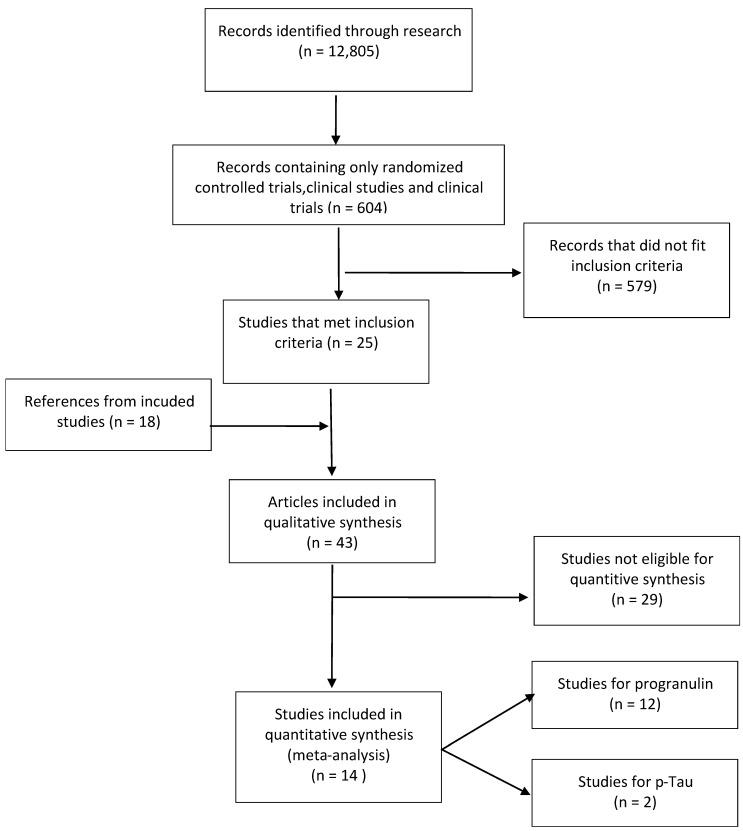
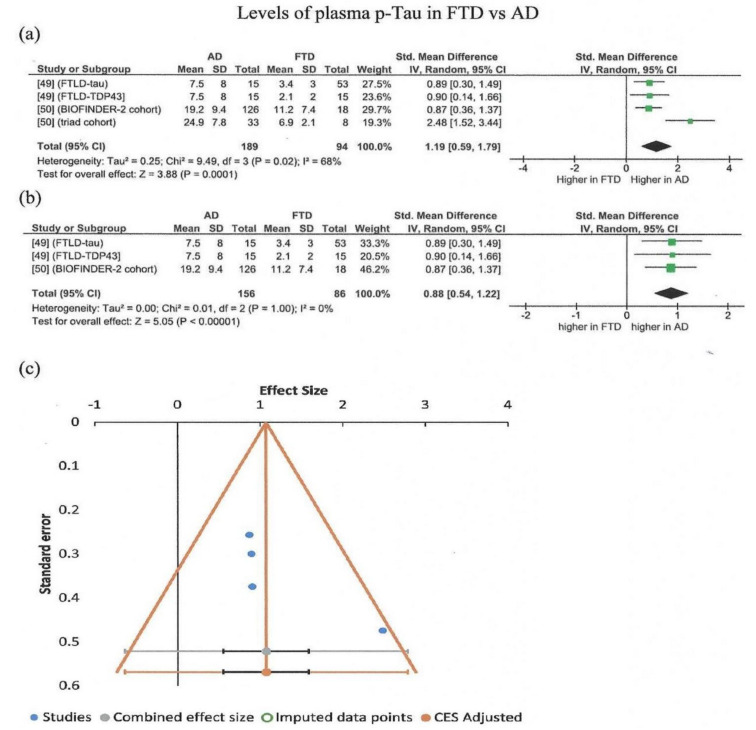
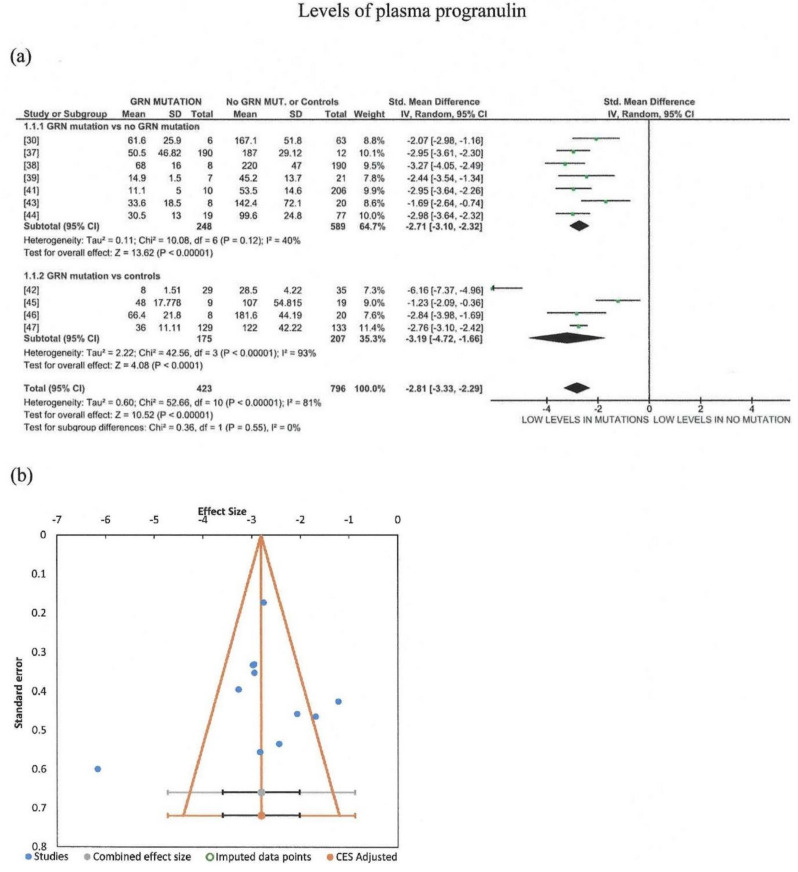
Biomarkers in cerebrospinal fluid (CSF) are useful in the differential diagnosis between frontotemporal dementia (FTD) and Alzheimer's dementia (AD), but require lumbar puncture, which is a moderately invasive procedure that can cause anxiety to patients. Gradually, the measurement of blood biomarkers has been attracting great interest. Testing blood instead of CSF, in order to measure biomarkers, offers numerous advantages because it negates the need for lumbar puncture, it is widely available, and can be repeated, allowing the prediction of disease course. In this study, a systematic review of the existing literature was conducted, as well as meta-analysis with greater emphasis on the most studied biomarkers, p-tau and progranulin. The goal was to give prominence to evidence regarding the use of plasma biomarkers in clinical practice.
脑脊液(CSF)中的生物标志物有助于鉴别额颞叶痴呆(FTD)和阿尔茨海默病性痴呆(AD),但需要进行腰椎穿刺,这是一种有中度侵入性的操作,可能会使患者感到焦虑。逐渐地,血液生物标志物的检测引起了极大的关注。为了测量生物标志物而检测血液而非脑脊液具有诸多优势,因为它无需进行腰椎穿刺,广泛可用且可重复进行,从而能够预测疾病进程。在本研究中,我们对现有文献进行了系统综述,并进行了荟萃分析,更侧重于研究最多的生物标志物——磷酸化tau蛋白(p-tau)和颗粒蛋白前体。目的是突出有关血浆生物标志物在临床实践中应用的证据。