Centro Dislipidemie in Età Evolutiva, U.O. Pediatria e Neonatologia, Ospedale G. da Saliceto, Piacenza, Italy.
U.O. Clinica Pediatrica, Servizio Clinico Dislipidemie per Lo Studio e La Prevenzione dell'Aterosclerosi in Età Pediatrica, ASST-Santi Paolo e Carlo, Milan, Italy.
Ital J Pediatr. 2021 Mar 5;47(1):51. doi: 10.1186/s13052-021-00985-x.
Cardiovascular disease (CVD) is one of the main causes of mortality and morbidity in Italy. Hypercholesterolemia is a modifiable CVD risk factor. The detection and treatment of hypercholesterolemia can modify the natural history of CVD, making CVD risk for affected patients comparable to that of unaffected ones. In this scenario, the detection of families at high cardiovascular risk is the first step of CVD prevention. This multicenter, observational study is aimed at finding an effective and non-invasive screening strategy to detect families at high risk for CVD.
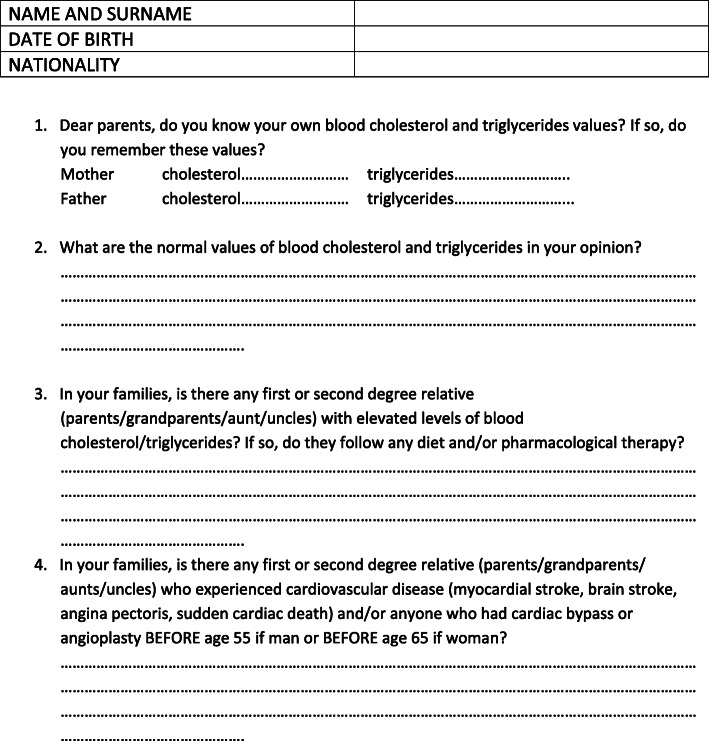
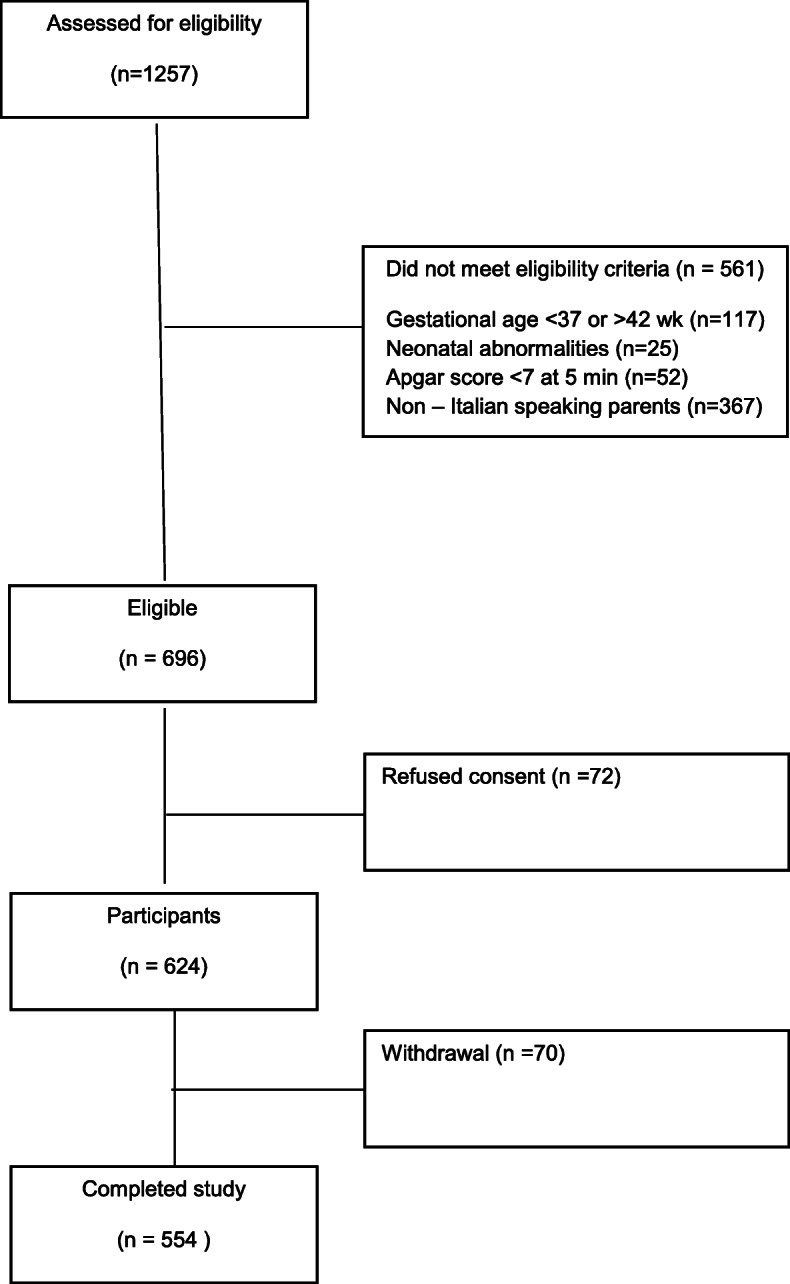
A survey investigating the knowledge of lipid and CVD issues was distributed to the parents of all infants born at the Neonatology Unit of Piacenza City Hospital and San Paolo Hospital in Milan over a 6 months period. Overall, 554 surveys have been collected.
26.8% newborns had parents who knew their own lipid profile, 40.2% had parents who knew the correct normal blood values of total cholesterol, 37.1% had parents who declared to have first or second degree relatives with lipid disorders, 33.7% had parents who declared to have first or second degree relatives with premature CVD CONCLUSION: Collecting a problem-tailored and accurate family history seems to be a good strategy to detect high risk families. Our data suggest that the percentage of adults who are unaware of their lipid profile, with a positive family history for CVD and/or lipid disorders is higher than expected. As a result, even the number of undetected paediatric patients at high cardiovascular risk might be greater than expected.
心血管疾病(CVD)是意大利主要的死亡和发病原因之一。高胆固醇血症是可改变的 CVD 风险因素。高胆固醇血症的检测和治疗可以改变 CVD 的自然病程,使受影响患者的 CVD 风险与未受影响患者相当。在这种情况下,检测心血管高危家庭是 CVD 预防的第一步。这项多中心、观察性研究旨在寻找一种有效且非侵入性的筛查策略,以检测 CVD 高危家庭。
在 6 个月的时间里,向皮亚琴扎市立医院和米兰圣保禄医院新生儿科出生的所有婴儿的父母分发了一份关于脂质和 CVD 问题知识的调查。共收集了 554 份调查问卷。
26.8%的新生儿的父母知道自己的血脂情况,40.2%的父母知道总胆固醇的正确正常血液值,37.1%的父母声称有一级或二级亲属有脂质紊乱,33.7%的父母声称有一级或二级亲属有早发性 CVD。
收集针对性强且准确的家族史似乎是检测高危家庭的良好策略。我们的数据表明,不知道自己血脂情况、有 CVD 和/或脂质紊乱家族史的成年人比例高于预期。因此,即使未检测到有高心血管风险的儿科患者数量也可能高于预期。