Regenerative Bioscience Center, University of Georgia, Athens, GA 30602, USA.
Edgar L. Rhodes Center for ADS, College of Agriculture and Environmental Sciences, University of Georgia, Athens, GA 30602, USA.
Sci Adv. 2021 Mar 5;7(10). doi: 10.1126/sciadv.abe0207. Print 2021 Mar.
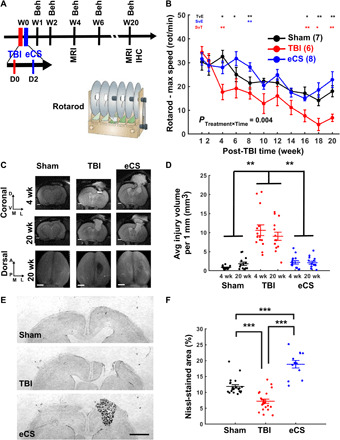
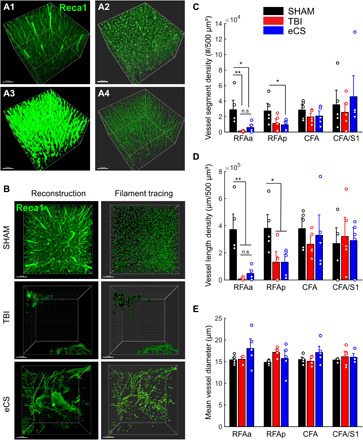
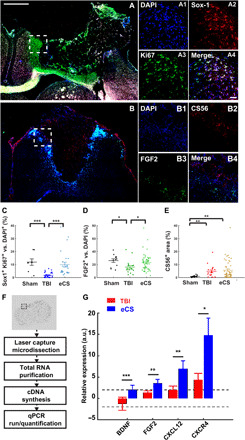
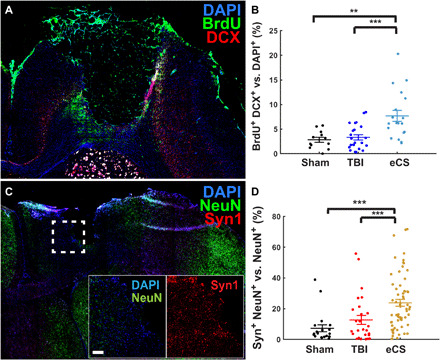
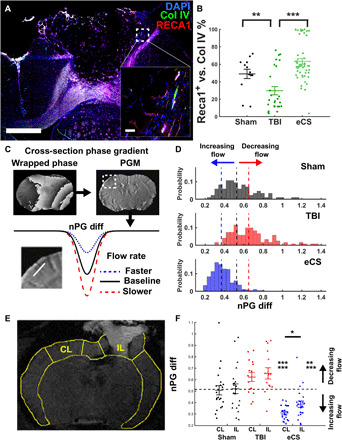
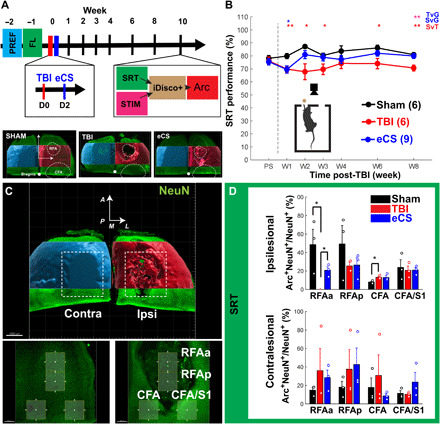
Severe traumatic brain injury (sTBI) survivors experience permanent functional disabilities due to significant volume loss and the brain's poor capacity to regenerate. Chondroitin sulfate glycosaminoglycans (CS-GAGs) are key regulators of growth factor signaling and neural stem cell homeostasis in the brain. However, the efficacy of engineered CS (eCS) matrices in mediating structural and functional recovery chronically after sTBI has not been investigated. We report that neurotrophic factor functionalized acellular eCS matrices implanted into the rat M1 region acutely after sTBI significantly enhanced cellular repair and gross motor function recovery when compared to controls 20 weeks after sTBI. Animals subjected to M2 region injuries followed by eCS matrix implantations demonstrated the significant recovery of "reach-to-grasp" function. This was attributed to enhanced volumetric vascularization, activity-regulated cytoskeleton (Arc) protein expression, and perilesional sensorimotor connectivity. These findings indicate that eCS matrices implanted acutely after sTBI can support complex cellular, vascular, and neuronal circuit repair chronically after sTBI.
严重创伤性脑损伤(sTBI)幸存者由于大量的脑损伤和大脑自身再生能力有限,会经历永久性的功能障碍。硫酸软骨素糖胺聚糖(CS-GAGs)是大脑中生长因子信号和神经干细胞内稳态的关键调节剂。然而,在 sTBI 后慢性期,工程化 CS(eCS)基质对结构和功能恢复的效果尚未得到研究。我们报告称,在 sTBI 后立即将神经营养因子功能化的去细胞 eCS 基质植入大鼠 M1 区,与 sTBI 后 20 周的对照组相比,可显著增强细胞修复和大运动功能恢复。对 M2 区损伤的动物进行 eCS 基质植入后,“抓握”功能得到了显著恢复。这归因于增强的容积血管化、活性调节细胞骨架(Arc)蛋白表达和损伤周围感觉运动连接。这些发现表明,sTBI 后立即植入 eCS 基质可支持 sTBI 后慢性期复杂的细胞、血管和神经元回路修复。