Department of Biochemistry and Molecular Genetics, University of Alabama at Birmingham, Birmingham, AL, USA.
Department of Radiation Oncology, University of Alabama at Birmingham, Birmingham, AL, USA.
Oncogene. 2021 Apr;40(13):2448-2462. doi: 10.1038/s41388-021-01683-y. Epub 2021 Mar 5.
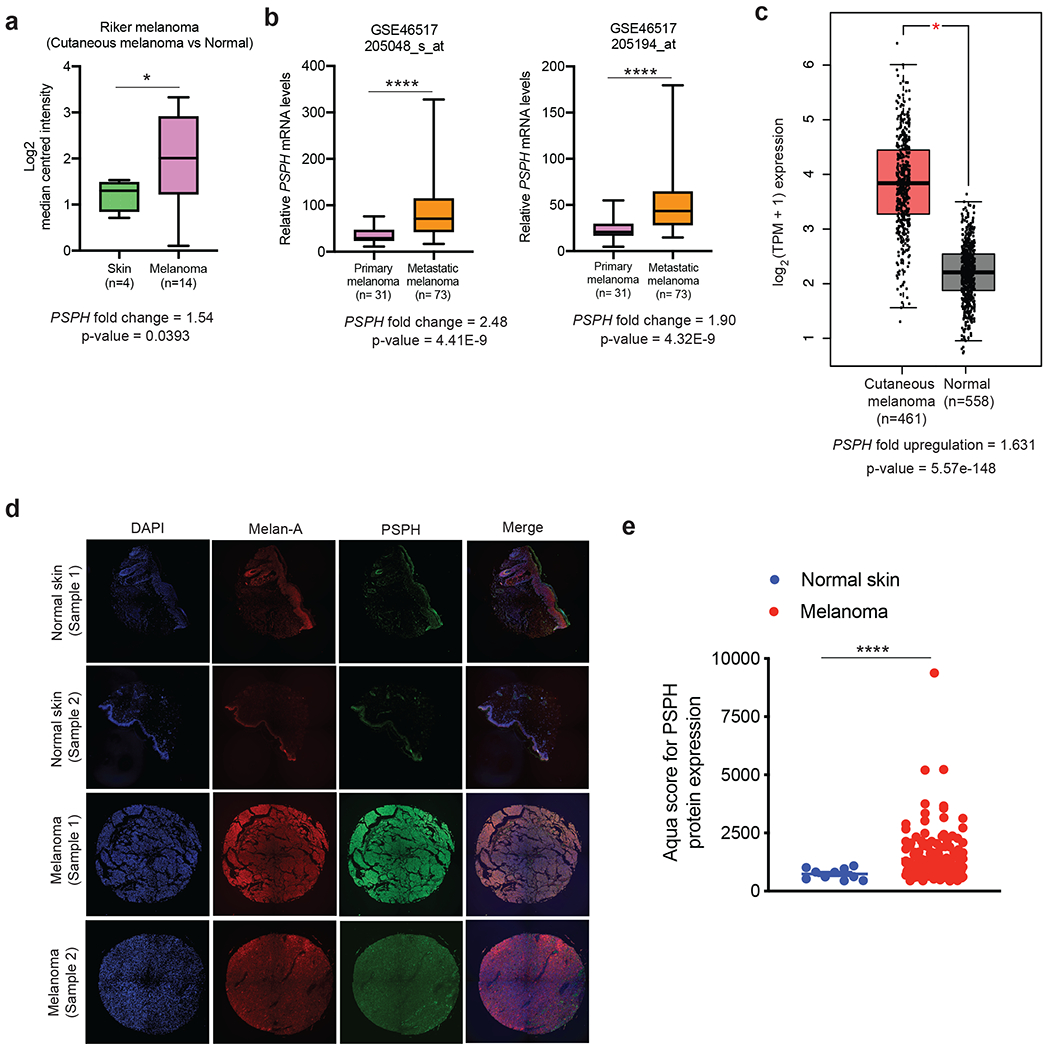
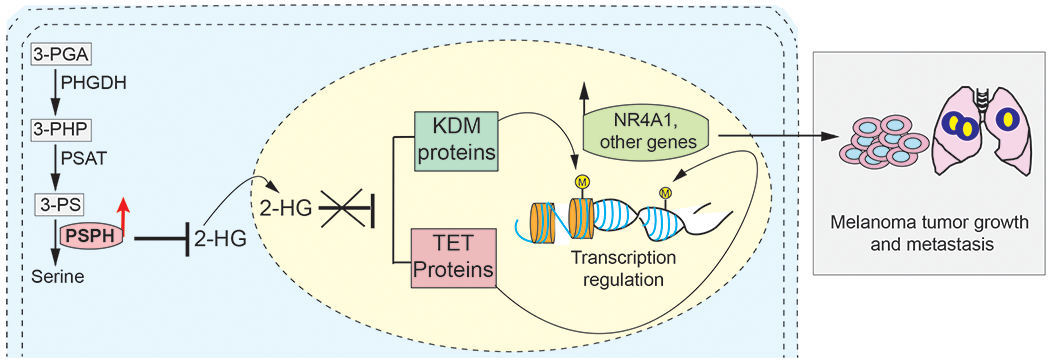
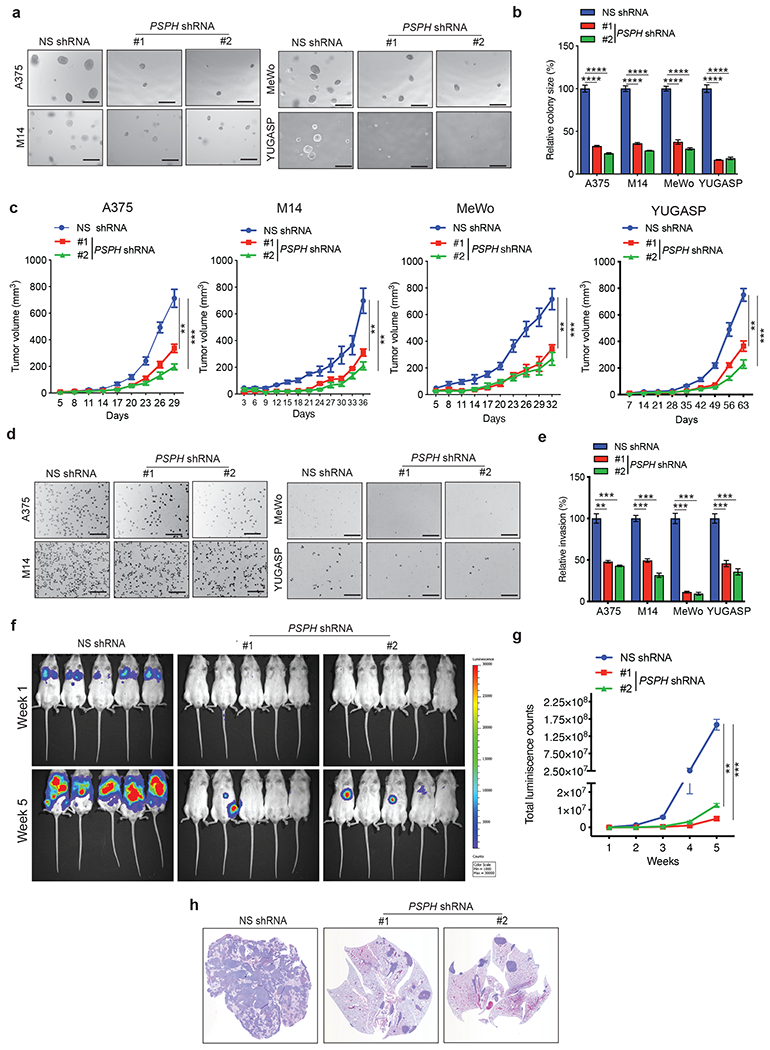
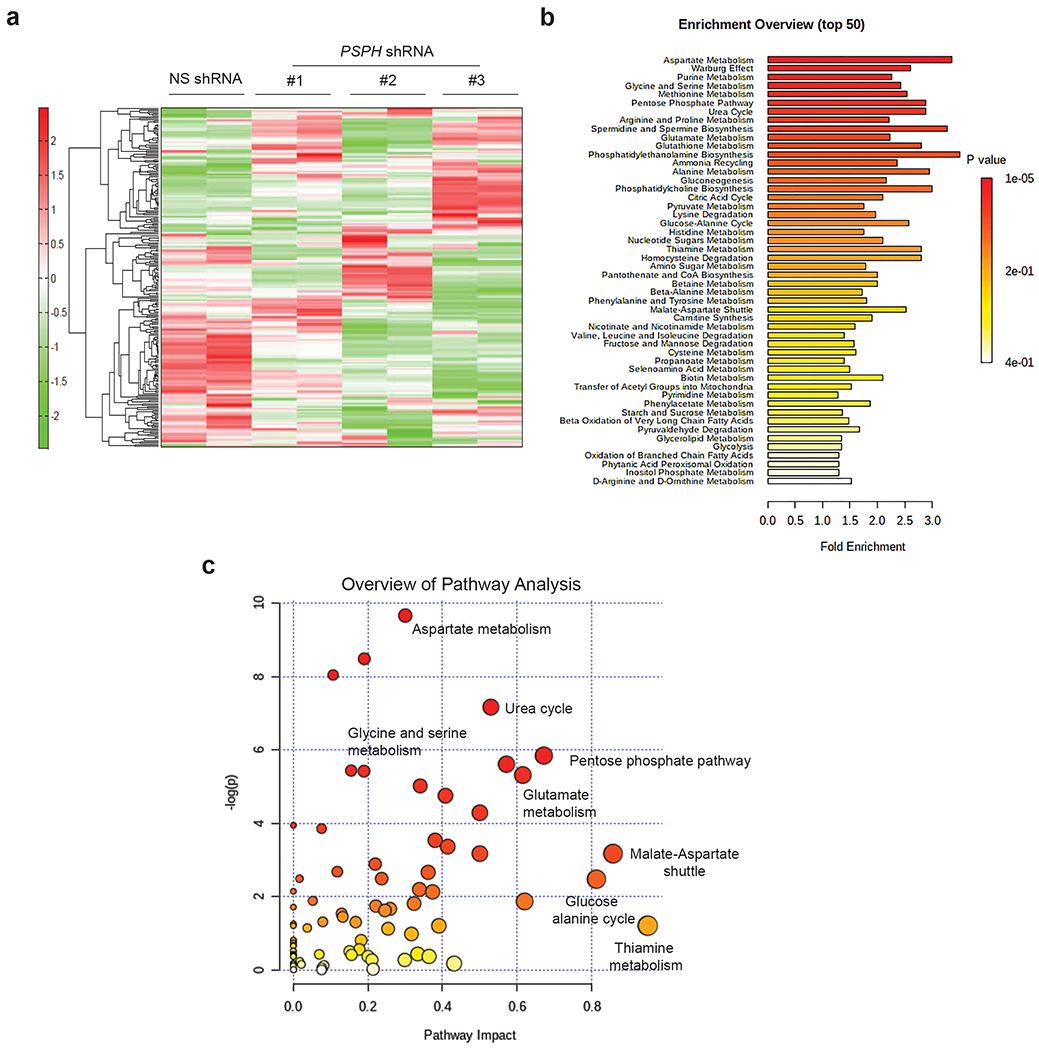
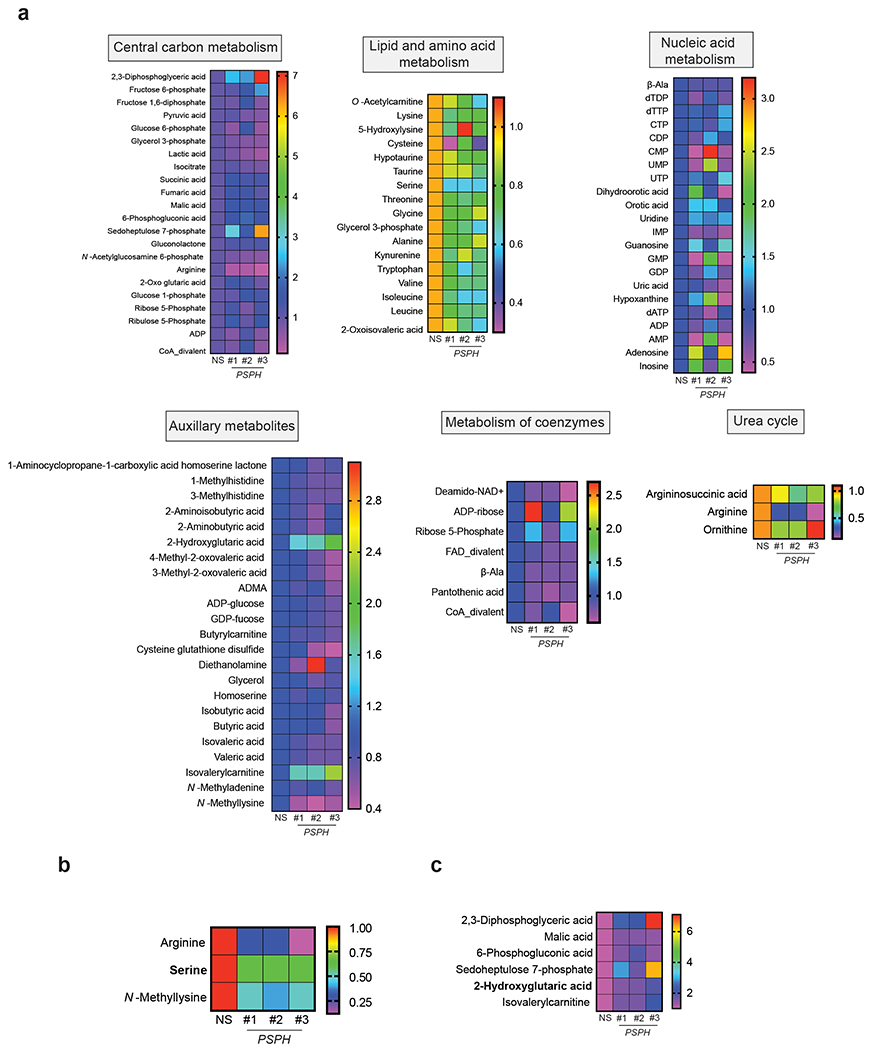
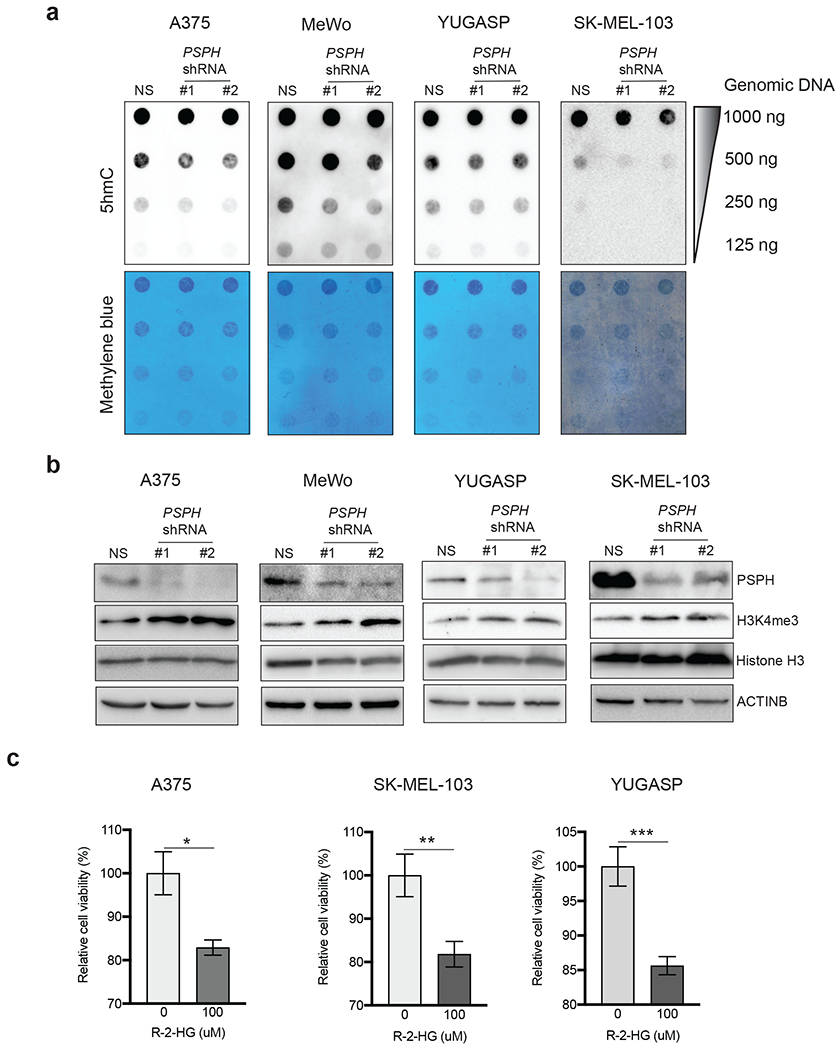
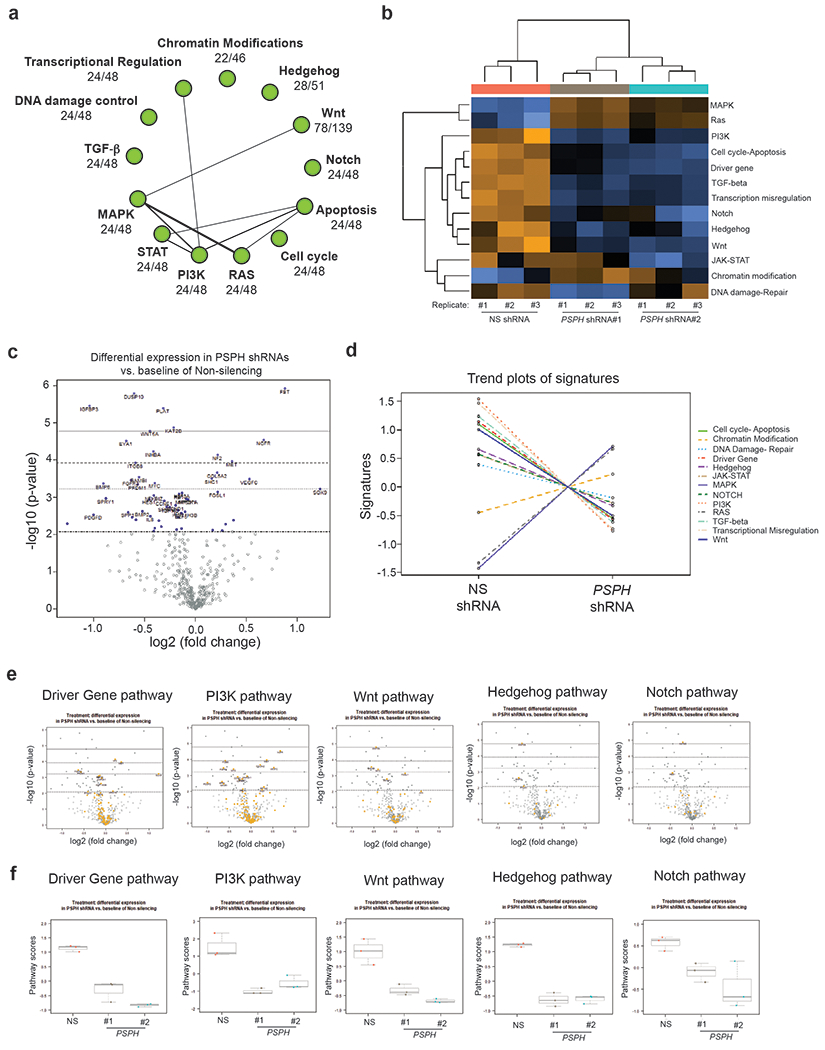
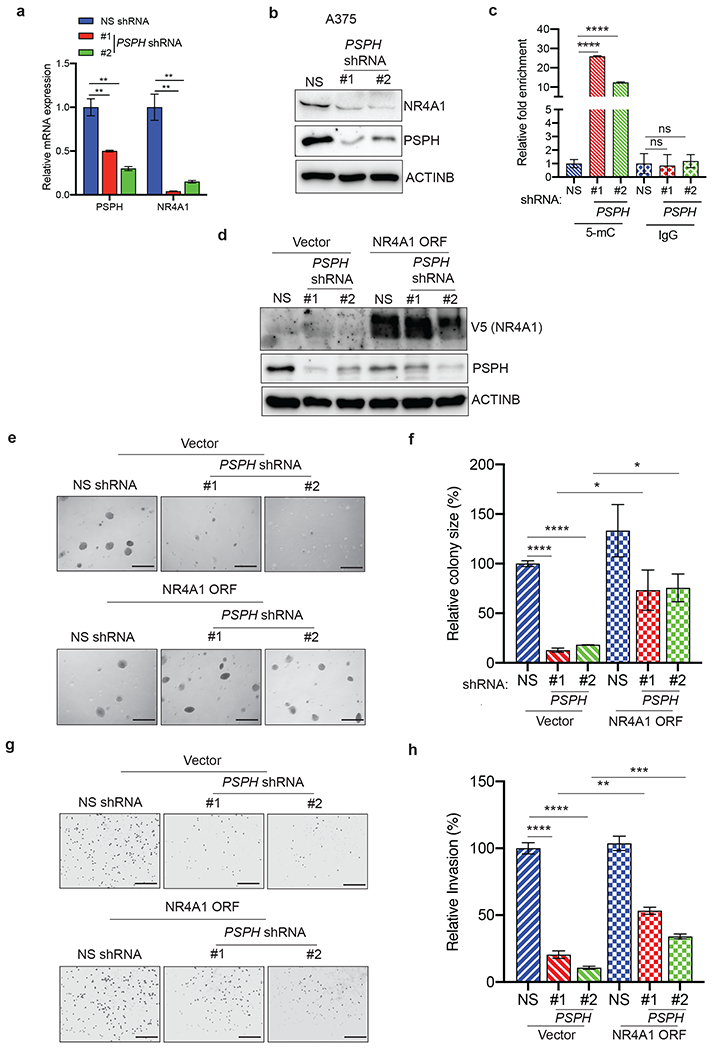
Metabolic deregulation, a hallmark of cancer, fuels cancer cell growth and metastasis. Here, we show that phosphoserine phosphatase (PSPH), an enzyme of the serine metabolism pathway, is upregulated in patient-derived melanoma samples. PSPH knockdown using short hairpin RNAs (shRNAs) blocks melanoma tumor growth and metastasis in both cell culture and mice. To elucidate the mechanism underlying PSPH action, we evaluated PSPH shRNA-expressing melanoma cells using global metabolomics and targeted mRNA expression profiling. Metabolomics analysis showed an increase in 2-hydroxyglutarate (2-HG) levels in PSPH knockdown cells. 2-HG inhibits the TET family of DNA demethylases and the Jumonji family of histone demethylases (KDM and JMJD), which is known to impact gene expression. Consistent with these data, PSPH knockdown in melanoma cells showed reduced DNA 5-hydroxymethylcytosine (5hmC) and increased histone H3K4me3 modifications. 2-HG treatment also inhibited melanoma growth. The nCounter PanCancer Pathways Panel-based mRNA expression profiling revealed attenuation of a number of cancer-promoting pathways upon PSPH knockdown. In particular, PSPH was necessary for nuclear receptor NR4A1 expression. Ectopic NR4A1 expression partly rescued the growth of melanoma cells expressing PSPH shRNA. Collectively, these results link PSPH to the facilitation of melanoma growth and metastasis through suppression of 2-HG and thus activation of pro-oncogenic gene expression.
代谢失调是癌症的一个标志,它为癌细胞的生长和转移提供动力。在这里,我们表明,丝氨酸代谢途径中的磷酸丝氨酸磷酸酶(PSPH)在患者来源的黑色素瘤样本中上调。使用短发夹 RNA(shRNA)敲低 PSPH 可阻止黑色素瘤细胞在细胞培养和小鼠中的肿瘤生长和转移。为了阐明 PSPH 作用的机制,我们使用全局代谢组学和靶向 mRNA 表达谱评估了表达 PSPH shRNA 的黑色素瘤细胞。代谢组学分析显示,PSPH 敲低细胞中的 2-羟戊二酸(2-HG)水平增加。2-HG 抑制 TET 家族 DNA 去甲基酶和 Jumonji 家族组蛋白去甲基酶(KDM 和 JMJD),已知这会影响基因表达。与这些数据一致的是,黑色素瘤细胞中的 PSPH 敲低显示 DNA 5-羟甲基胞嘧啶(5hmC)减少和组蛋白 H3K4me3 修饰增加。2-HG 处理也抑制了黑色素瘤的生长。nCounter PanCancer Pathways Panel 基于 mRNA 表达谱的分析显示,PSPH 敲低后许多促进癌症的途径受到抑制。特别是,PSPH 对于核受体 NR4A1 的表达是必需的。异位 NR4A1 表达部分挽救了表达 PSPH shRNA 的黑色素瘤细胞的生长。总之,这些结果将 PSPH 与通过抑制 2-HG 从而激活致癌基因表达来促进黑色素瘤生长和转移联系起来。