Department of General Surgical Science, Graduate School of Medicine, Gunma University, Maebashi, Japan.
Division of Integrated Oncology Research, Gunma University Initiative for Advanced Research (GIAR), Maebashi, Japan.
Cancer Rep (Hoboken). 2021 Aug;4(4):e1364. doi: 10.1002/cnr2.1364. Epub 2021 Mar 6.
Lectin-like oxidized LDL receptor-1 (LOX-1) has been identified as a new marker for functional myeloid-derived suppressor cells (MDSCs) that exhibit an immunosuppressive phenotype in the tumor microenvironment (TME). However, the role of LOX-1 cells in the TME of colorectal cancer (CRC) remains unknown.
This study aimed to determine the expression and significance of LOX-1 in the TME of clinical CRC specimens.
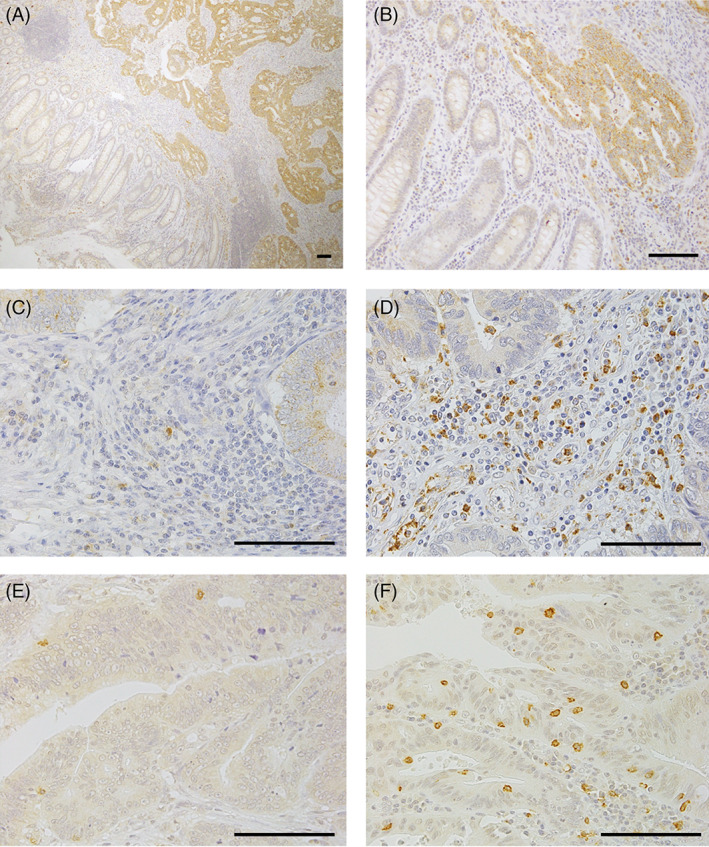
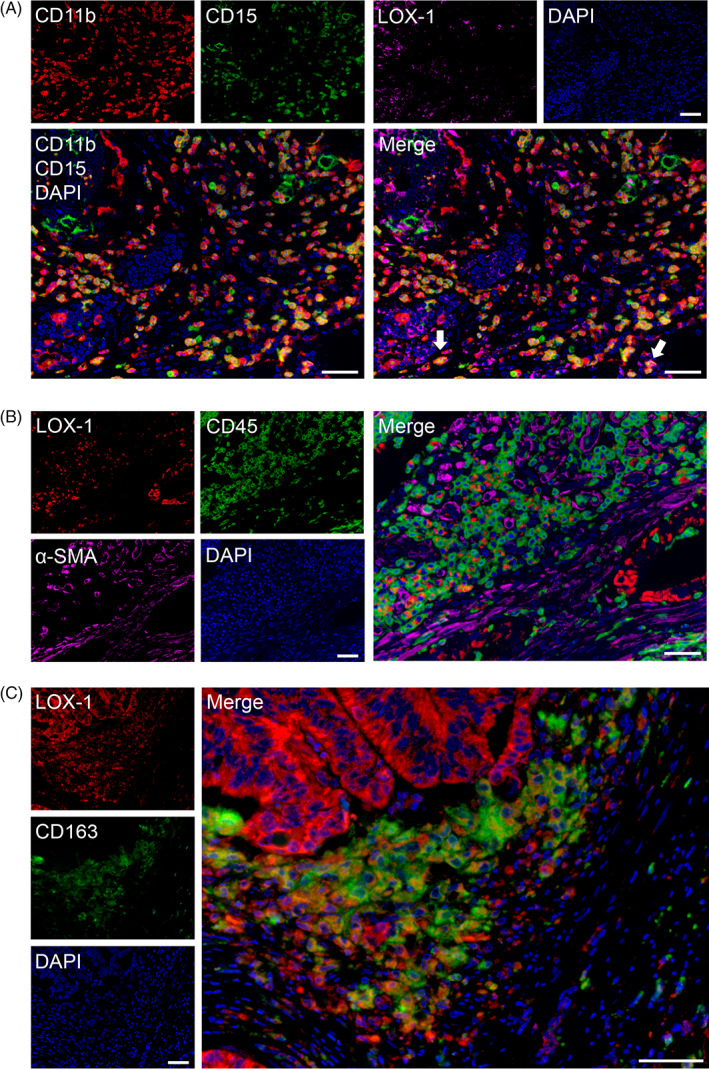
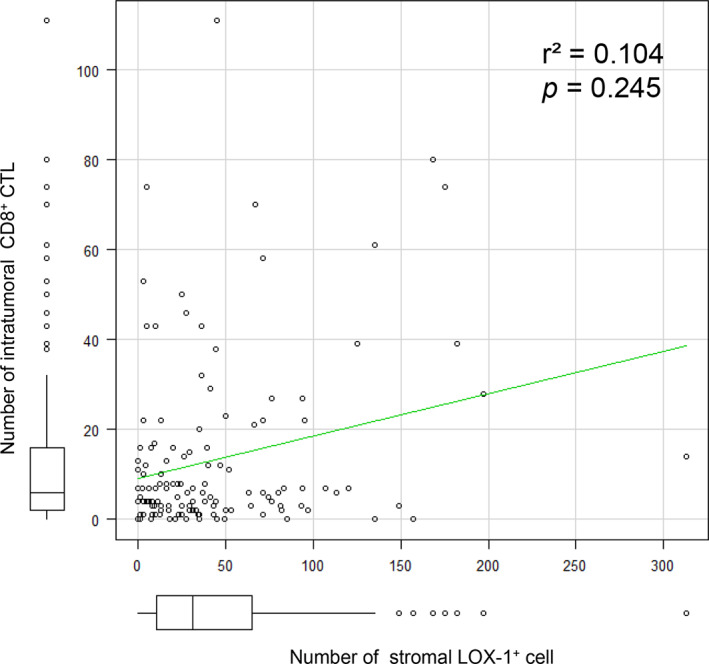
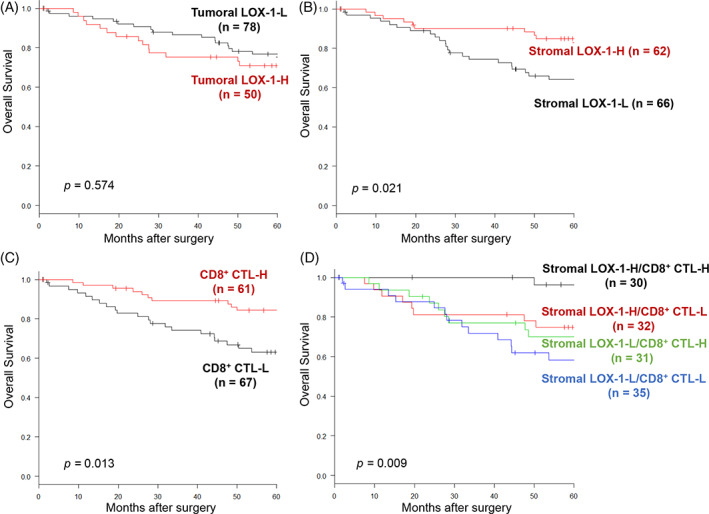
We performed immunohistochemical and genetic analyses of LOX-1, CD8, KRAS, and BRAF in 128 resected CRC specimens and determined the expression of IFN-γ and IL-10 using real-time reverse transcription-polymerase chain reaction. We analyzed the correlation between LOX-1, TME factors, gene alteration, clinicopathological factors, and disease prognosis. The co-expression pattern of LOX-1, hematopoietic markers, and a fibroblast marker was evaluated using multiplex immunofluorescence staining. Low stromal LOX-1 expression and low intratumoral CD8 cytotoxic T-lymphocyte (CTL) status correlated with poor prognosis. Moreover, stromal LOX-1-low/CD8 CTL-low status was the most important independent prognostic factor of poor overall survival. Most of the LOX-1 stromal cells were positive for CD163 , indicating they were CD163 M2 macrophages.
The MDSC marker, LOX-1, was mainly expressed by M2 macrophages in CRC tissues. LOX-1 macrophages and CD8 CTLs may serve as useful biomarkers for predicting the prognosis of CRC.
凝集素样氧化型 LDL 受体-1(LOX-1)已被鉴定为功能性髓系来源抑制细胞(MDSC)的新标志物,其在肿瘤微环境(TME)中表现出免疫抑制表型。然而,LOX-1 细胞在结直肠癌(CRC)TME 中的作用尚不清楚。
本研究旨在确定 LOX-1 在临床 CRC 标本 TME 中的表达和意义。
我们对 128 例切除的 CRC 标本进行了 LOX-1、CD8、KRAS 和 BRAF 的免疫组化和基因分析,并使用实时逆转录-聚合酶链反应测定了 IFN-γ和 IL-10 的表达。我们分析了 LOX-1、TME 因子、基因改变、临床病理因素和疾病预后之间的相关性。使用多重免疫荧光染色评估 LOX-1、造血标志物和成纤维细胞标志物的共表达模式。低基质 LOX-1 表达和低肿瘤内 CD8 细胞毒性 T 淋巴细胞(CTL)状态与预后不良相关。此外,基质 LOX-1 低/CD8 CTL 低状态是影响总生存预后的最重要独立预后因素。大多数 LOX-1 基质细胞呈 CD163 阳性,表明其为 CD163 M2 巨噬细胞。
CRC 组织中的 MDSC 标志物 LOX-1 主要由 M2 巨噬细胞表达。LOX-1 巨噬细胞和 CD8 CTL 可能成为预测 CRC 预后的有用生物标志物。