Dhillon Permesh Singh, Dineen Robert A, Morris Haley, Tanasescu Radu, Nikfekr Esmaeil, Evans Jonathan, Constantinescu Cris S, Hosseini Akram A
Division of Clinical Neuroscience, School of Medicine, University of Nottingham, Nottingham, United Kingdom.
Department of Interventional Neuroradiology, Nottingham University Hospitals NHS Trust, Nottingham, United Kingdom.
Front Neurol. 2021 Feb 19;12:640017. doi: 10.3389/fneur.2021.640017. eCollection 2021.
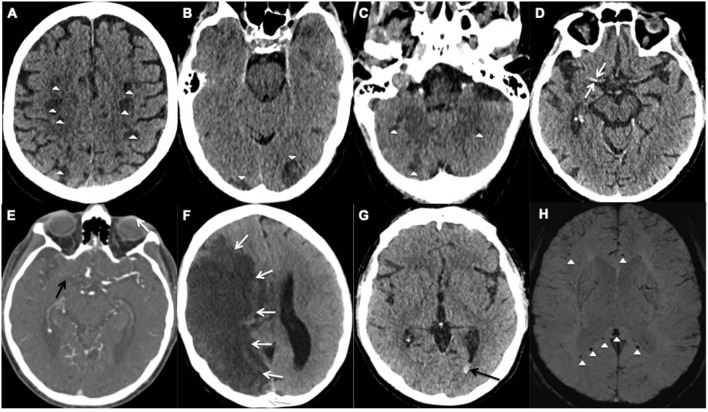
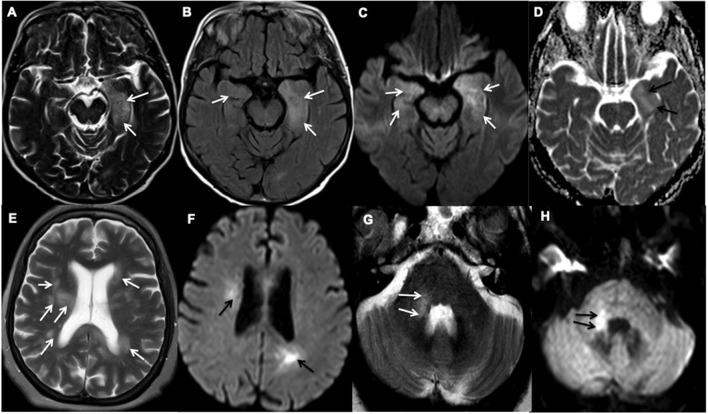
Early reports have detailed a range of neurological symptoms in patients with the SARS-CoV-2 infection. However, there is a lack of detailed description and incidence of the neurological disorders amongst hospitalized COVID-19 patients. We describe a range of neurological disorders (other than non-specific neurological symptoms), including their clinical, radiological, and laboratory findings, encountered in our cohort of COVID-19 patients admitted to a large tertiary institution. We reviewed our prospectively collated database of all adult Neurology referrals, Neurology and Stroke admissions and Neurological multi-disciplinary team meetings for all hospitalized patients with suspected or proven COVID-19 from 17 March 2020 to 31 August 2020. Twenty-nine of 1,243 COVID-19 inpatients (2.3%) presented with COVID-19-related neurological disorders. The mean age was 68.9 ± 13.5(SD) years, age range of 34-97 years, and there were 16 males. Twenty two patients had confirmed, five were probable and two had suspected COVID-19 infection according to the WHO case classification. Eight patients (27%) required critical care admission. Neurological symptoms at presentation included acute confusion and delirium, seizures, and new focal neurological deficits. Based on the pre-defined neurological phenotype, COVID-19 patients were grouped into four main categories. Sixteen patients had cerebrovascular events (13 with acute ischemic stroke and three had hemorrhagic features), seven patients were found to have inflammatory, non-inflammatory and autoimmune encephalopathy (including two with known Multiple Sclerosis), whilst disorders of movement and peripheral nervous system were diagnosed in three patients each. Although the exact prevalence and etiology remain unclear, new onset of neurological disorders, in addition to anosmia, is non-sporadic during the acute COVID-19-infection. Longitudinal follow-up of these patients is required to determine the clinical and functional outcome, treatment response and long-term effects of the SARS-CoV-2 infection.
早期报告详细描述了感染新型冠状病毒(SARS-CoV-2)患者的一系列神经系统症状。然而,对于住院的2019冠状病毒病(COVID-19)患者中神经障碍的详细描述和发病率尚缺乏相关研究。我们描述了一系列神经障碍(不包括非特异性神经症状),包括我们收治的一批入住大型三级医疗机构的COVID-19患者的临床、影像学和实验室检查结果。我们回顾了前瞻性整理的数据库,该数据库涵盖了2020年3月17日至2020年8月31日期间所有疑似或确诊COVID-19的住院患者的成人神经科转诊、神经科和卒中住院病例以及神经多学科团队会议记录。1243例COVID-19住院患者中有29例(2.3%)出现了与COVID-19相关的神经障碍。平均年龄为68.9±13.5(标准差)岁,年龄范围为34至97岁,其中男性16例。根据世界卫生组织的病例分类,22例患者确诊,5例可能感染,2例疑似感染COVID-19。8例患者(27%)需要重症监护。就诊时的神经症状包括急性意识模糊和谵妄、癫痫发作以及新出现的局灶性神经功能缺损。根据预先定义的神经表型,COVID-19患者分为四大类。16例患者发生脑血管事件(13例急性缺血性卒中,3例有出血特征),7例患者被发现患有炎症性、非炎症性和自身免疫性脑病(包括2例已知患有多发性硬化症),同时3例患者分别被诊断为运动障碍和周围神经系统疾病。尽管确切的患病率和病因仍不清楚,但除嗅觉丧失外,急性COVID-19感染期间新发神经障碍并非偶发。需要对这些患者进行纵向随访,以确定临床和功能结局、治疗反应以及SARS-CoV-2感染的长期影响。