Pathak Arsum, van Beynen Philip E, Akiwumi Fenda A, Lindeman Kenyon C
Geography, Environmental Science and Policy Program, School of Geosciences, University of South Florida, Tampa, FL, 33620, USA.
Program in Sustainability, Florida Institute of Technology, Melbourne, FL, 32901, USA.
Environ Dev. 2021 Mar;37:100556. doi: 10.1016/j.envdev.2020.100556. Epub 2020 Aug 28.
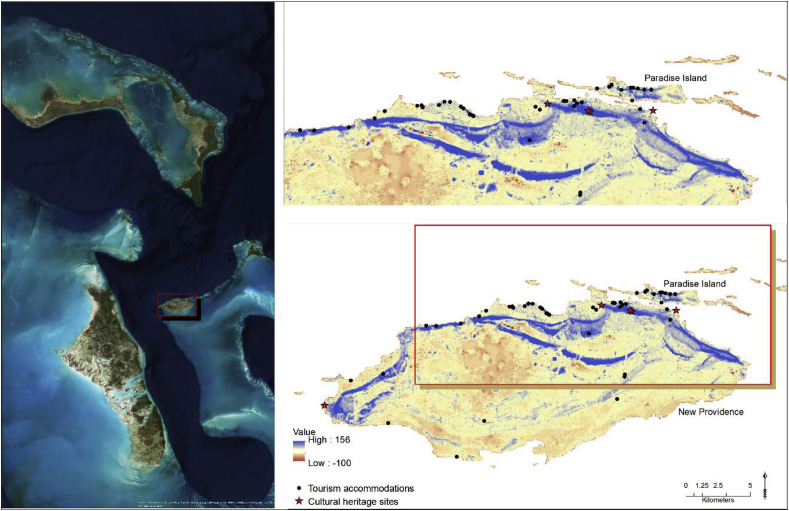
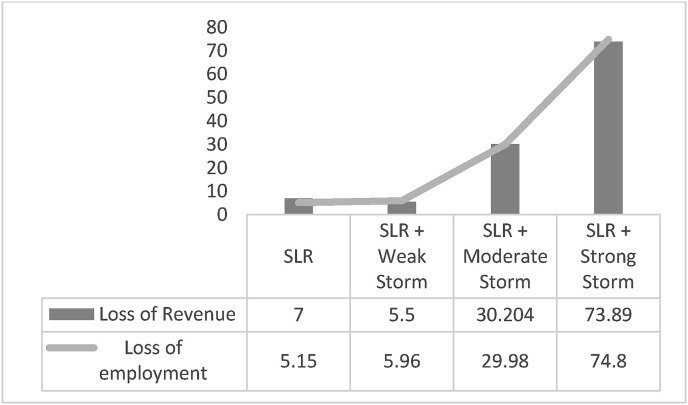
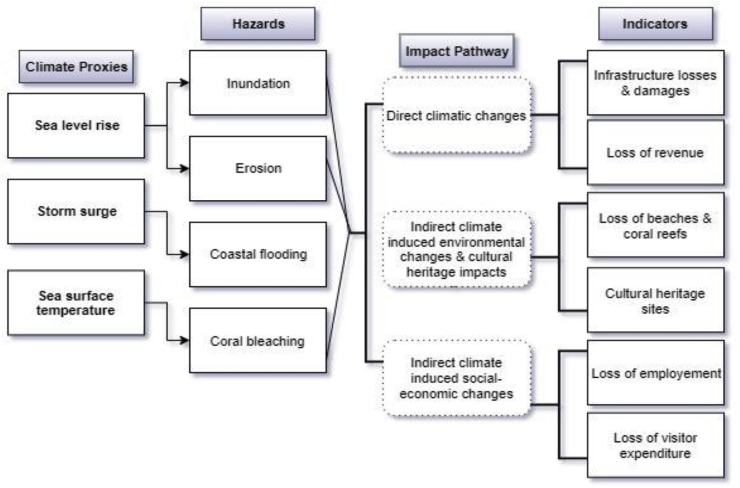
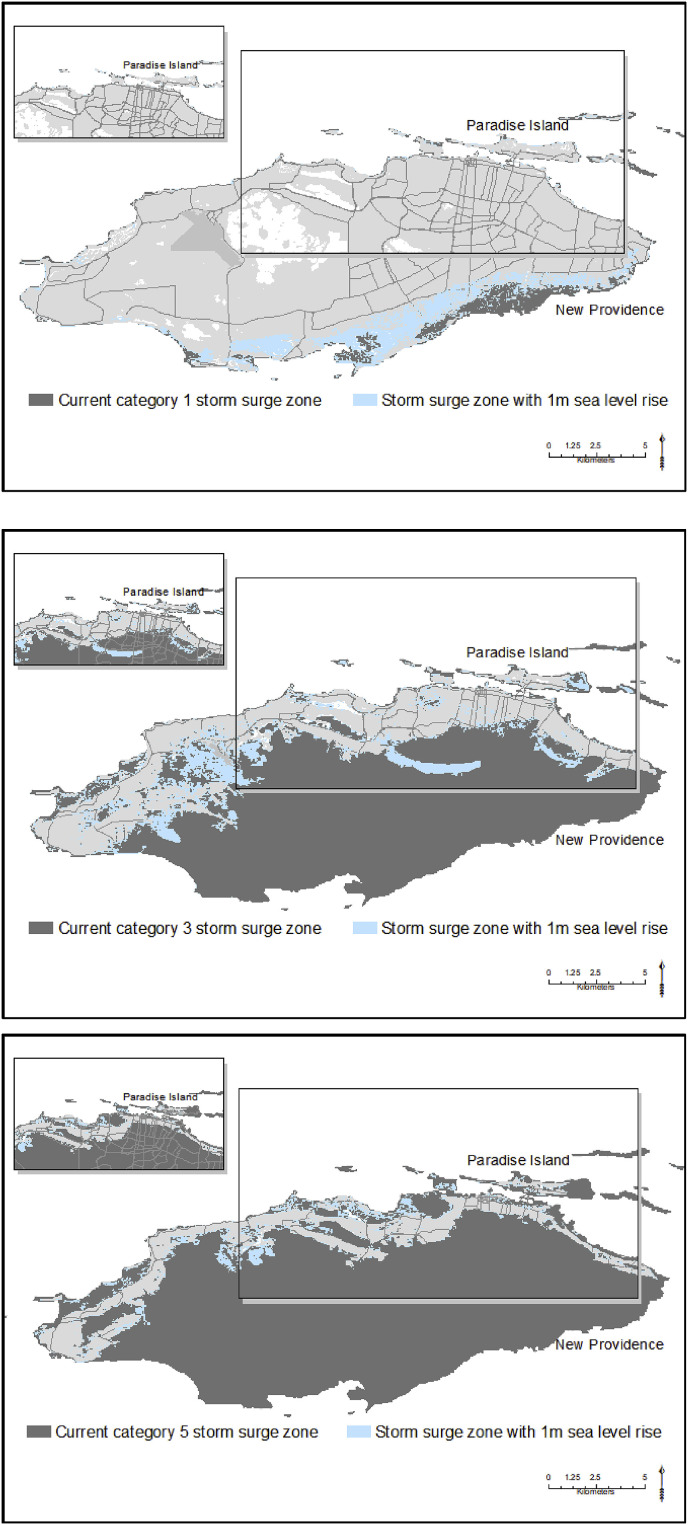
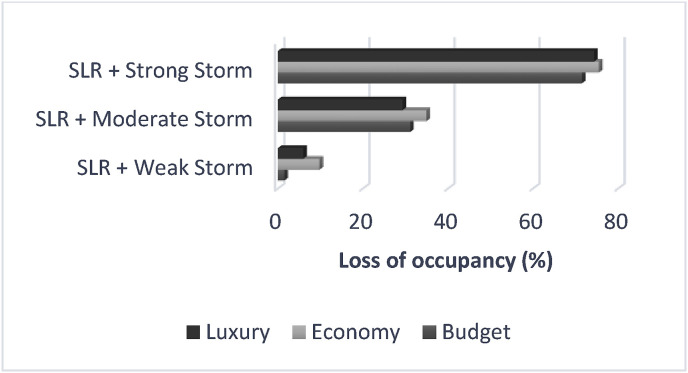
This study examines the direct and indirect impacts of climate change to the tourism sector on the islands of New Providence and adjacent Paradise Island in the Bahamas. The assessment was carried out by conducting a geospatial analysis of tourism establishments at risk using Geographic Information Systems (GIS). We combined the geospatial analysis with publicly available databases to assess the integrated climate-related impacts pertaining to a Small Island Developing State (SIDS) economy. Our study estimated that many tourism properties currently lie in a storm surge zone and the extent of properties at risk increases with a future scenario of a 1 m rise in sea level. While sea level rise (SLR) by itself only threatens a small number of properties, when combined with weak (Category 1), moderate (Category 3) and strong (Category 5) storms the resulting coastal flooding impacts 34%, 69%, and 83% of the tourism infrastructure (hotels and resorts), respectively. In addition to flooding, properties are also susceptible to coastal erosion with 28% of the total hotels and resorts on the two islands being situated within 0-50 m and 60% of the tourism infrastructure within 0-100 m of the coastline. Considering the economic importance of the sector, the potential impacts on the tourism infrastructure will cause significant losses in revenue and employment for the two islands. Furthermore, the majority of the tourism on these islands is beach-based and visitor expenditures will decline due to their vulnerability. These losses will have far-reaching social-economic consequences for the Bahamas. Our findings reveal a need for integrated coastal zone management that incorporates tourism management strategies with adaptation measures to deal with climate change.
本研究考察了气候变化对巴哈马新普罗维登斯岛及邻近的天堂岛旅游业的直接和间接影响。评估是通过使用地理信息系统(GIS)对处于风险中的旅游设施进行地理空间分析来进行的。我们将地理空间分析与公开可用的数据库相结合,以评估与小岛屿发展中国家(SIDS)经济相关的综合气候影响。我们的研究估计,目前许多旅游房产位于风暴潮区域,随着未来海平面上升1米的情景,处于风险中的房产范围会增加。虽然海平面上升本身仅威胁到少数房产,但当与弱(1级)、中(3级)和强(5级)风暴相结合时,由此产生的沿海洪水分别影响34%、69%和83%的旅游基础设施(酒店和度假村)。除了洪水,房产还易受海岸侵蚀影响,两岛上28%的酒店和度假村位于距离海岸线0 - 50米范围内;60%的旅游基础设施位于距离海岸线0 - 100米范围内。考虑到该部门的经济重要性,对旅游基础设施的潜在影响将给这两个岛屿带来重大的收入和就业损失。此外,这些岛屿上的大部分旅游业以海滩为基础,由于其易受影响性,游客支出将会下降。这些损失将给巴哈马带来深远的社会经济后果。我们的研究结果表明需要进行综合海岸带管理,将旅游管理策略与适应气候变化的措施结合起来。