State Key Laboratory of Environmental Geochemistry, Institute of Geochemistry, Chinese Academy of Sciences, Guiyang 550081, PR China.
State Key Laboratory of Environmental Geochemistry, Institute of Geochemistry, Chinese Academy of Sciences, Guiyang 550081, PR China.
J Hazard Mater. 2021 Jul 15;414:125439. doi: 10.1016/j.jhazmat.2021.125439. Epub 2021 Feb 19.
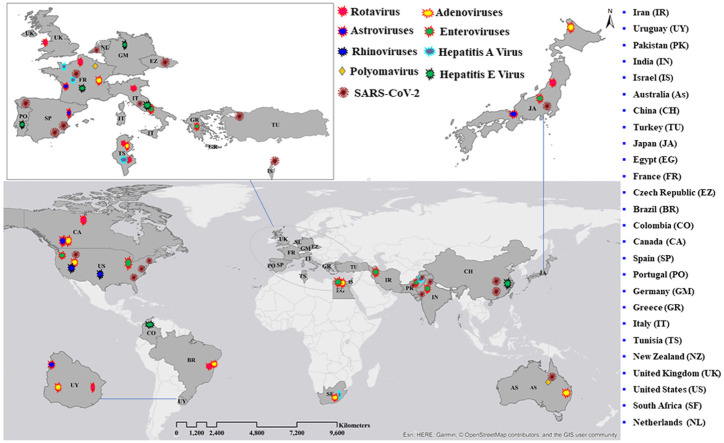
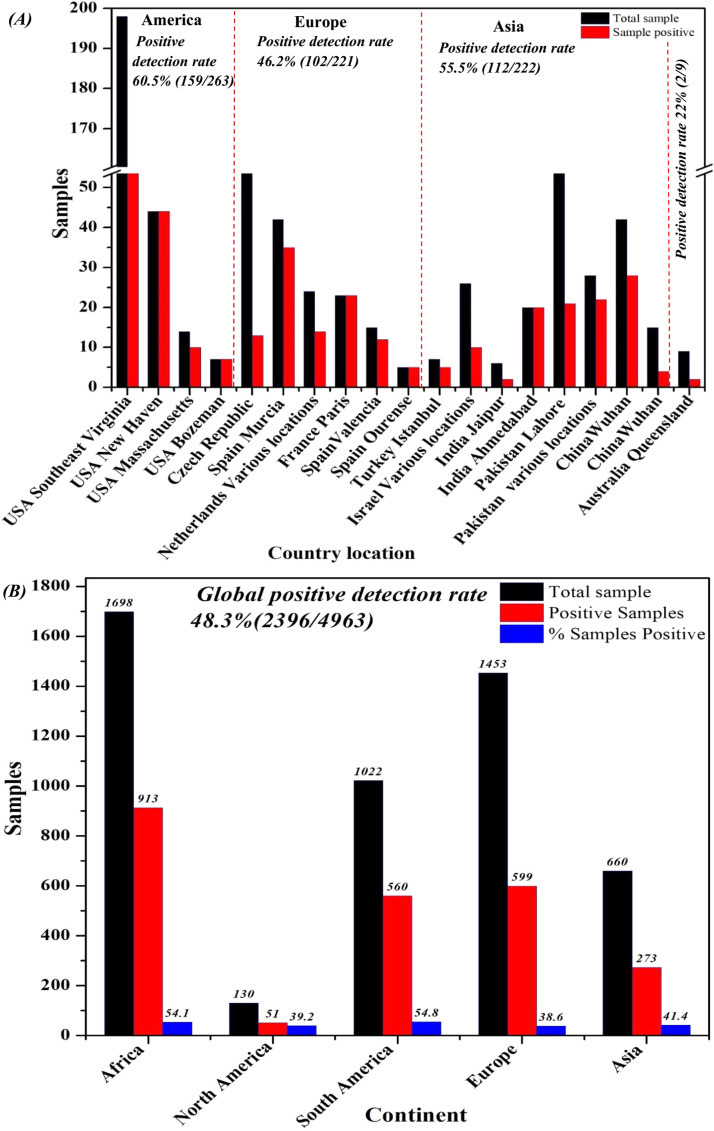
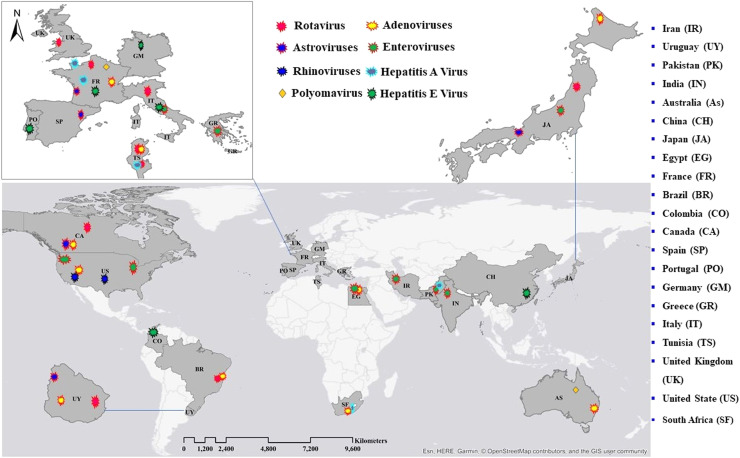
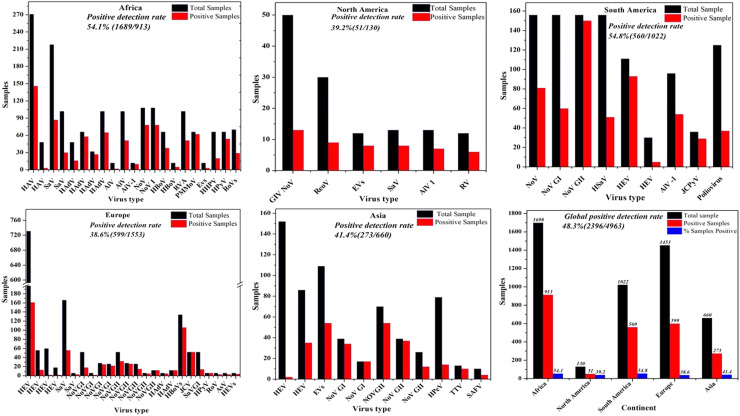
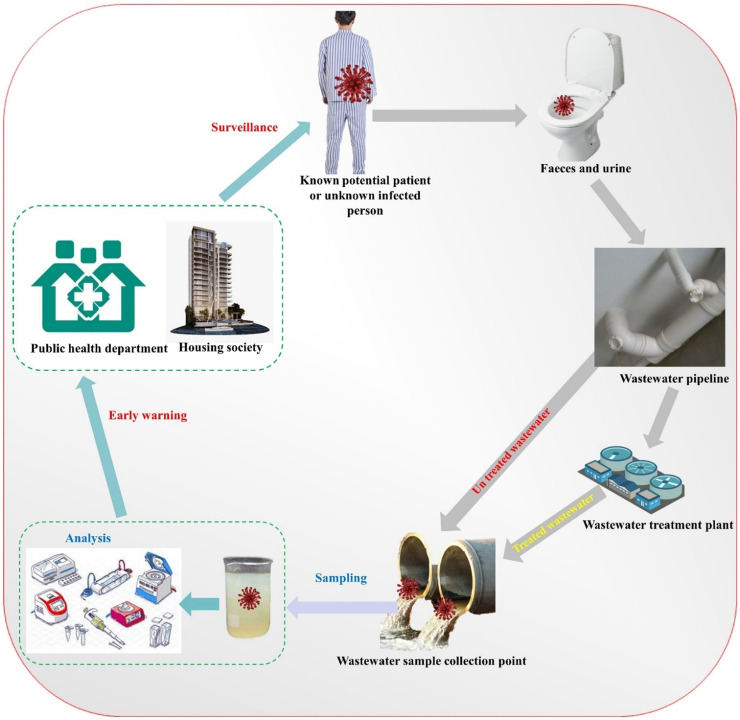
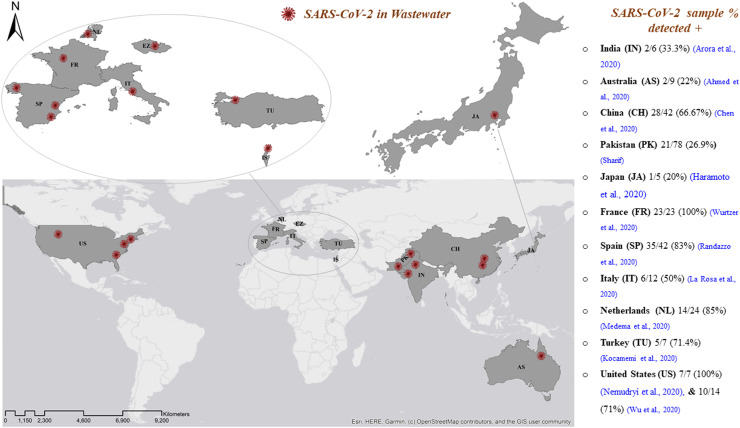
Viruses are omnipresent and persistent in wastewater, which poses a risk to human health. In this review, we summarise the different qualitative and quantitative methods for virus analysis in wastewater and systematically discuss the spatial distribution and temporal patterns of various viruses (i.e., enteric viruses, Caliciviridae (Noroviruses (NoVs)), Picornaviridae (Enteroviruses (EVs)), Hepatitis A virus (HAV)), and Adenoviridae (Adenoviruses (AdVs))) in wastewater systems. Then we critically review recent SARS-CoV-2 studies to understand the ongoing COVID-19 pandemic through wastewater surveillance. SARS-CoV-2 genetic material has been detected in wastewater from France, the Netherlands, Australia, Italy, Japan, Spain, Turkey, India, Pakistan, China, and the USA. We then discuss the utility of wastewater-based epidemiology (WBE) to estimate the occurrence, distribution, and genetic diversity of these viruses and generate human health risk assessment. Finally, we not only promote the prevention of viral infectious disease transmission through wastewater but also highlight the potential use of WBE as an early warning system for public health assessment.
病毒在废水中普遍存在且具有持久性,这对人类健康构成了威胁。在这篇综述中,我们总结了废水病毒分析的不同定性和定量方法,并系统地讨论了各种病毒(即肠道病毒、杯状病毒科(诺如病毒 (NoV))、小核糖核酸病毒科(肠道病毒 (EV))、甲型肝炎病毒 (HAV))和腺病毒科(腺病毒 (AdV)))在废水系统中的空间分布和时间模式。然后,我们批判性地回顾了最近的 SARS-CoV-2 研究,以通过废水监测了解当前的 COVID-19 大流行。法国、荷兰、澳大利亚、意大利、日本、西班牙、土耳其、印度、巴基斯坦、中国和美国的废水中都检测到了 SARS-CoV-2 的遗传物质。然后,我们讨论了基于废水的流行病学 (WBE) 在估计这些病毒的发生、分布和遗传多样性以及进行人类健康风险评估方面的效用。最后,我们不仅提倡通过废水预防病毒性传染病的传播,还强调了 WBE 作为公共卫生评估的早期预警系统的潜在用途。