Elife. 2021 Mar 9;10:e60060. doi: 10.7554/eLife.60060.
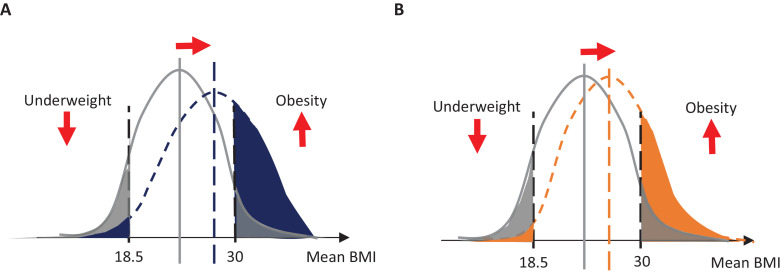
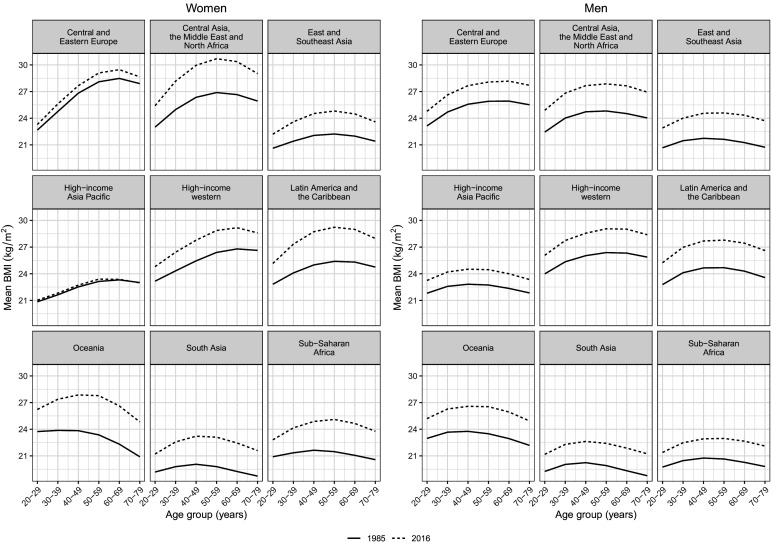
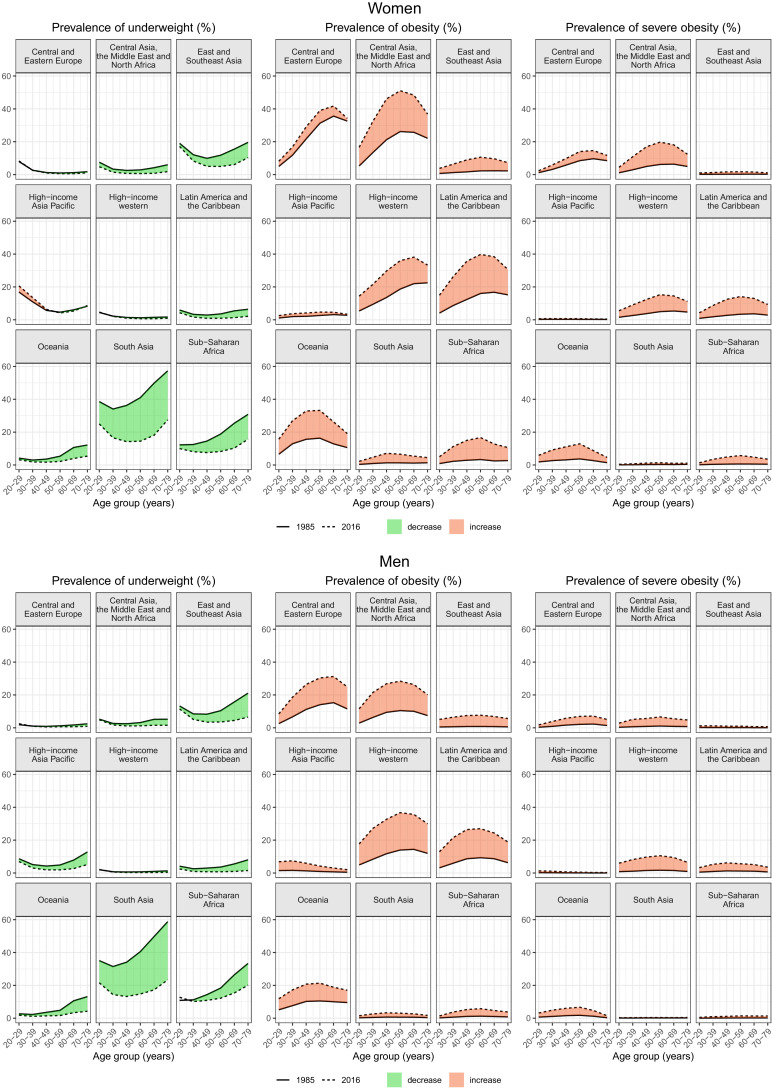
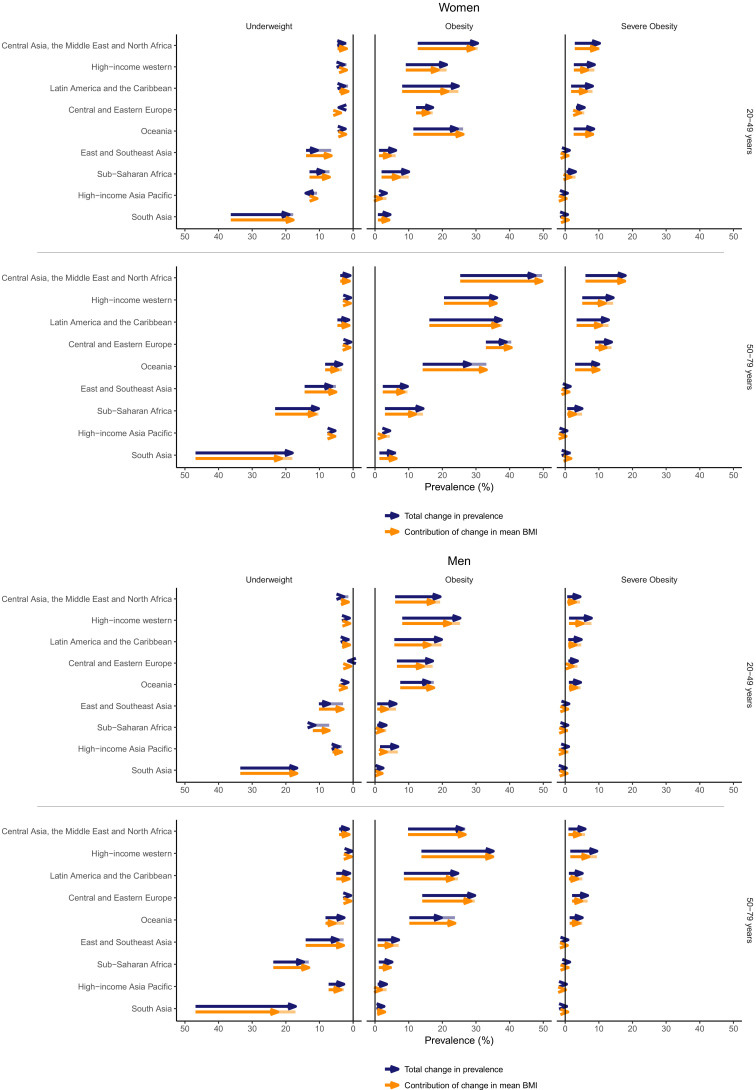
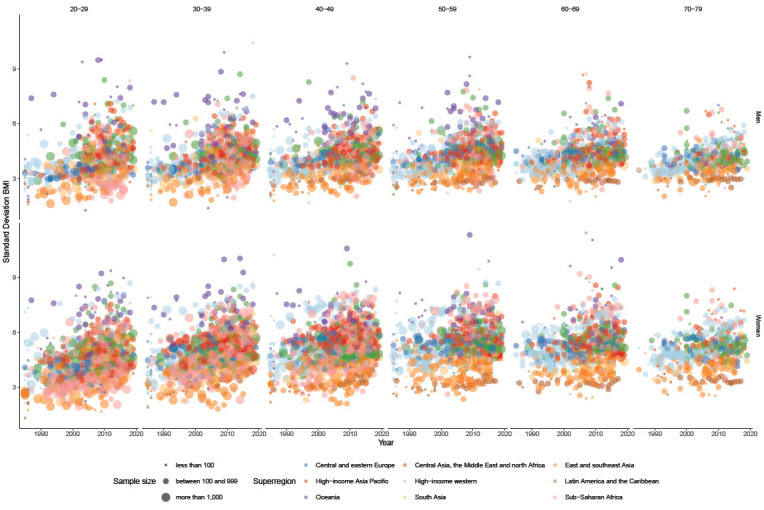
From 1985 to 2016, the prevalence of underweight decreased, and that of obesity and severe obesity increased, in most regions, with significant variation in the magnitude of these changes across regions. We investigated how much change in mean body mass index (BMI) explains changes in the prevalence of underweight, obesity, and severe obesity in different regions using data from 2896 population-based studies with 187 million participants. Changes in the prevalence of underweight and total obesity, and to a lesser extent severe obesity, are largely driven by shifts in the distribution of BMI, with smaller contributions from changes in the shape of the distribution. In East and Southeast Asia and sub-Saharan Africa, the underweight tail of the BMI distribution was left behind as the distribution shifted. There is a need for policies that address all forms of malnutrition by making healthy foods accessible and affordable, while restricting unhealthy foods through fiscal and regulatory restrictions.
从 1985 年到 2016 年,大多数地区的消瘦流行率下降,肥胖和重度肥胖流行率上升,而这些变化在不同地区的幅度存在显著差异。我们利用来自 2896 项基于人群的研究、涉及 1.87 亿参与者的数据,研究了平均体重指数(BMI)的变化对不同地区消瘦、肥胖和重度肥胖流行率变化的解释程度。消瘦和总肥胖(包括重度肥胖)的流行率变化主要归因于 BMI 分布的变化,而分布形状的变化则贡献较小。在东亚和东南亚以及撒哈拉以南非洲,BMI 分布的消瘦尾部被甩在后面,而分布发生了转移。需要采取政策,通过提供健康食品和限制不健康食品(通过财政和监管限制)来解决所有形式的营养不良问题。