Zhengzhou Fruit Research Institute, Chinese Academy of Agricultural Sciences, Zhengzhou 450009, China.
National Horticulture Germplasm Resources Center, Zhengzhou Fruit Research Institute, Chinese Academy of Agricultural Sciences, Zhengzhou 450009, China.
Genome Res. 2021 Apr;31(4):592-606. doi: 10.1101/gr.261032.120. Epub 2021 Mar 9.
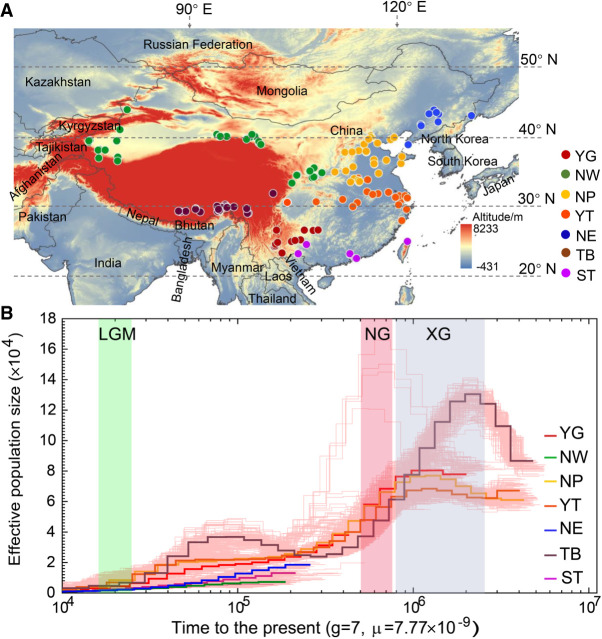
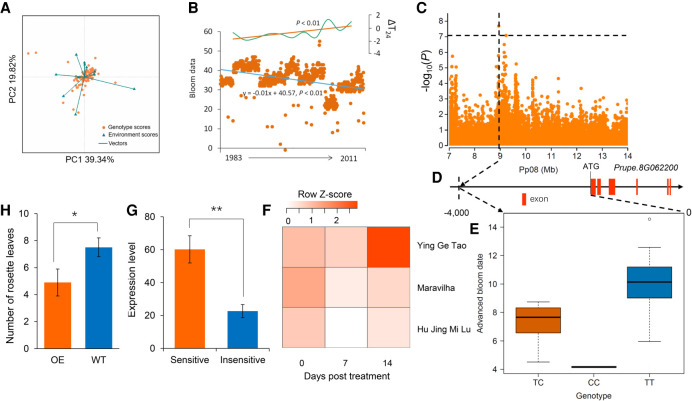
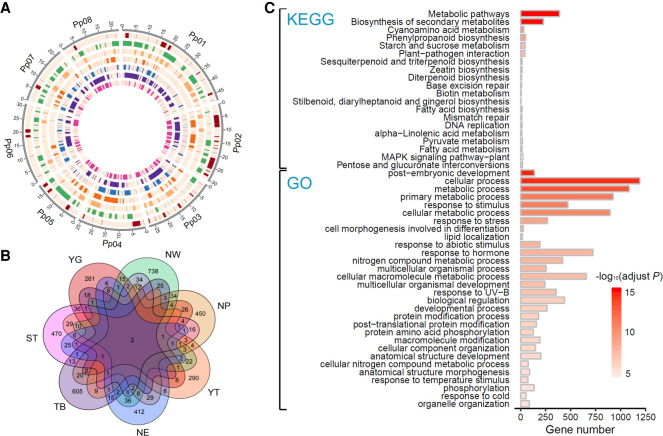
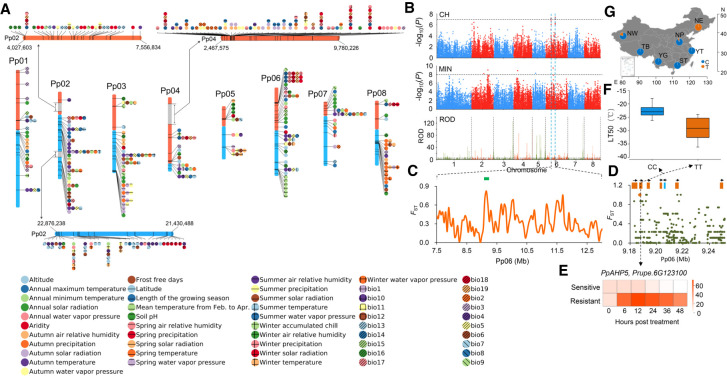
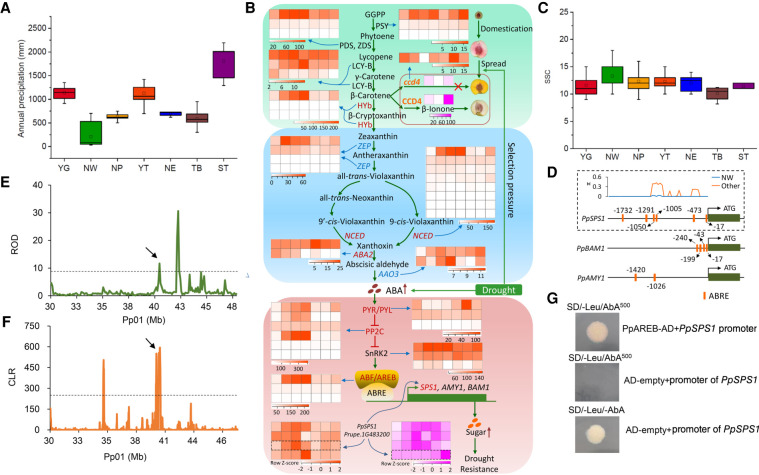
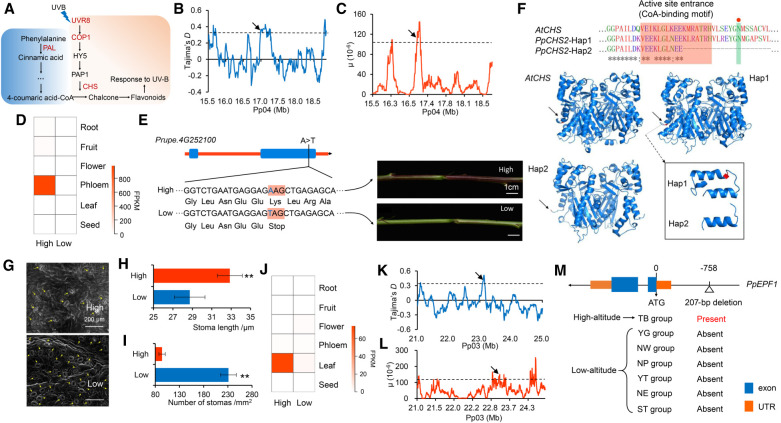
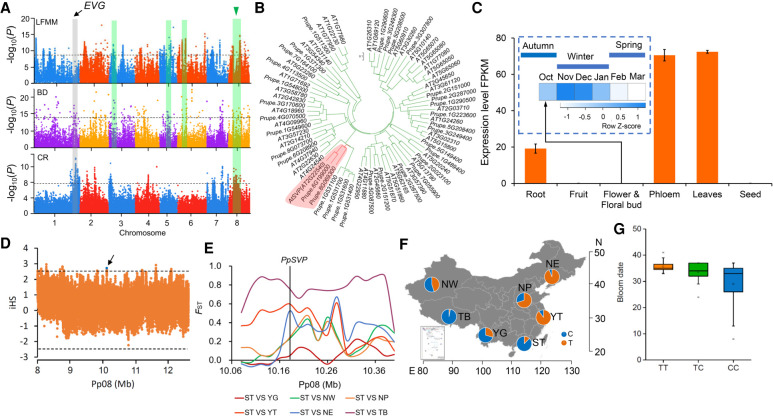
The environment has constantly shaped plant genomes, but the genetic bases underlying how plants adapt to environmental influences remain largely unknown. We constructed a high-density genomic variation map of 263 geographically representative peach landraces and wild relatives. A combination of whole-genome selection scans and genome-wide environmental association studies (GWEAS) was performed to reveal the genomic bases of peach adaptation to diverse climates. A total of 2092 selective sweeps that underlie local adaptation to both mild and extreme climates were identified, including 339 sweeps conferring genomic pattern of adaptation to high altitudes. Using genome-wide environmental association studies (GWEAS), a total of 2755 genomic loci strongly associated with 51 specific environmental variables were detected. The molecular mechanism underlying adaptive evolution of high drought, strong UVB, cold hardiness, sugar content, flesh color, and bloom date were revealed. Finally, based on 30 yr of observation, a candidate gene associated with bloom date advance, representing peach responses to global warming, was identified. Collectively, our study provides insights into molecular bases of how environments have shaped peach genomes by natural selection and adds candidate genes for future studies on evolutionary genetics, adaptation to climate changes, and breeding.
环境不断塑造植物基因组,但植物适应环境影响的遗传基础在很大程度上仍然未知。我们构建了 263 个具有地理代表性的桃地方品种和野生近缘种的高密度基因组变异图谱。通过全基因组选择扫描和全基因组环境关联研究(GWEAS)的组合,揭示了桃适应不同气候的基因组基础。共鉴定出 2092 个局部适应温和和极端气候的选择清除,包括 339 个适应高海拔的基因组适应模式的清除。通过全基因组环境关联研究(GWEAS),共检测到 2755 个与 51 个特定环境变量强烈相关的基因组位点。揭示了高干旱、强 UVB、耐寒性、含糖量、果肉颜色和开花日期的适应性进化的分子机制。最后,基于 30 年的观测,鉴定到一个与开花日期提前相关的候选基因,代表了桃对全球变暖的响应。总的来说,我们的研究深入了解了环境通过自然选择塑造桃基因组的分子基础,并为未来进化遗传学、适应气候变化和育种的研究提供了候选基因。