The Division of Science, New York University Abu Dhabi, Abu Dhabi, United Arab Emirates.
Department of Anesthesiology, The Affiliated Hospital of Xuzhou Medical University, Xuzhou, China.
PLoS Biol. 2021 Mar 10;19(3):e3000709. doi: 10.1371/journal.pbio.3000709. eCollection 2021 Mar.
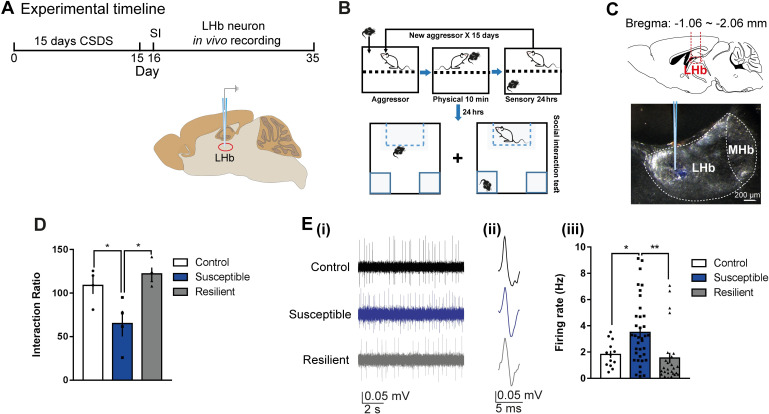
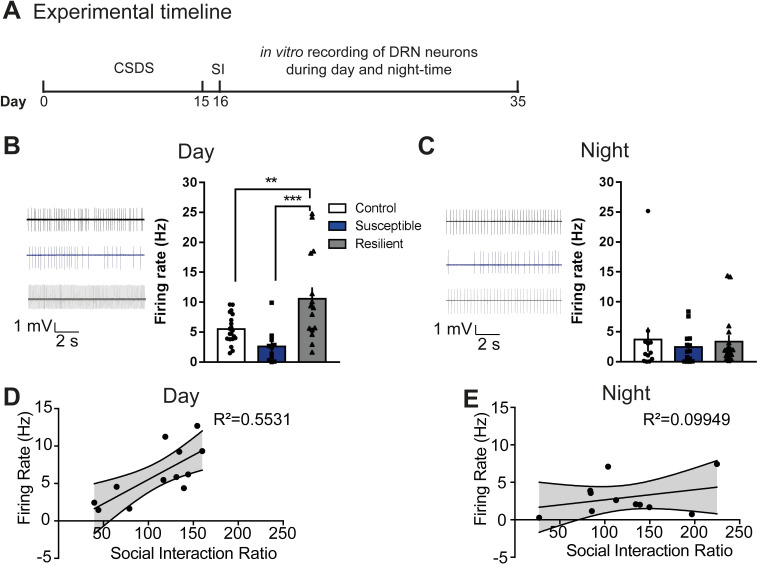
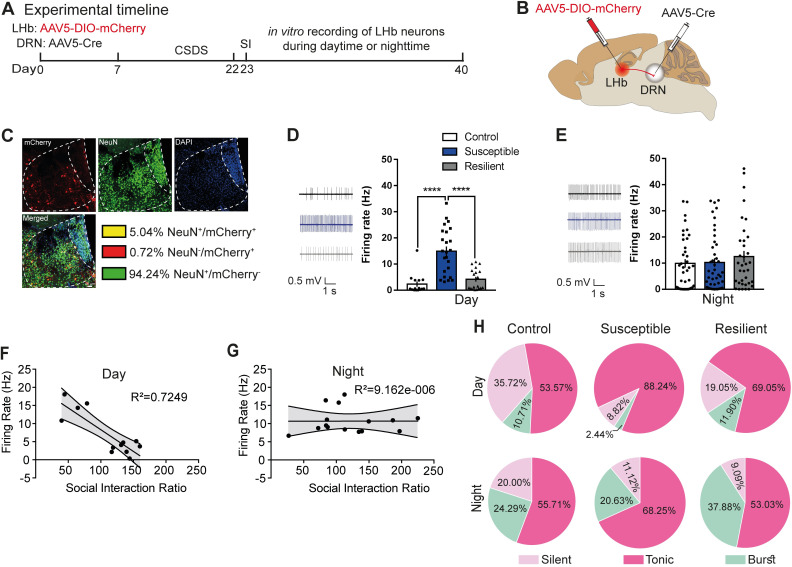
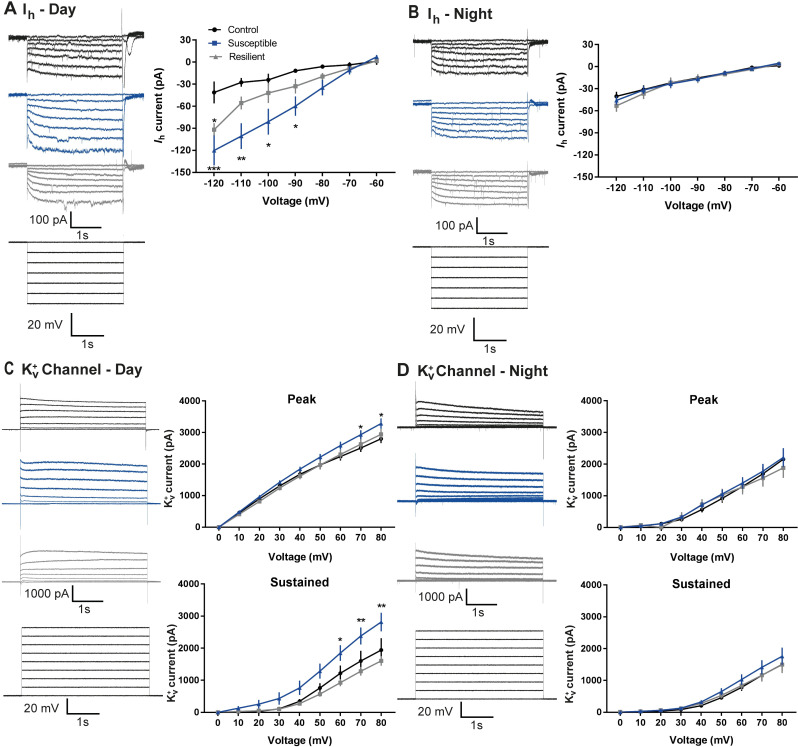
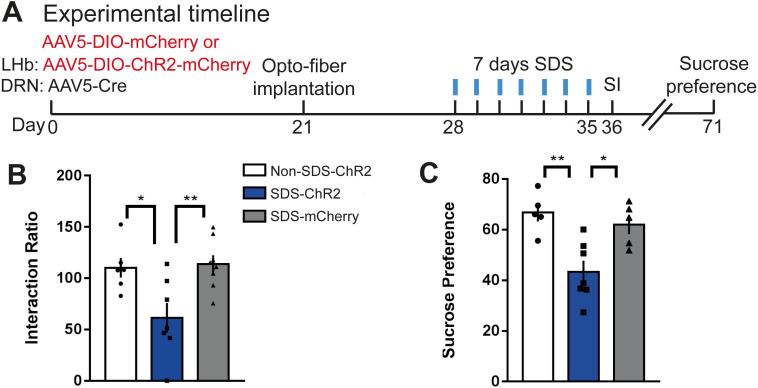
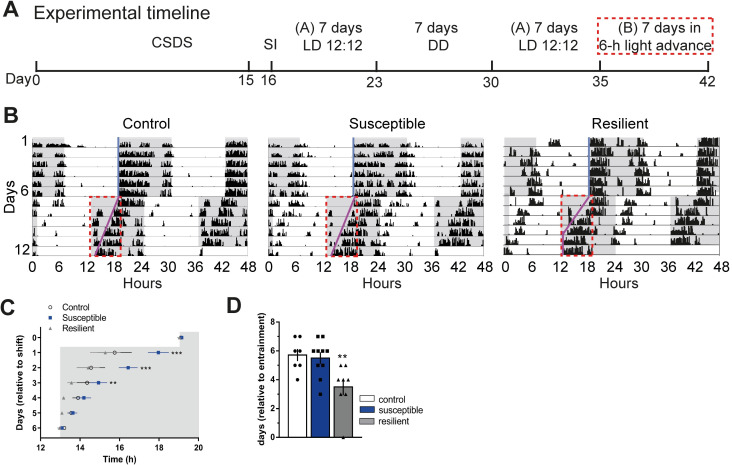
Daily rhythms are disrupted in patients with mood disorders. The lateral habenula (LHb) and dorsal raphe nucleus (DRN) contribute to circadian timekeeping and regulate mood. Thus, pathophysiology in these nuclei may be responsible for aberrations in daily rhythms during mood disorders. Using the 15-day chronic social defeat stress (CSDS) paradigm and in vitro slice electrophysiology, we measured the effects of stress on diurnal rhythms in firing of LHb cells projecting to the DRN (cellsLHb→DRN) and unlabeled DRN cells. We also performed optogenetic experiments to investigate if increased firing in cellsLHb→DRN during exposure to a weak 7-day social defeat stress (SDS) paradigm induces stress-susceptibility. Last, we investigated whether exposure to CSDS affected the ability of mice to photoentrain to a new light-dark (LD) cycle. The cellsLHb→DRN and unlabeled DRN cells of stress-susceptible mice express greater blunted diurnal firing compared to stress-näive (control) and stress-resilient mice. Daytime optogenetic activation of cellsLHb→DRN during SDS induces stress-susceptibility which shows the direct correlation between increased activity in this circuit and putative mood disorders. Finally, we found that stress-susceptible mice are slower, while stress-resilient mice are faster, at photoentraining to a new LD cycle. Our findings suggest that exposure to strong stressors induces blunted daily rhythms in firing in cellsLHb→DRN, DRN cells and decreases the initial rate of photoentrainment in susceptible-mice. In contrast, resilient-mice may undergo homeostatic adaptations that maintain daily rhythms in firing in cellsLHb→DRN and also show rapid photoentrainment to a new LD cycle.
昼夜节律在情绪障碍患者中被打乱。外侧缰核 (LHb) 和中缝背核 (DRN) 有助于昼夜计时并调节情绪。因此,这些核团中的病理生理学可能是情绪障碍期间昼夜节律异常的原因。我们使用 15 天慢性社会挫败应激 (CSDS) 范式和体外切片电生理学,测量应激对投射到 DRN 的 LHb 细胞 (细胞 LHb→DRN) 和未标记的 DRN 细胞昼夜节律放电的影响。我们还进行了光遗传学实验,以研究在暴露于弱 7 天社会挫败应激 (SDS) 范式期间,细胞 LHb→DRN 中放电增加是否会导致应激易感性。最后,我们研究了 CSDS 是否会影响小鼠适应新的明暗 (LD) 周期的能力。应激易感性小鼠的细胞 LHb→DRN 和未标记的 DRN 细胞的昼夜节律放电较应激-naive (对照) 和应激抗性小鼠更为迟钝。SDS 期间白天光遗传学激活细胞 LHb→DRN 会诱导应激易感性,这表明该回路中活性的增加与潜在的情绪障碍直接相关。最后,我们发现应激易感性小鼠在适应新 LD 周期时较慢,而应激抗性小鼠较快。我们的研究结果表明,暴露于强应激源会导致细胞 LHb→DRN、DRN 细胞的昼夜节律放电迟钝,并降低易感小鼠的光适应初始速度。相比之下,抗性小鼠可能经历了维持细胞 LHb→DRN 昼夜节律放电的同型适应,并且也显示出对新 LD 周期的快速光适应。