Laboratory of Behavioral Neurobiology, Faculty of Human Sciences, University of Tsukuba, Tsukuba, Ibaraki, 305-8577, Japan.
Laboratory of Behavioral Neuroendocrinology, Faculty of Human Sciences, University of Tsukuba, Tsukuba, Ibaraki, 305-8577, Japan.
Nat Commun. 2022 Jul 21;13(1):4039. doi: 10.1038/s41467-022-31728-z.
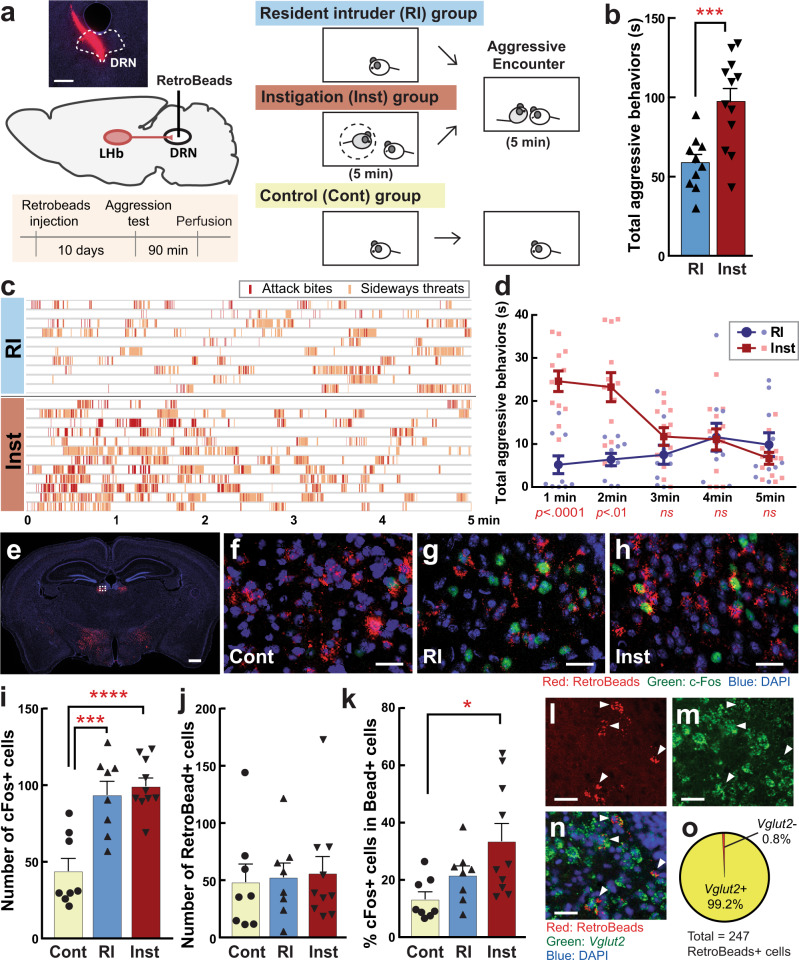
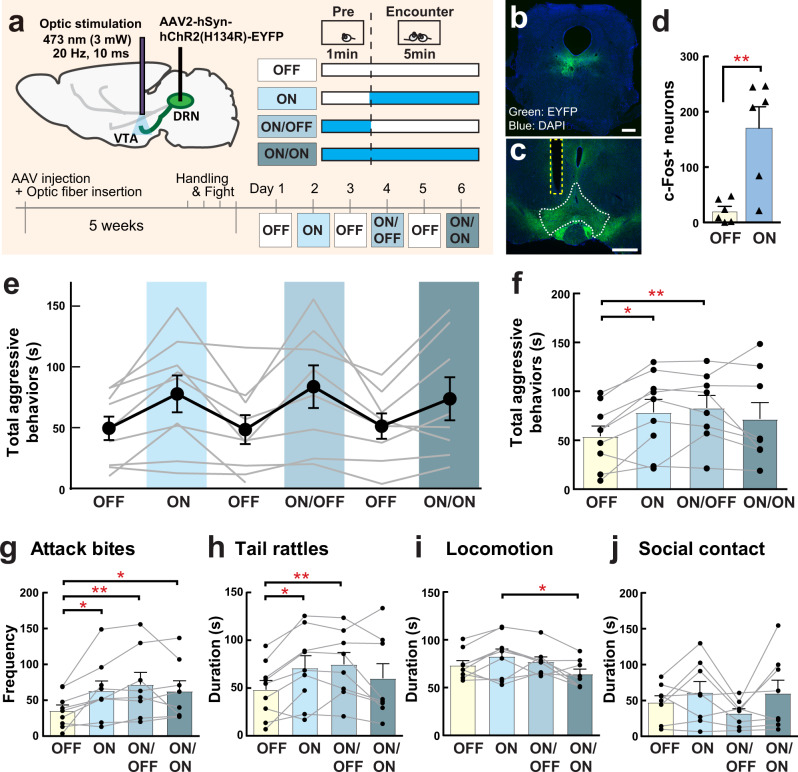
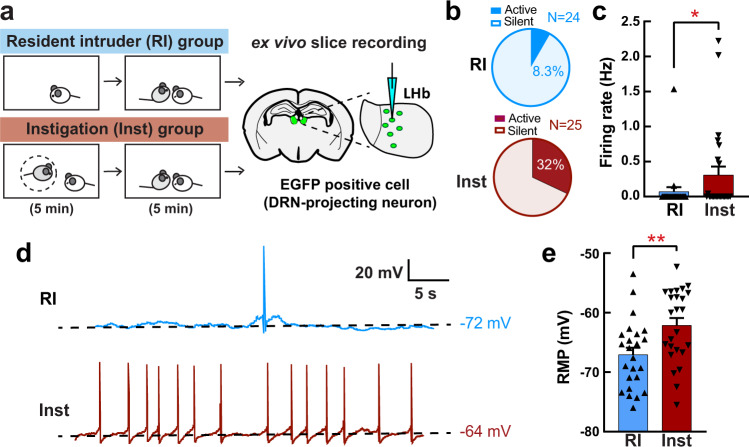
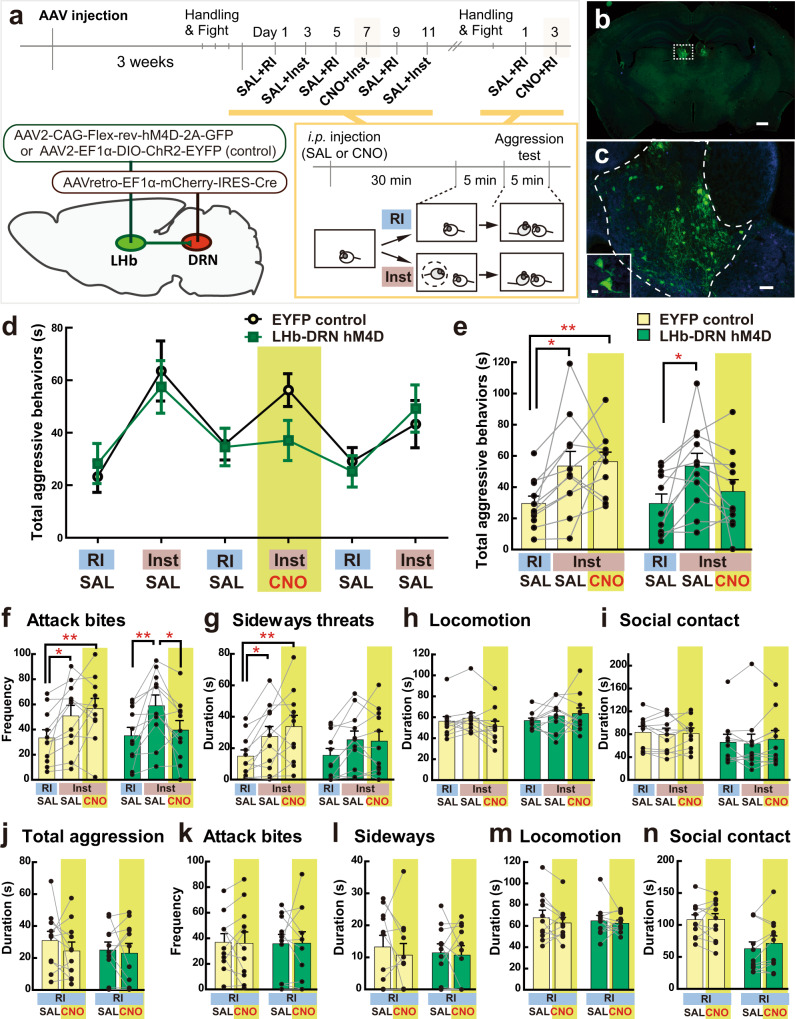
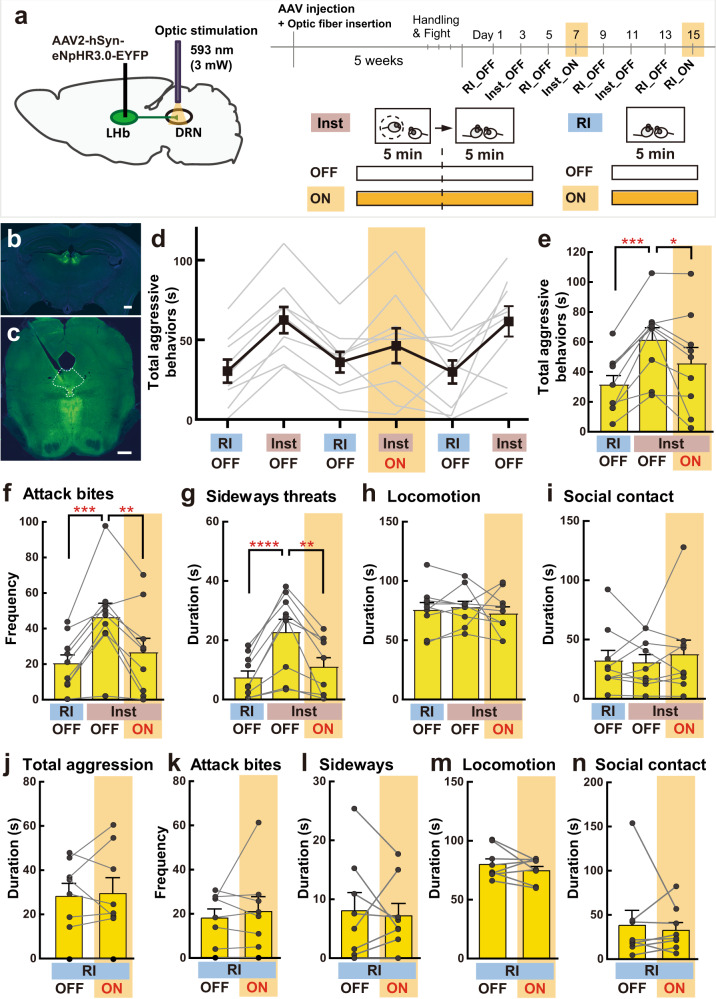
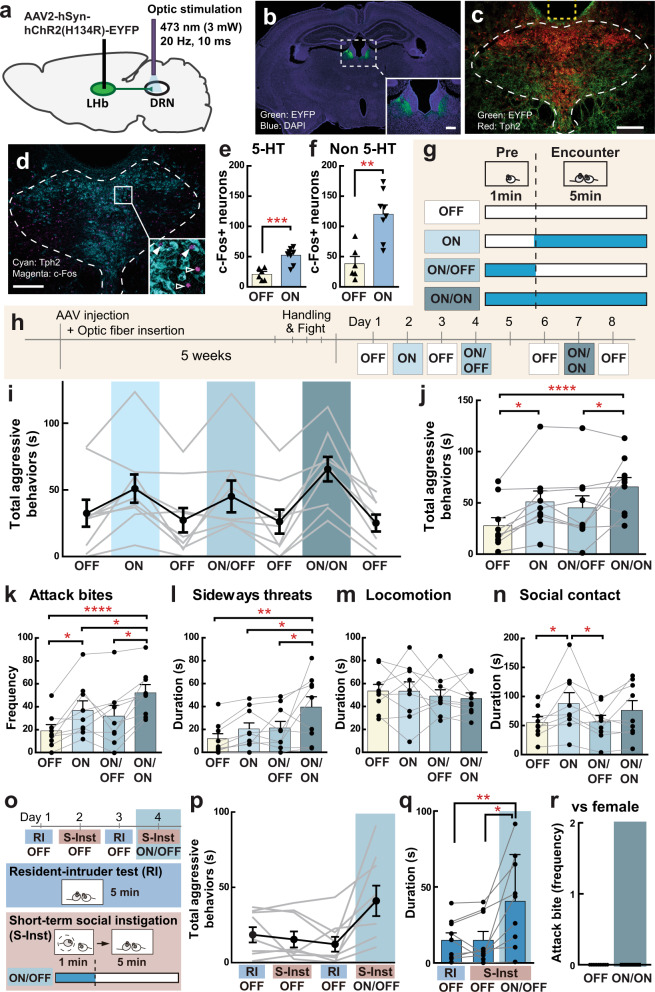
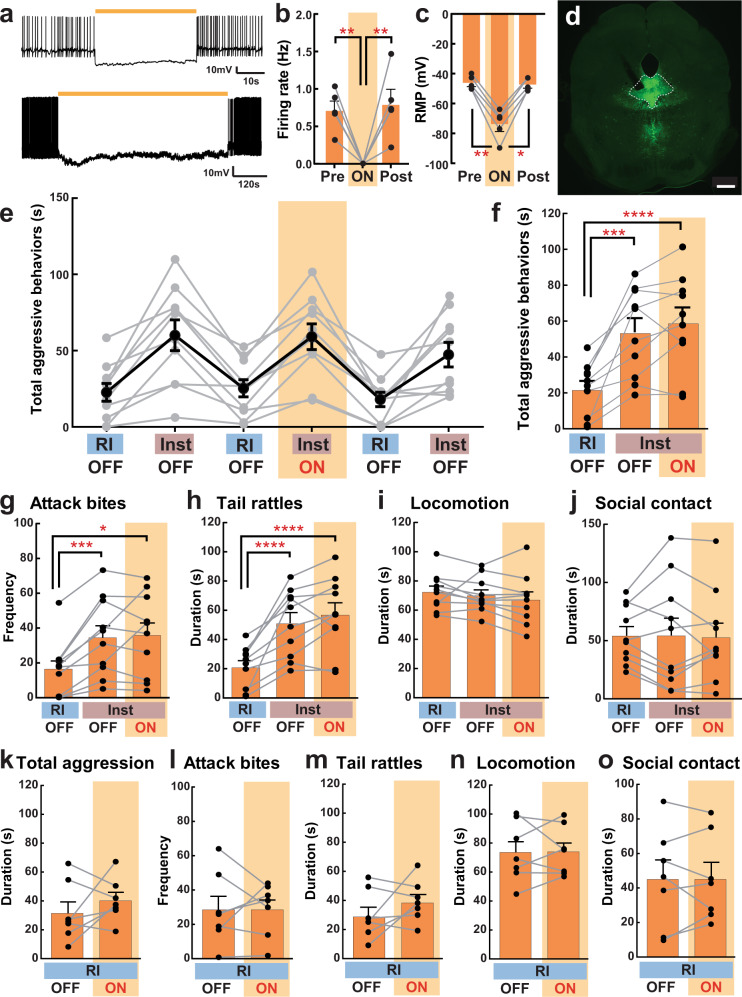
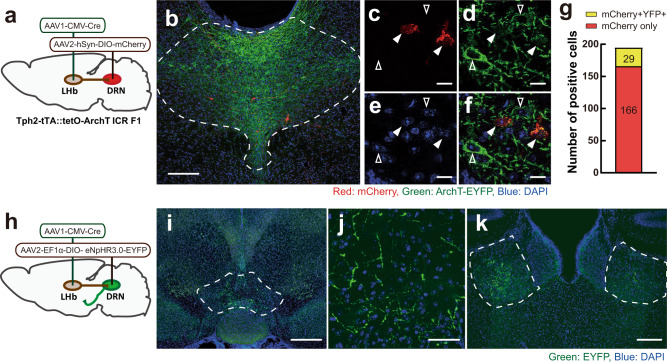
The dorsal raphe nucleus (DRN) is known to control aggressive behavior in mice. Here, we found that glutamatergic projections from the lateral habenula (LHb) to the DRN were activated in male mice that experienced pre-exposure to a rival male mouse ("social instigation") resulting in heightened intermale aggression. Both chemogenetic and optogenetic suppression of the LHb-DRN projection blocked heightened aggression after social instigation in male mice. In contrast, inhibition of this pathway did not affect basal levels of aggressive behavior, suggesting that the activity of the LHb-DRN projection is not necessary for the expression of species-typical aggressive behavior, but required for the increase of aggressive behavior resulting from social instigation. Anatomical analysis showed that LHb neurons synapse on non-serotonergic DRN neurons that project to the ventral tegmental area (VTA), and optogenetic activation of the DRN-VTA projection increased aggressive behaviors. Our results demonstrate that the LHb glutamatergic inputs to the DRN promote aggressive arousal induced by social instigation, which contributes to aggressive behavior by activating VTA-projecting non-serotonergic DRN neurons as one of its potential targets.
中缝背核(DRN)被认为可以控制小鼠的攻击行为。在这里,我们发现,经历过雄性竞争鼠预暴露(“社会挑衅”)的雄性小鼠中,外侧缰核(LHb)到 DRN 的谷氨酸能投射被激活,导致雄性间攻击行为加剧。化学遗传和光遗传抑制 LHb-DRN 投射均可阻断雄性小鼠在社会挑衅后的攻击行为加剧。相比之下,抑制该通路并不影响基础攻击行为水平,这表明 LHb-DRN 投射的活性对于表达物种典型的攻击行为不是必需的,但对于因社会挑衅而导致的攻击行为的增加是必需的。解剖分析表明,LHb 神经元与投射到腹侧被盖区(VTA)的非血清素能 DRN 神经元形成突触,并且 DRN-VTA 投射的光遗传学激活增加了攻击行为。我们的研究结果表明,LHb 谷氨酸能输入到 DRN 促进了由社会挑衅引起的攻击觉醒,通过激活 VTA 投射的非血清素能 DRN 神经元作为其潜在靶点之一,从而促进攻击行为。