Environmental Toxicology Graduate Program, University of California Riverside, Riverside, CA, United States of America.
Department of Molecular, Cell and Systems Biology, University of California Riverside, Riverside, CA, United States of America.
PLoS One. 2021 Mar 9;16(3):e0248127. doi: 10.1371/journal.pone.0248127. eCollection 2021.
The atomizers of electronic cigarettes (ECs) contain metals that transfer to the aerosol upon heating and may present health hazards. This study analyzed 4th-generation EC pod atomizer design features and characterized their elemental/metal composition.
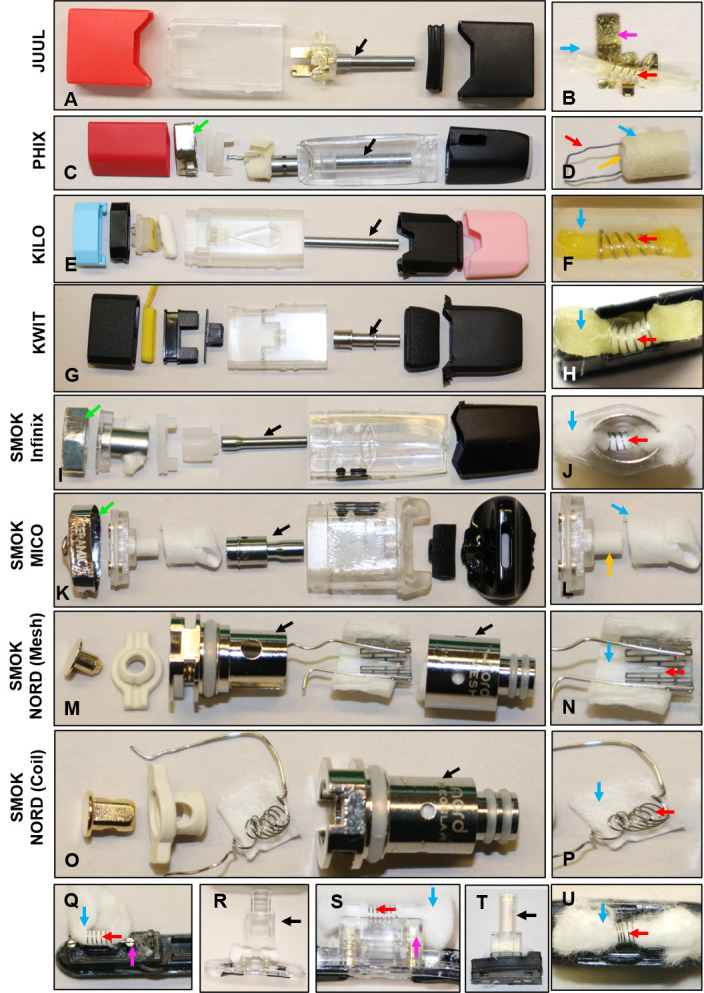
Eleven EC pods from six brands/manufacturers were purchased at local shops and online. Pods were dissected and imaged using a Canon EOS Rebel SL2 camera. Elemental analysis and mapping of atomizer components was done using a scanning electron microscope coupled with an energy dispersive x-ray spectrometer.
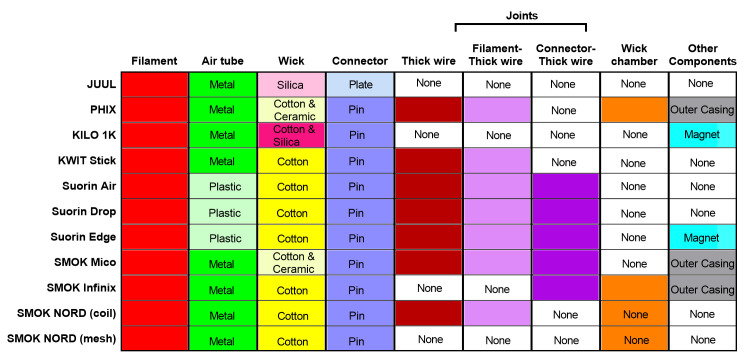
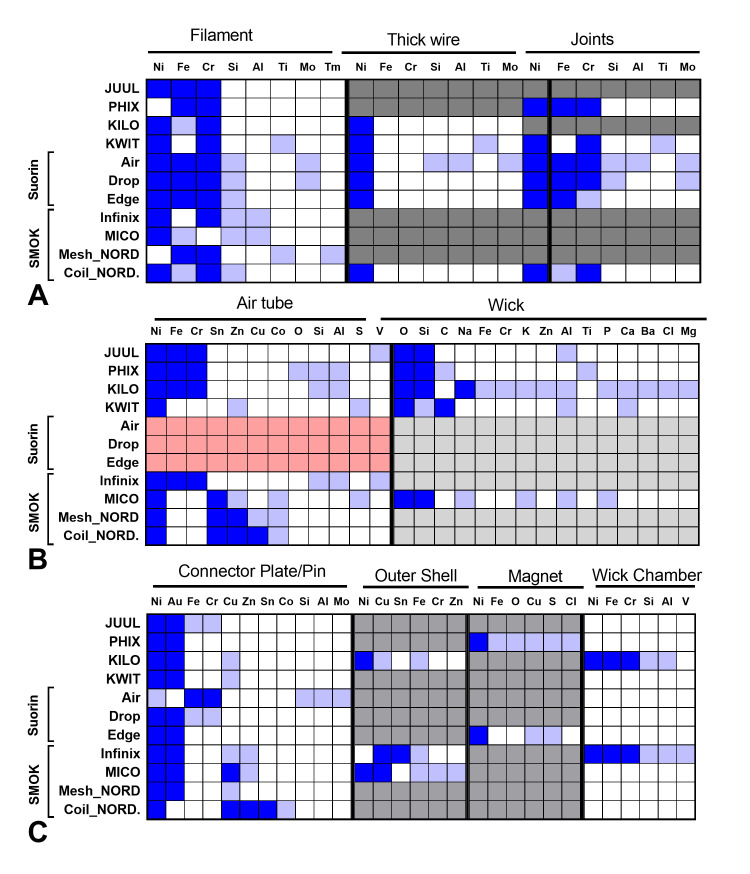
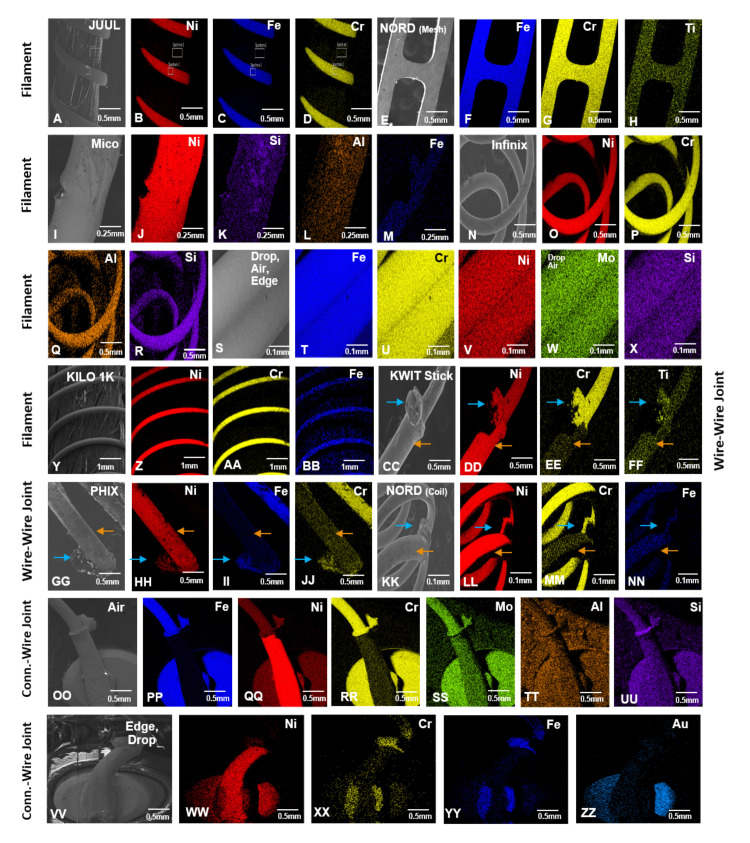
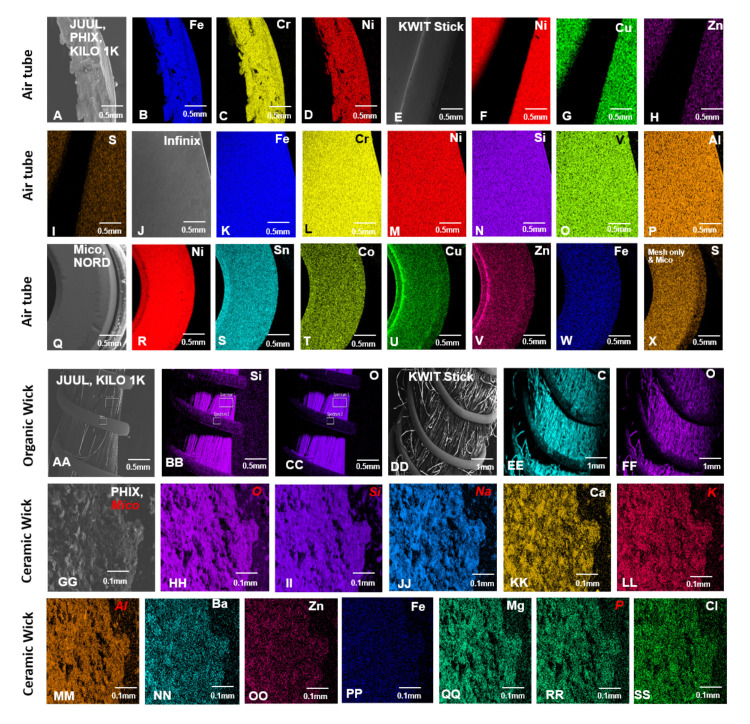
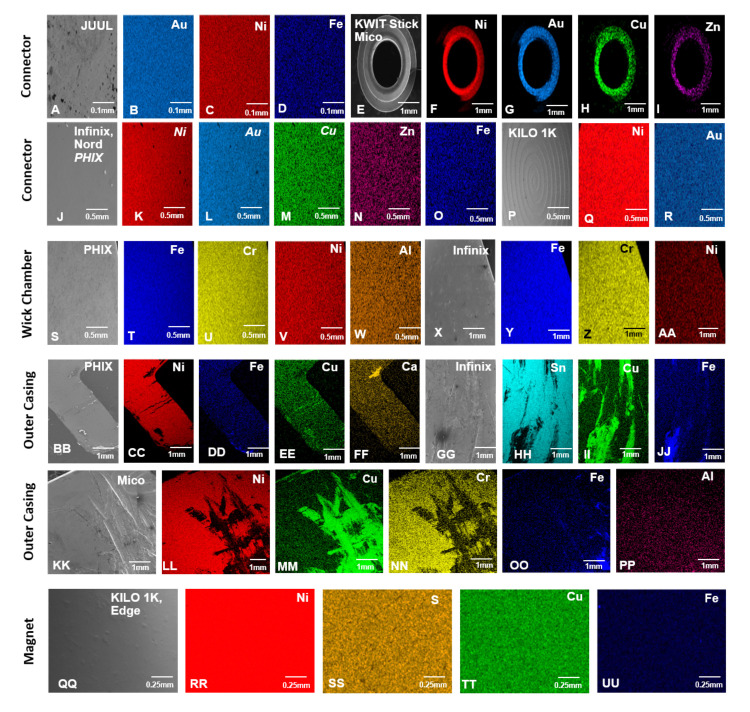
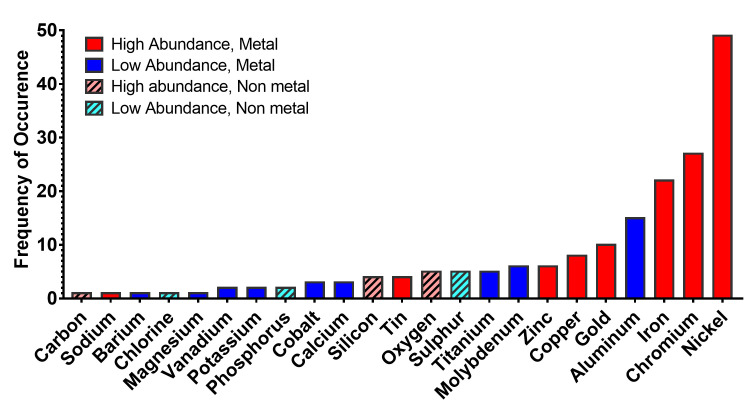
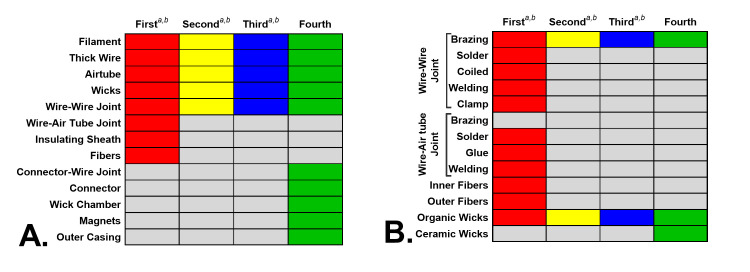
EC pods varied in size and design. The internal atomizer components were similar across brands except for variations occurring mainly in the wicks and filaments of some products. The filaments were either Elinvar (nickel, iron, and chromium) (36.4%), nichrome (36.4%), iron-chromium (18.2%), or nickel (9%). Thick wires present in 55% of the atomizers were mainly nickel and were joined to filaments by brazing. Wire-connector joints were Elinvar. Metal air tubes were made of Elinvar (50%), nickel, zinc, copper, and tin (37.5%), and nickel and copper (12.5%). Most of the wick components were silica, except for two pods (PHIX and Mico), which were mainly ceramic. Connectors contained gold-plated nickel, iron-chromium multiple alloys of nickel, zinc, gold, iron, and copper. Wick chambers were made of Elinvar. Outer casings were either nickel, copper-tin, or nickel-copper alloys. Magnets were nickel with minor iron, copper, and sulfur. Some frequently occurring elements were high in relative abundance in atomizer components.
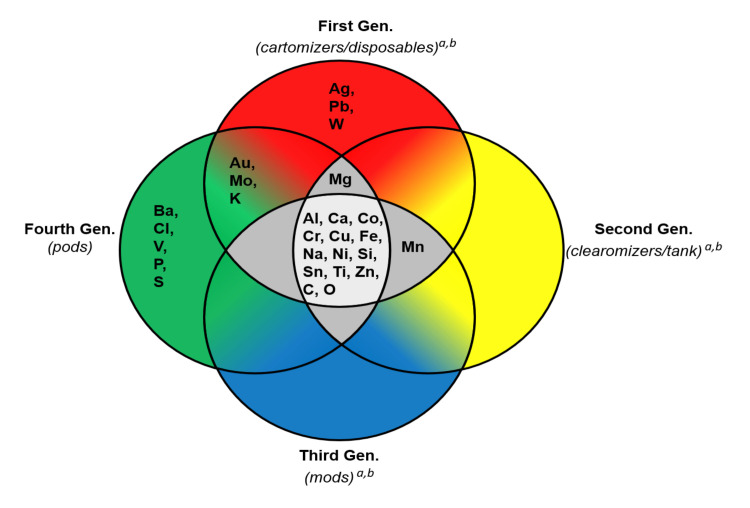
The atomizers of pods are similar to previous generations, with the introduction of ceramic wicks and magnets in the newer generations. The elements in EC atomizers may transfer into aerosols and adversely affect health and accumulate in the environment.
电子烟的雾化器含有金属,这些金属在加热时会转移到气溶胶中,可能会带来健康风险。本研究分析了第四代 EC 烟弹雾化器的设计特点,并对其元素/金属成分进行了表征。
从当地商店和网上购买了六个品牌/制造商的 11 个 EC 烟弹。使用佳能 EOS Rebel SL2 相机对烟弹进行解剖和成像。使用扫描电子显微镜结合能量色散 X 射线光谱仪对雾化器组件进行元素分析和映射。
EC 烟弹的大小和设计各不相同。除了一些产品的棉芯和导丝存在差异外,不同品牌的内部雾化器组件基本相似。导丝由埃林瓦(镍、铁和铬)(36.4%)、镍铬合金(36.4%)、铁铬(18.2%)或镍(9%)制成。55%的雾化器中存在的粗丝主要是镍,通过钎焊与导丝连接。线-连接器接头由埃林瓦制成。金属空气管由埃林瓦(50%)、镍、锌、铜和锡(37.5%)和镍和铜(12.5%)制成。除了两个烟弹(PHIX 和 Mico)主要由陶瓷制成外,大多数棉芯组件都是二氧化硅。连接器包含镀金镍、铁铬多合金镍、锌、金、铁和铜。棉芯室由埃林瓦制成。外壳要么是镍,要么是铜锡,要么是镍铜合金。磁铁是含少量铁、铜和硫的镍。一些经常出现的元素在雾化器组件中相对丰富。
与前几代产品相比,新几代产品引入了陶瓷棉芯和磁铁。EC 雾化器中的元素可能会转移到气溶胶中,对健康造成不利影响,并在环境中积累。