Ipsos Healthcare, London, United Kingdom.
Population Services International, Johannesburg, South Africa.
PLoS One. 2021 Mar 10;16(3):e0247483. doi: 10.1371/journal.pone.0247483. eCollection 2021.
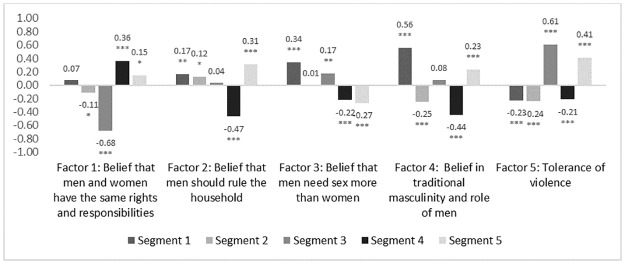
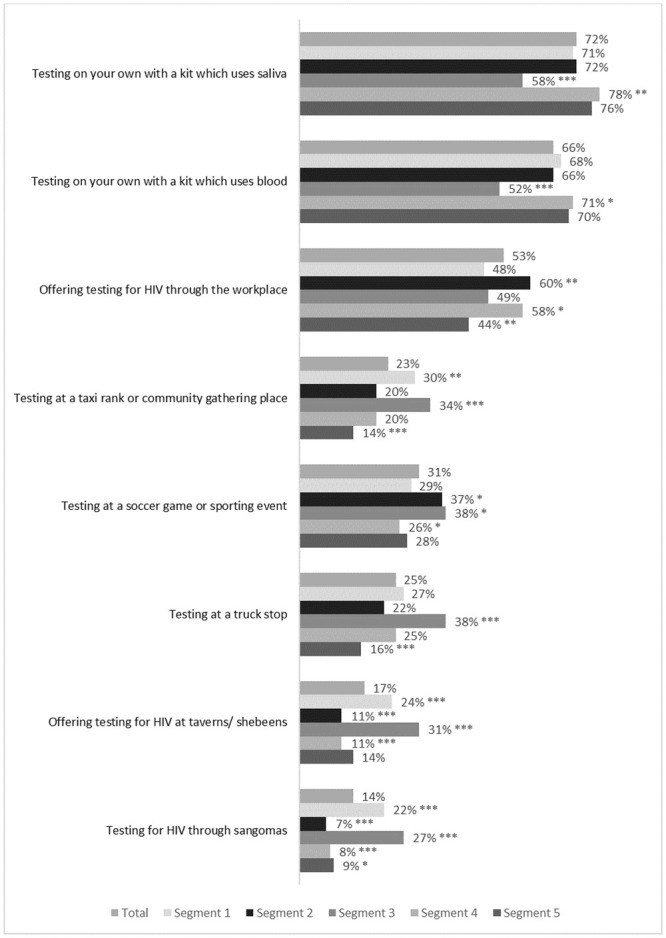
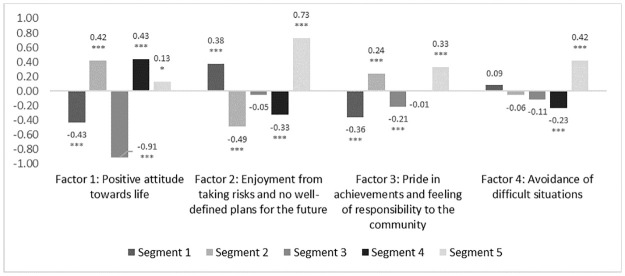
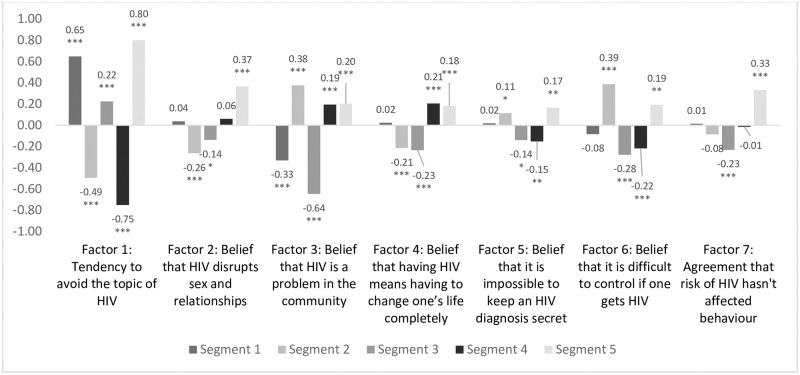
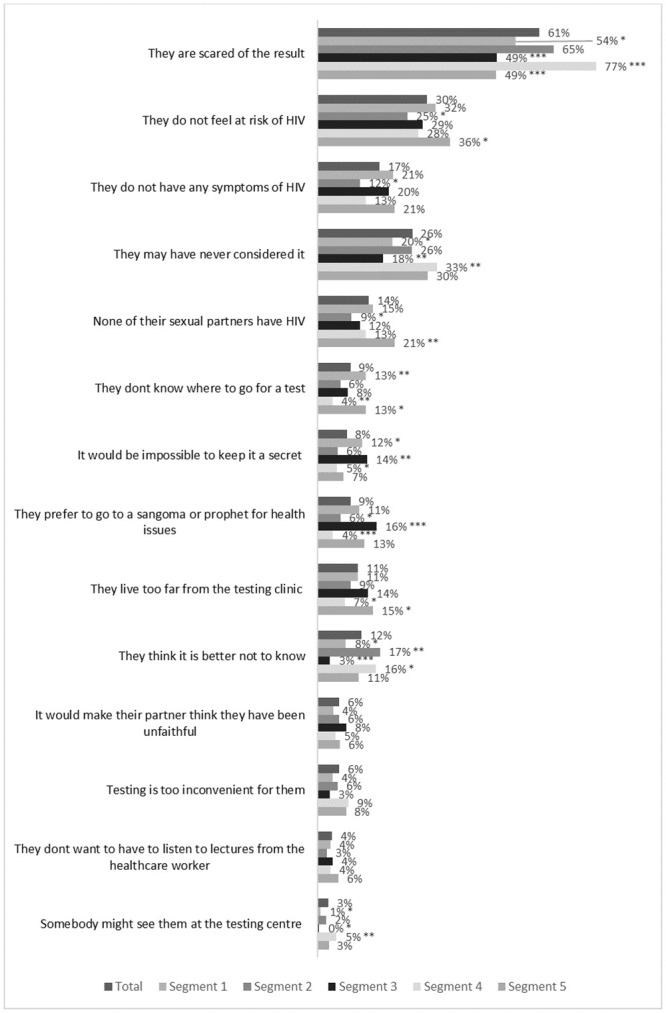
Despite recent improvements, men still have worse HIV outcomes than women in South Africa. This study describes how young men form distinct behavioural and attitudinal subgroups, and is intended to inform the design of targeted interventions to encourage HIV testing and initiation on antiretroviral therapy. Data were collected using a cross-sectional survey with questions on men's attitudes, beliefs and behaviours around HIV/AIDS. A total of 2,019 men were randomly sampled from eight district municipalities in KwaZulu-Natal and Mpumalanga provinces between October 2018 and January 2019. Men were eligible to participate if they were aged 20-34, Black African, had an education level below university graduation, were aware of HIV and were willing to disclose whether they had tested for HIV. Each participant responded to a questionnaire asking about their demographic characteristics, reported sexual behaviour, engagement with HIV testing and treatment services, alcohol consumption, HIV knowledge, attitudes to gender equity and reported level of depressive symptoms. Data were analysed using canonical correlation, hierarchical clustering and factor analysis techniques to produce five groups of men. The results were synthesised using Human Centred Design principles to suggests areas for potential intervention for each segment. The results showed that men vary based on their attitudes to gender and masculinity, use of alcohol, testing and treatment behaviour, HIV-related fears and preferences for testing modalities. Segment 1 (21%) avoids the topic of HIV, perhaps fearful of the impact on his life. Segment 2 (23%) is well connected to his community and has social concerns about HIV. Segment 3 (15%) struggles with more distal determinants of HIV acquisition such as unemployment and poor mental health. Segment 4 (25%) has concerns about the lifestyle changes that would be required if he were HIV positive. Segment 5 (16%) has a strong traditional mindset and is fearful of the ramifications of HIV in his community. The results will be used to design targeted interventions to increase HIV testing and treatment rates among young men in South Africa. Further research is required to understand the impact of interventions designed in this way.
尽管最近有所改善,但南非男性的艾滋病毒感染结果仍比女性差。本研究描述了年轻男性如何形成不同的行为和态度亚组,旨在为设计有针对性的干预措施提供信息,以鼓励艾滋病毒检测和开始接受抗逆转录病毒治疗。数据是使用横断面调查收集的,问题涉及男性对艾滋病毒/艾滋病的态度、信念和行为。2018 年 10 月至 2019 年 1 月期间,从夸祖鲁-纳塔尔省和姆普马兰加省的八个地区市随机抽取了 2019 名男性。如果他们年龄在 20-34 岁之间、为非洲黑人、教育程度低于大学毕业、了解艾滋病毒并且愿意透露是否接受过艾滋病毒检测,则有资格参加。每个参与者都回答了一份问卷,询问他们的人口统计学特征、报告的性行为、接受艾滋病毒检测和治疗服务的情况、饮酒情况、艾滋病毒知识、对性别平等的态度以及报告的抑郁症状水平。使用典型相关、层次聚类和因子分析技术对数据进行分析,得出了五组男性。使用以人为本的设计原则对结果进行综合分析,为每个部分提出了潜在干预的领域。结果表明,男性的态度、对性别和男子气概的看法、饮酒、检测和治疗行为、对艾滋病毒的恐惧以及对检测方式的偏好各不相同。第 1 组(21%)避免讨论艾滋病毒问题,可能担心这会对他的生活产生影响。第 2 组(23%)与他的社区联系紧密,对艾滋病毒有社会关注。第 3 组(15%)在失业和心理健康较差等更遥远的艾滋病毒感染决定因素方面存在困难。第 4 组(25%)对如果他感染艾滋病毒将需要进行的生活方式改变表示担忧。第 5 组(16%)具有强烈的传统思维模式,对艾滋病毒在社区中的影响感到恐惧。结果将用于设计有针对性的干预措施,以提高南非年轻男性的艾滋病毒检测和治疗率。需要进一步研究来了解以这种方式设计的干预措施的影响。