Surgo Foundation, Seattle, United States.
Department of Global Health and Population, Harvard T.H. Chan School of Public Health, Boston, United States.
Elife. 2017 Sep 13;6:e25923. doi: 10.7554/eLife.25923.
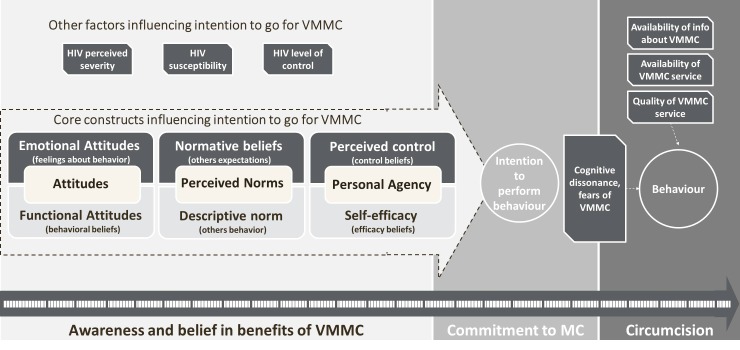
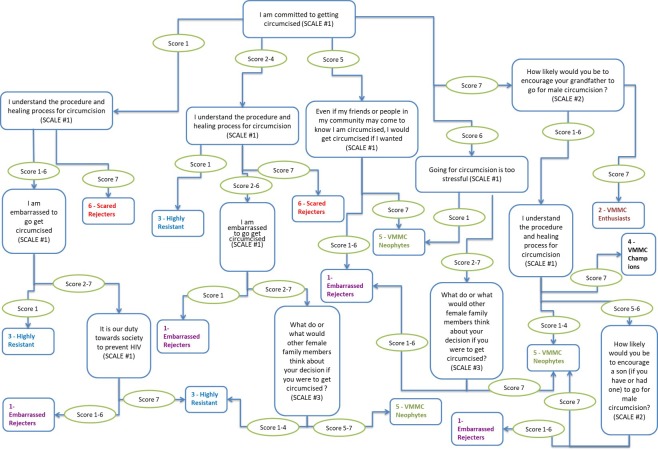
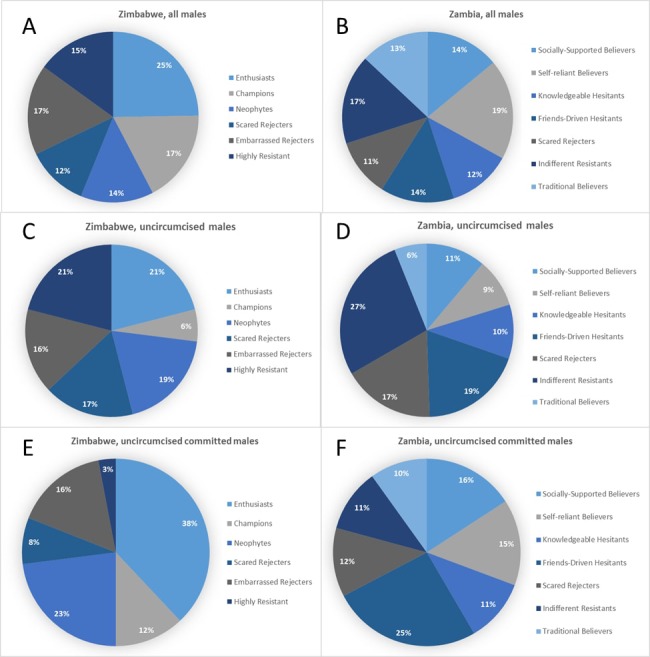
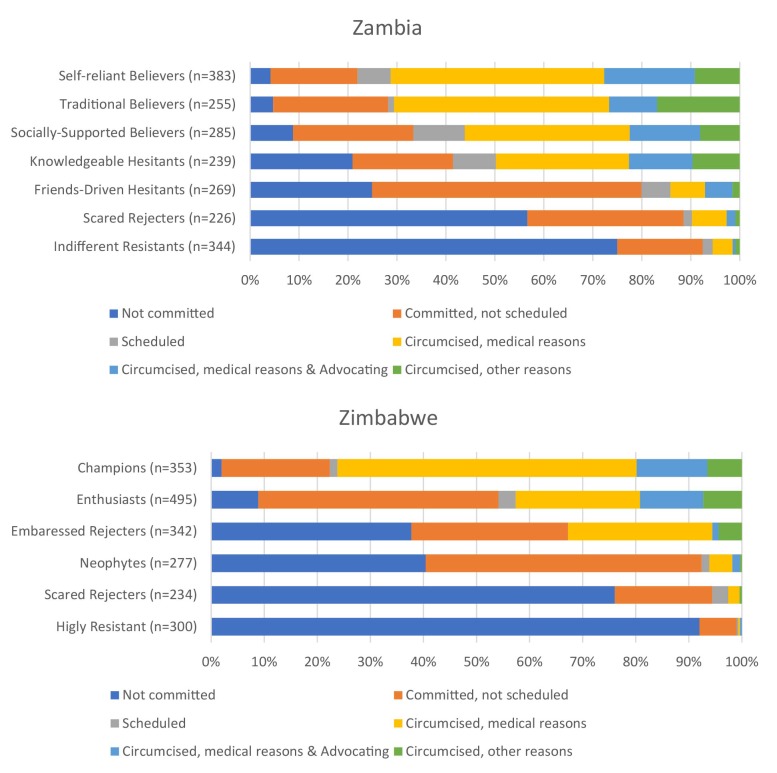
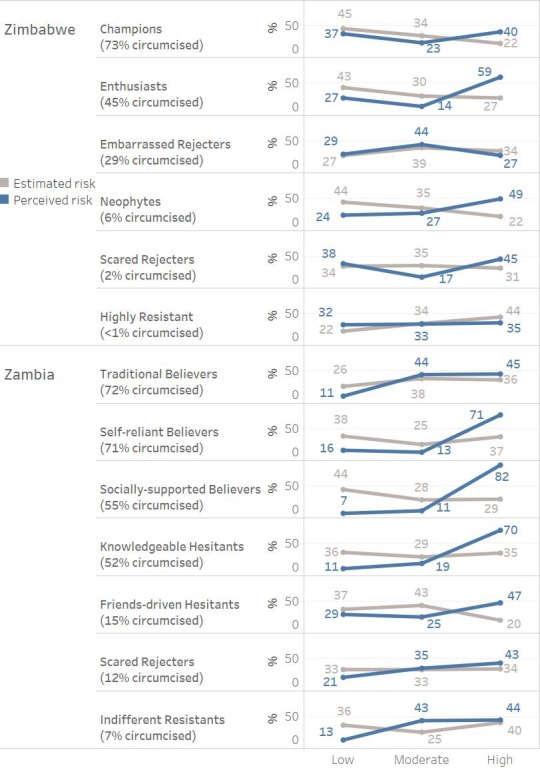
Public health programs are starting to recognize the need to move beyond a one-size-fits-all approach in demand generation, and instead tailor interventions to the heterogeneity underlying human decision making. Currently, however, there is a lack of methods to enable such targeting. We describe a novel hybrid behavioral-psychographic segmentation approach to segment stakeholders on potential barriers to a target behavior. We then apply the method in a case study of demand generation for voluntary medical male circumcision (VMMC) among 15-29 year-old males in Zambia and Zimbabwe. Canonical correlations and hierarchical clustering techniques were applied on representative samples of men in each country who were differentiated by their underlying reasons for their propensity to get circumcised. We characterized six distinct segments of men in Zimbabwe, and seven segments in Zambia, according to their needs, perceptions, attitudes and behaviors towards VMMC, thus highlighting distinct reasons for a failure to engage in the desired behavior.
公共卫生项目开始认识到,在需求产生方面,需要超越一刀切的方法,而是针对人类决策背后的异质性来调整干预措施。然而,目前缺乏实现这种目标定位的方法。我们描述了一种新的混合行为-心理特征细分方法,以根据潜在的目标行为障碍对利益相关者进行细分。然后,我们在赞比亚和津巴布韦的 15-29 岁男性中,针对自愿男性割礼(VMMC)的需求产生案例研究中应用了该方法。在每个国家中,我们对代表性的男性样本应用典型相关和层次聚类技术,这些男性样本根据他们进行割礼的倾向的潜在原因而有所不同。根据他们对 VMMC 的需求、看法、态度和行为,我们在津巴布韦确定了六个不同的男性群体,在赞比亚确定了七个群体,从而突出了未能参与期望行为的不同原因。