McAuley Julie, Fraser Claire, Paraskeva Elena, Trajcevska Elizabeth, Sait Michelle, Wang Nancy, Bert Eric, Purcell Damian, Strugnell Richard
Department of Microbiology and Immunology, The University of Melbourne at the Peter Doherty Institute for Infection and Immunity, Melbourne, 3000, Australia.
Media Production Unit, Department of Microbiology and Immunology, The University of Melbourne at the Peter Doherty Institute of Infection and Immunity, Melbourne, 3000, Australia.
Virol J. 2021 Mar 10;18(1):53. doi: 10.1186/s12985-021-01525-z.
The sudden arrival of the COVID-19 pandemic placed significant stresses on supply chains including viral transport medium (VTM). The VTM that was urgently required needed to support viral replication, as well as other routine diagnostic approaches. We describe the preparation and validation testing of VTM for rapidly expanding diagnostic testing, where the capacity of the VTM to preserve viral integrity, for culture, isolation and full sequence analysis, was maintained.
VTM was prepared using different methods of sterilization then 'spiked' with virus. The VTM was investigated using viral culture in Vero cells, and for nucleic acid detection by quantitative PCR.
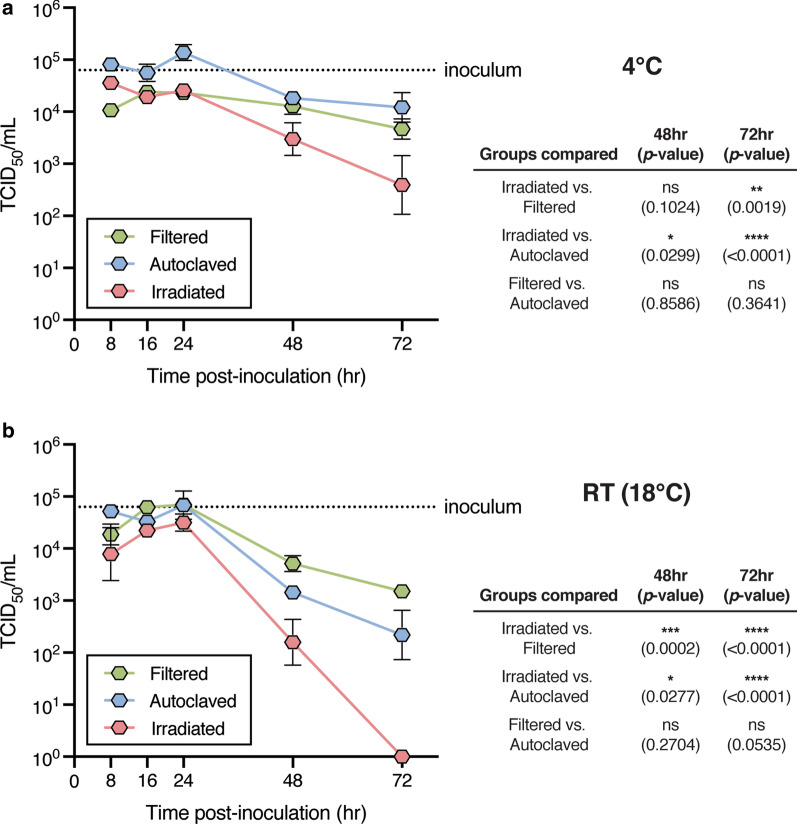
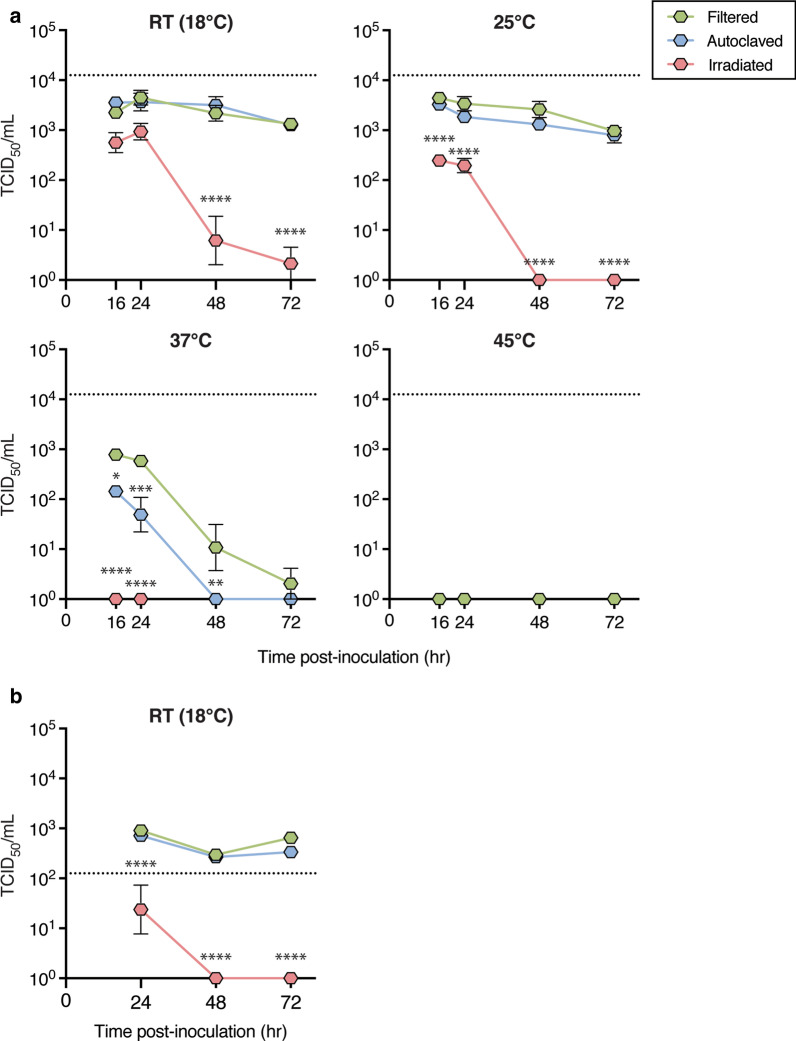
The best results were obtained by filter and autoclave-based sterilization. The VTM proved robust for culture-based analyses provided the inoculated VTM was stored at 4 °C, and tested within 48 h. The filtered VTM also supported PCR-based diagnosis for at least 5 days when the mock inoculated VTM was held at room temperature.
The manual handling of VTM production, including filling and sterilization, was optimized. SARS-CoV-2 was spiked into VTM to assess different sterilization methods and measure the effects of storage time and temperature upon VTM performance. While most diagnostic protocols will not require replication competent virus, the use of high quality VTM will allow for the next phase of laboratory analysis in the COVID-19 pandemic, including drug and antibody susceptibility analysis of re-isolated SARS-CoV-2, and for the testing of vaccine escape mutants.
新型冠状病毒肺炎(COVID-19)大流行的突然到来给包括病毒运输培养基(VTM)在内的供应链带来了巨大压力。迫切需要的VTM既要支持病毒复制,也要支持其他常规诊断方法。我们描述了用于快速扩大诊断检测的VTM的制备和验证测试,其中VTM在保存病毒完整性以用于培养、分离和全序列分析方面的能力得以维持。
采用不同的灭菌方法制备VTM,然后接种病毒。通过在Vero细胞中进行病毒培养以及定量PCR检测核酸来研究VTM。
基于过滤和高压灭菌的灭菌方法取得了最佳效果。如果接种后的VTM保存在4℃并在48小时内进行检测,VTM在基于培养的分析中表现出强大的性能。当模拟接种的VTM保存在室温下时,经过过滤的VTM在至少5天内也支持基于PCR的诊断。
优化了VTM生产过程中的人工操作,包括灌装和灭菌。将严重急性呼吸综合征冠状病毒2(SARS-CoV-2)接种到VTM中,以评估不同的灭菌方法,并测量储存时间和温度对VTM性能的影响。虽然大多数诊断方案不需要具有复制能力的病毒,但使用高质量的VTM将为COVID-19大流行中的下一阶段实验室分析提供可能,包括对重新分离的SARS-CoV-2进行药物和抗体敏感性分析,以及对疫苗逃逸突变体进行检测。