Graduate School of Biomedical Sciences, Nagasaki University, Nagasaki, Japan.
Institute of Tropical Medicine, Nagasaki University, Nagasaki, Japan.
Parasit Vectors. 2021 Mar 10;14(1):151. doi: 10.1186/s13071-021-04656-y.
With the increasing threat of the worldwide spread of mosquito-borne infectious diseases, consumer interest in anti-mosquito textiles that protect against mosquito bites is also increasing. Accordingly, repellent- or insecticide-treated textiles are gaining popularity. The standardization of commercial textile products is, therefore, indispensable for an authentic and objective evaluation of these products. Here we report a textile testing method using an artificial blood-feeding system that does not involve human volunteers or live animals, which aligns with the policy of protecting human and animal welfare.
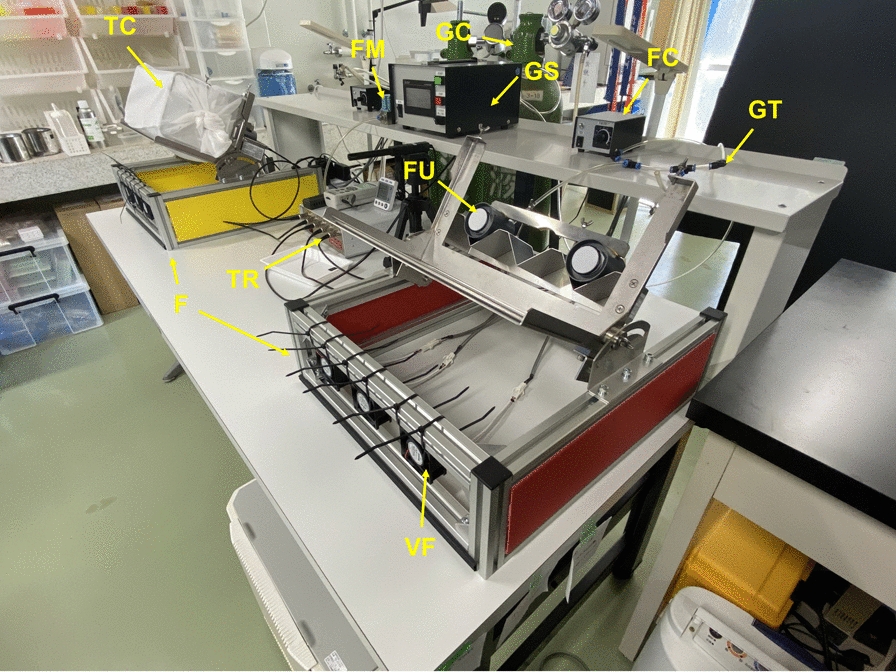
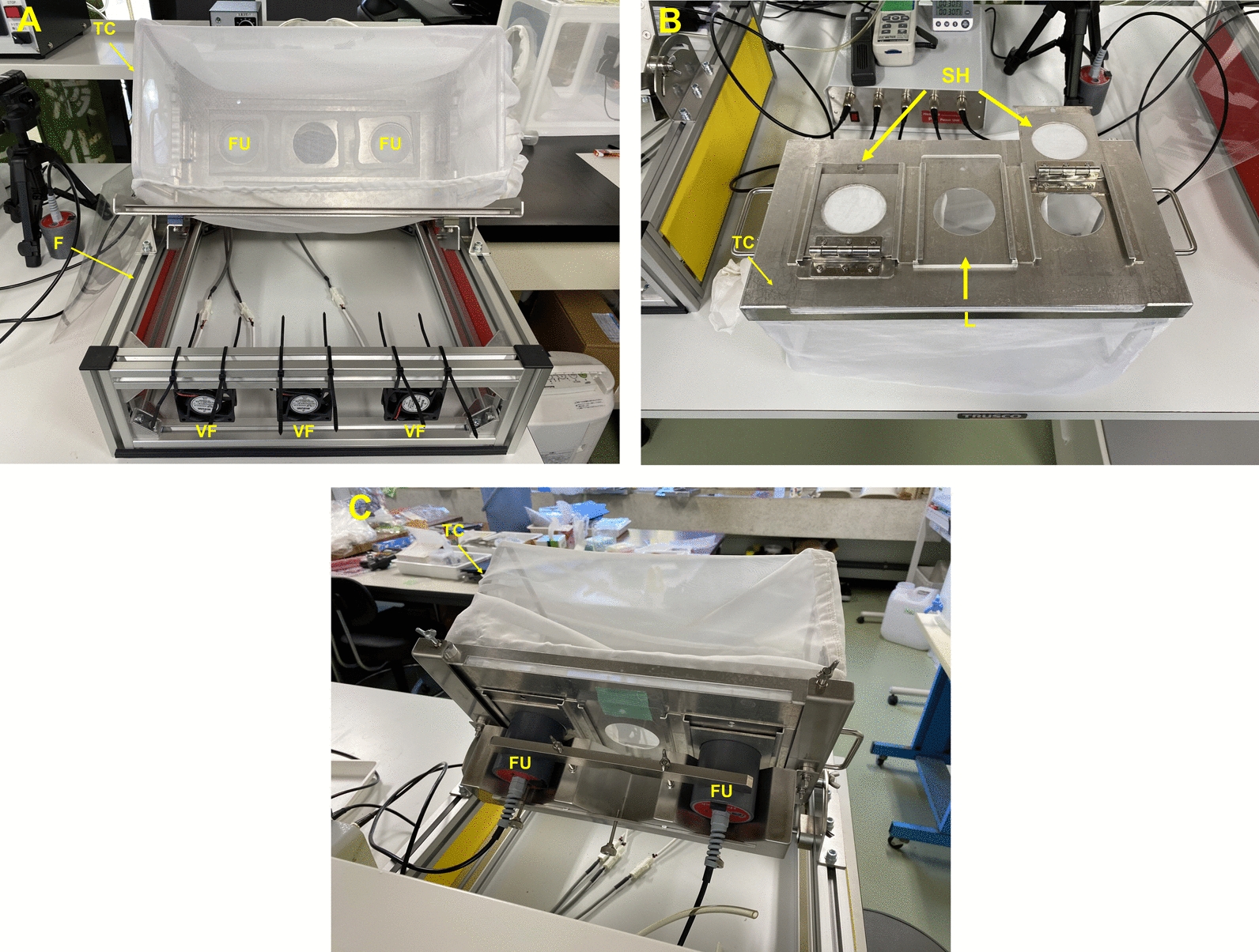
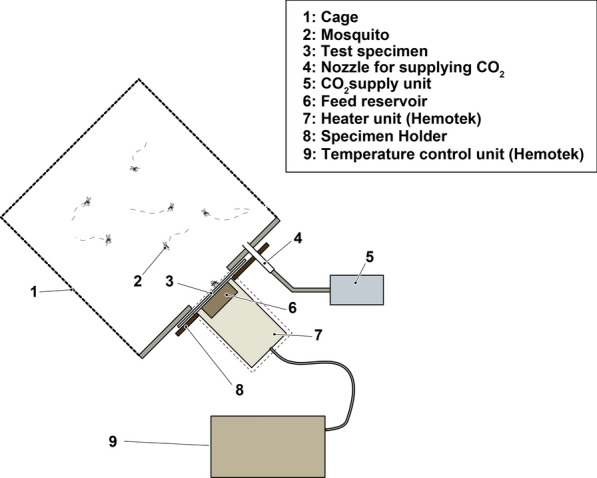
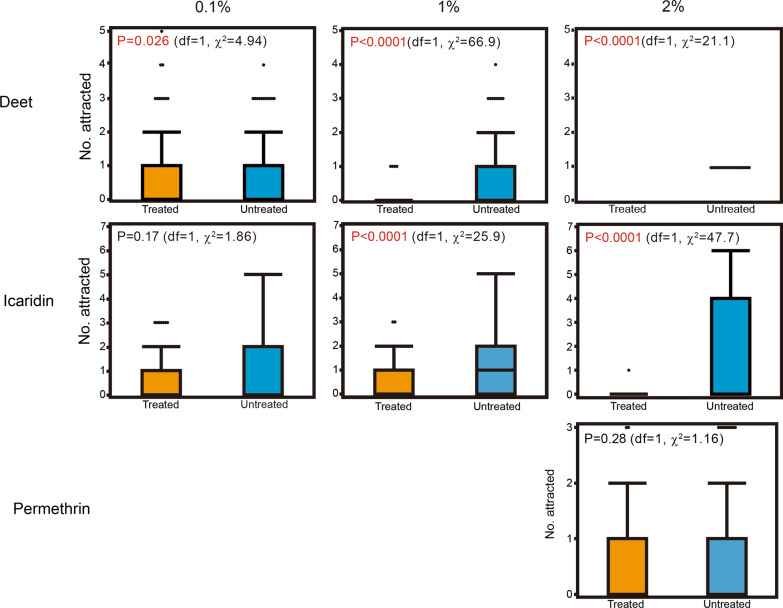
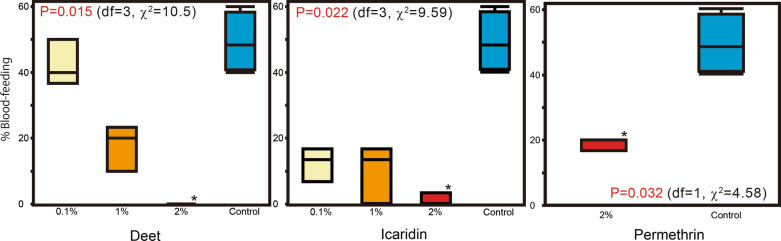
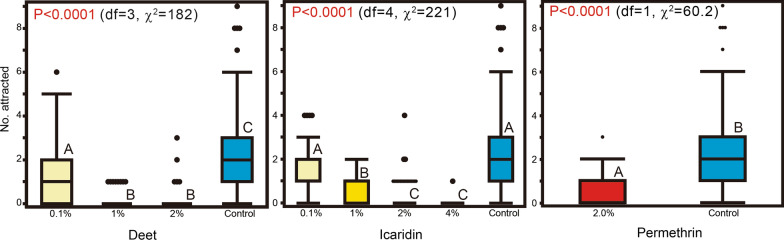
The attractive blood-feeding device (ABFD) was designed using the Hemotek® membrane feeding system. The repellency of DEET, icaridin and permethrin was assayed using unfed female adults of Aedes albopictus (Skuse) under two different test conditions, namely choice and no-choice tests. The choice test consisted of two feeding units, one chemically treated and untreated, that were installed on the ABFD; mosquitoes attracted to and resting on the feeding units were counted and the overall blood-feeding rates recorded. The no-choice test consisted of two feeding units treated with the same chemical that were installed on the ABFD; mosquitoes attracted to and resting on the feeding units were counted and the blood-feeding rates were recorded. A control test was conducted using two feeding units, both sides of which were untreated.
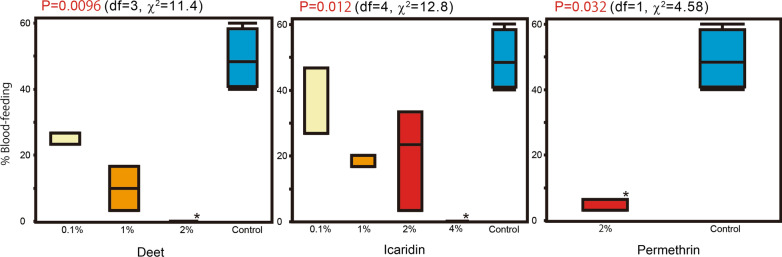
In the choice test, high repellency (> 95% inhibition of resting on the treated surface) of 1% DEET and 2% icaridin was observed, whereas 2% permethrin was not an effective repellent. Also, high blood-feeding inhibition (> 95%) was observed for 2% DEET and 2% icaridin. In the no-choice test, high repellency was observed for 1% DEET and 2% icaridin, whereas the repellency of 2% permethrin was low. Also, high blood-feeding inhibition was observed for 2% DEET, 4% icaridin and 2% permethrin.
The accuracy and reproducibility of the developed method demonstrate that the ABFD may be widely used for fundamental experiments in the field of mosquito physiology, for the development of new repellent chemicals and in evaluation studies of mosquito repellent products, such as anti-mosquito textiles. The further development of the membrane and feeding unit systems will enable a more practical evaluation of mosquito repellents and blood-feeding inhibitors, such as pyrethroids.
随着蚊媒传染病在全球传播威胁的不断增加,消费者对能防止蚊虫叮咬的防蚊纺织品的兴趣也在不断增加。因此,驱虫剂或杀虫剂处理过的纺织品越来越受欢迎。因此,对商业纺织产品进行标准化是对这些产品进行真实、客观评价的必要条件。在这里,我们报告了一种使用人工吸血系统的纺织测试方法,该方法不涉及人类志愿者或活体动物,符合保护人类和动物福利的政策。
采用 Hemotek®膜饲养系统设计了有吸引力的吸血装置(ABFD)。在两种不同的测试条件下,即选择和非选择测试下,用未进食的白纹伊蚊(Skuse)成年雌性进行了 DEET、icaridin 和氯菊酯的驱避率测定。选择测试由两个喂食单元组成,一个化学处理,一个未处理,安装在 ABFD 上;计算吸引并停留在喂食单元上的蚊子数量,并记录总的吸血率。非选择测试由两个用相同化学物质处理的喂食单元组成,安装在 ABFD 上;计算吸引并停留在喂食单元上的蚊子数量,并记录吸血率。使用两个未处理的喂食单元进行对照测试。
在选择测试中,观察到 1% DEET 和 2% icaridin 的高驱避率(>95%的停留在处理表面的抑制),而 2% 氯菊酯则不是有效的驱避剂。此外,还观察到 2% DEET 和 2% icaridin 的高吸血抑制率(>95%)。在非选择测试中,观察到 1% DEET 和 2% icaridin 的高驱避率,而 2% 氯菊酯的驱避率较低。此外,还观察到 2% DEET、4% icaridin 和 2% 氯菊酯的高吸血抑制率。
所开发方法的准确性和可重复性表明,ABFD 可广泛用于蚊子生理学领域的基础实验、新型驱避剂化学品的开发以及驱蚊产品(如防蚊纺织品)的评价研究。进一步开发膜和饲养单元系统将使拟除虫菊酯等驱蚊剂和吸血抑制剂的更实际评价成为可能。