Isobe Yuki, Asakura Hiroki, Tsujiguchi Hiromasa, Kannon Takayuki, Takayama Hiroaki, Takeshita Yumie, Ishii Kiyo-Aki, Kanamori Takehiro, Hara Akinori, Yamashita Tatsuya, Tajima Atsushi, Kaneko Shuichi, Nakamura Hiroyuki, Takamura Toshinari
Department of Endocrinology and Metabolism, Kanazawa University Graduate School of Medical Sciences, Kanazawa, Japan.
Department of Environmental and Preventive Medicine, Kanazawa University Graduate School of Medical Sciences, Kanazawa, Japan.
Front Nutr. 2021 Feb 22;8:633703. doi: 10.3389/fnut.2021.633703. eCollection 2021.
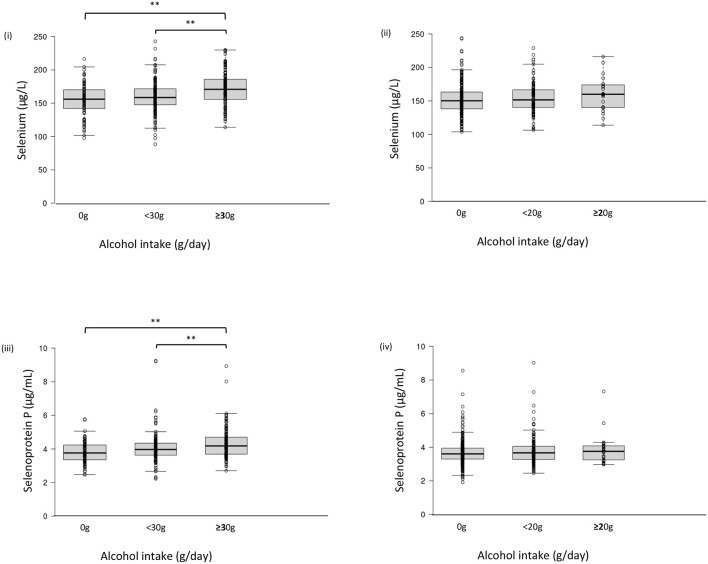
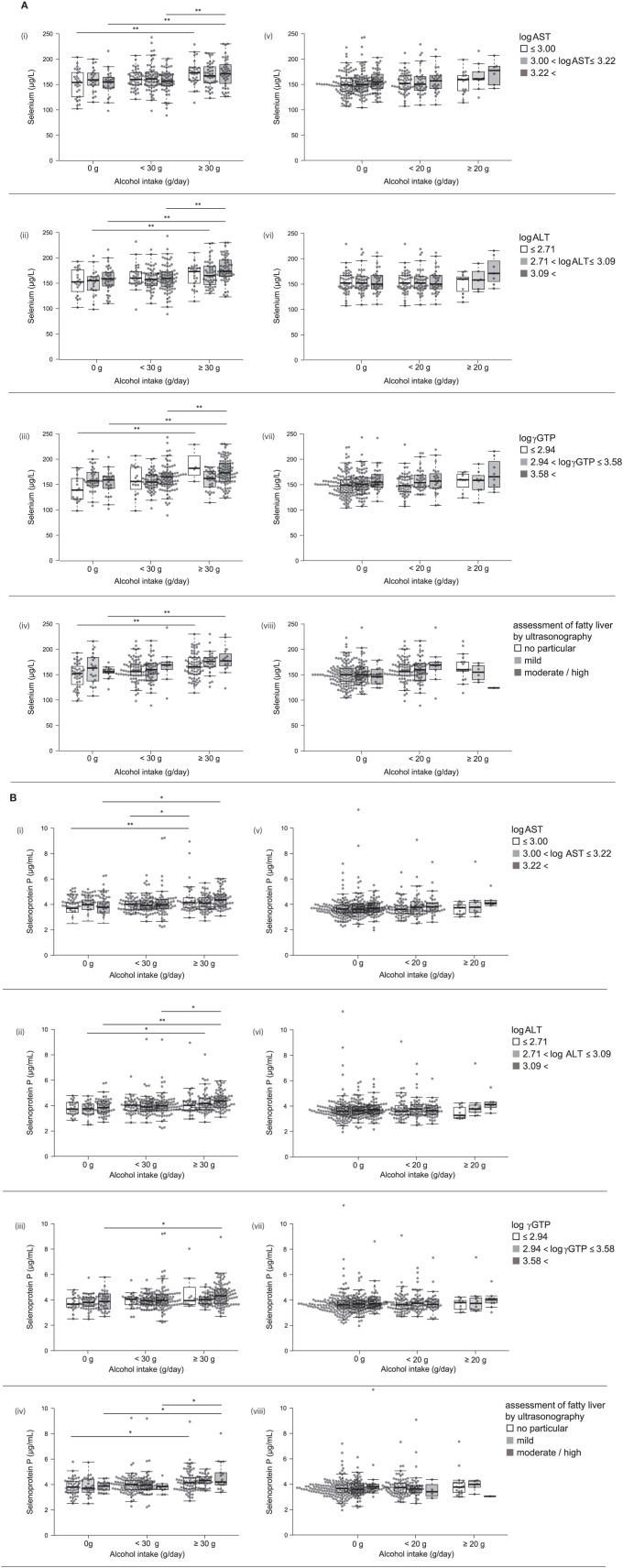
Selenoprotein P is a hepatokine with antioxidative properties that eliminate a physiologic burst of reactive oxygen species required for intracellular signal transduction. Serum levels of selenoprotein P are elevated during aging and in people with type 2 diabetes, non-alcoholic fatty liver disease, and hepatitis C. However, how serum levels of full-length selenoprotein P are regulated largely remains unknown, especially in the general population. To understand the significance of serum selenoprotein P levels in the general population, we evaluated intrinsic and environmental factors associated with serum levels of full-length selenoprotein P in 1,183 subjects participating in the Shika-health checkup cohort. Serum levels of selenium were positively correlated with liver enzymes and alcohol intake and negatively correlated with body mass index. Serum levels of selenoprotein P were positively correlated with age, liver enzymes, and alcohol intake. In multiple regression analyses, alcohol intake was positively correlated with serum levels of both selenium and selenoprotein P independently of age, gender, liver enzymes, and fatty liver on ultrasonography. In conclusion, alcohol intake is associated with elevated serum levels of selenium and selenoprotein P independently of liver enzyme levels and liver fat in the general population. Moderate alcohol intake may exert beneficial or harmful effects on health, at least partly by upregulating selenoprotein P. These findings increase our understanding of alcohol-mediated redox regulation and form the basis for the adoption of appropriate drinking guidelines.
硒蛋白P是一种具有抗氧化特性的肝因子,可消除细胞内信号转导所需的生理性活性氧爆发。在衰老过程中以及在2型糖尿病、非酒精性脂肪性肝病和丙型肝炎患者中,血清硒蛋白P水平会升高。然而,全长硒蛋白P的血清水平如何调节在很大程度上仍然未知,尤其是在普通人群中。为了了解普通人群中血清硒蛋白P水平的意义,我们在参与志贺健康检查队列的1183名受试者中评估了与全长硒蛋白P血清水平相关的内在和环境因素。血清硒水平与肝酶和酒精摄入量呈正相关,与体重指数呈负相关。血清硒蛋白P水平与年龄、肝酶和酒精摄入量呈正相关。在多元回归分析中,酒精摄入量与血清硒和硒蛋白P水平呈正相关,独立于年龄、性别、肝酶和超声检查发现的脂肪肝。总之,在普通人群中,酒精摄入量与血清硒和硒蛋白P水平升高有关,独立于肝酶水平和肝脏脂肪。适度饮酒可能对健康产生有益或有害影响,至少部分是通过上调硒蛋白P实现的。这些发现增进了我们对酒精介导的氧化还原调节的理解,并为采用适当的饮酒指南奠定了基础。