State Key Laboratory of Microbial Technology, Shandong University, 72 Binhai Road, 266237 Qingdao, China.
National Glycoengineering Research Center, Shandong University, 27 Binhai Road, 266237 Qingdao, China.
J Ind Microbiol Biotechnol. 2021 Apr 30;48(1-2). doi: 10.1093/jimb/kuab012.
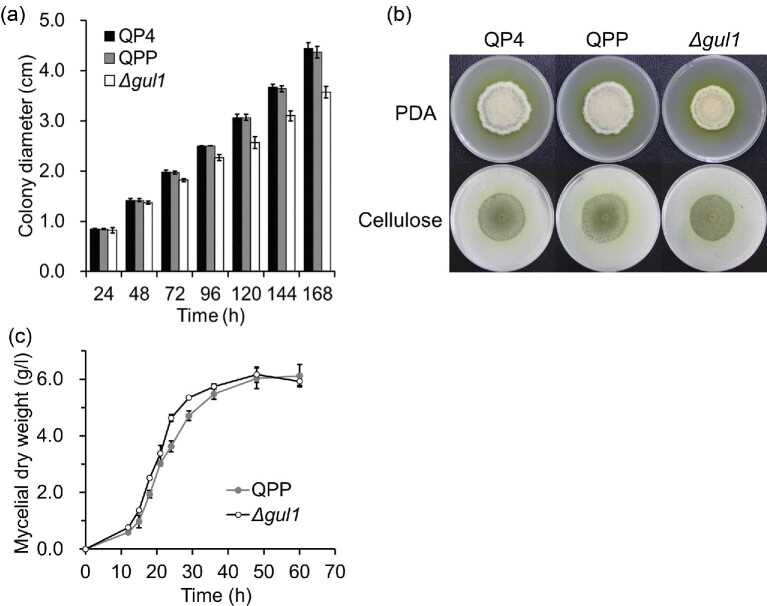
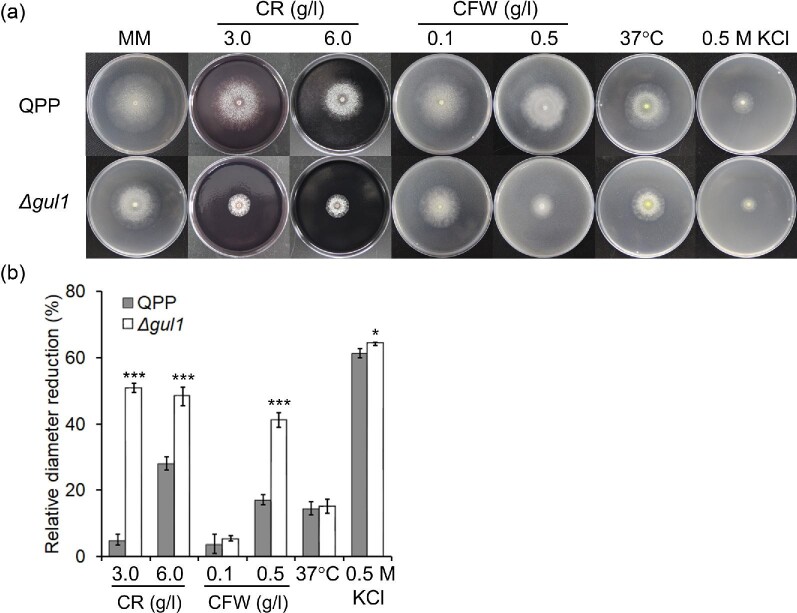
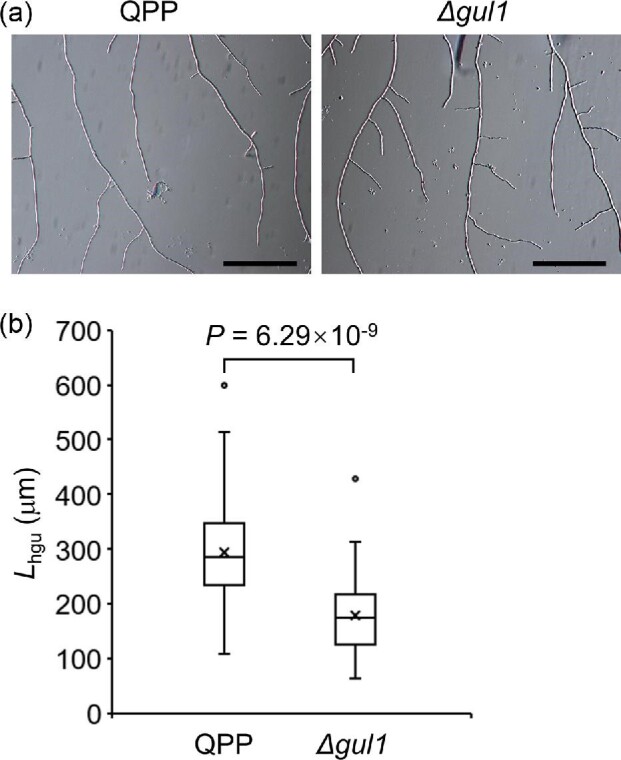
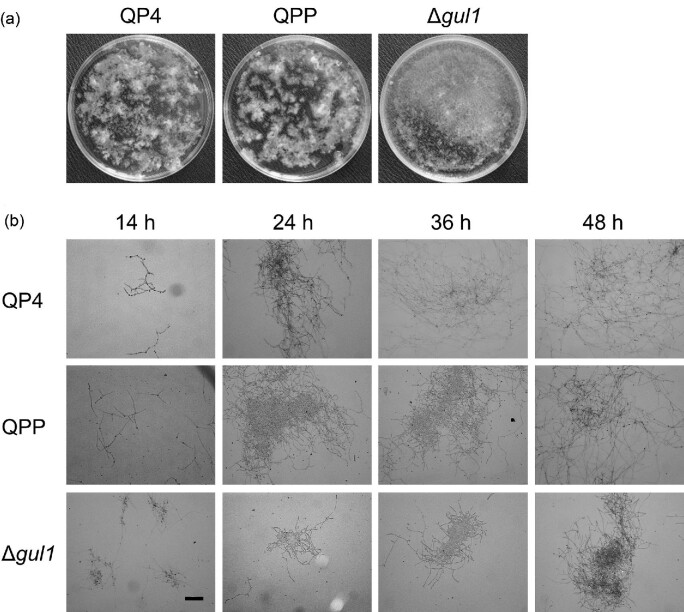
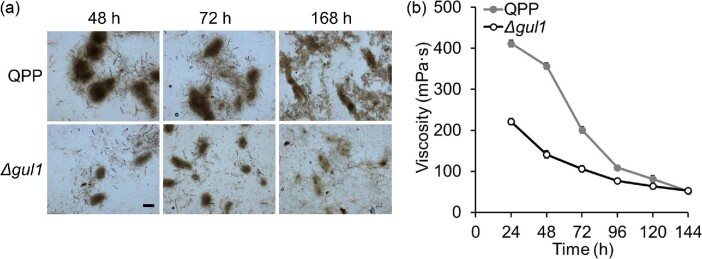
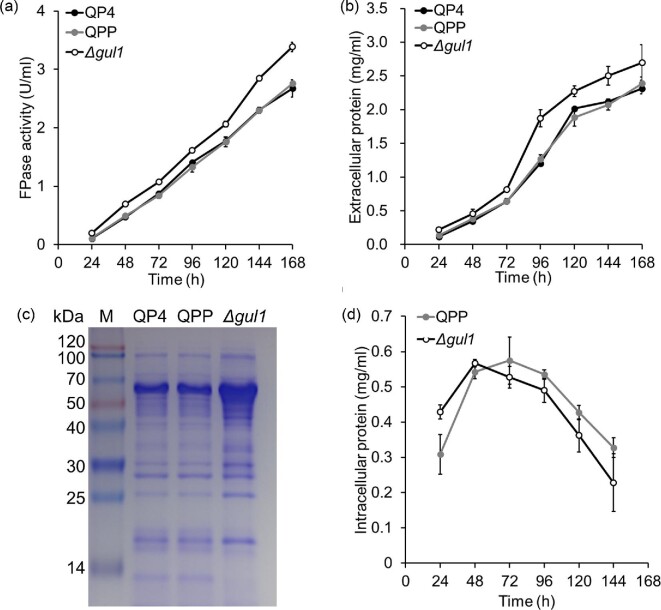
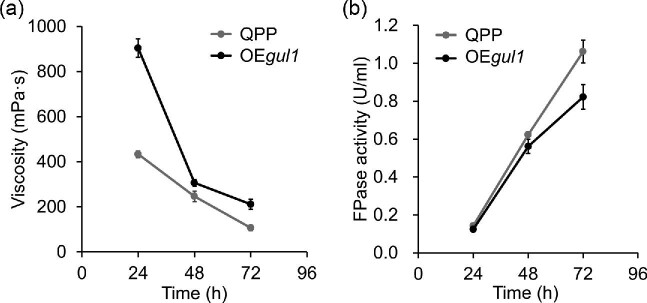
Hyphal morphology is considered to have a close relationship with the production level of secreted proteins by filamentous fungi. In this study, the gul1 gene, which encodes a putative mRNA-binding protein, was disrupted in cellulase-producing fungus Trichoderma reesei. The hyphae of Δgul1 strain produced more lateral branches than the parent strain. Under the condition for cellulase production, disruption of gul1 resulted in smaller mycelial clumps and significantly lower viscosity of fermentation broth. In addition, cellulase production was improved by 22% relative to the parent strain. Transcriptome analysis revealed that a set of genes encoding cell wall remodeling enzymes as well as hydrophobins were differentially expressed in the Δgul1 strain. The results suggest that the regulatory role of gul1 in cell morphogenesis is likely conserved in filamentous fungi. To our knowledge, this is the first report on the engineering of gul1 in an industrially important fungus.
菌丝形态被认为与丝状真菌分泌蛋白的产生水平密切相关。在这项研究中,纤维素酶产生菌里氏木霉中的 gul1 基因(编码一个假定的 mRNA 结合蛋白)被破坏。Δgul1 菌株的菌丝比亲本菌株产生更多的侧枝。在纤维素酶生产条件下,gul1 的破坏导致菌丝团更小,发酵液的粘度显著降低。此外,与亲本菌株相比,纤维素酶的产量提高了 22%。转录组分析表明,一组编码细胞壁重塑酶和疏水性蛋白的基因在Δgul1 菌株中差异表达。结果表明,gul1 在细胞形态发生中的调控作用在丝状真菌中可能是保守的。据我们所知,这是首次在工业上重要的真菌中对 gul1 进行工程改造的报道。