Radiation Application Research School, Nuclear Science and Technology Research Institute, P.O. Box 11365-3486, Tehran, Iran.
Department of Mechanical Engineering, Shohadaye Hoveizeh University of Technology, P.O. Box 78986, Susangerd, Iran.
Mikrochim Acta. 2021 Mar 10;188(4):121. doi: 10.1007/s00604-021-04773-6.
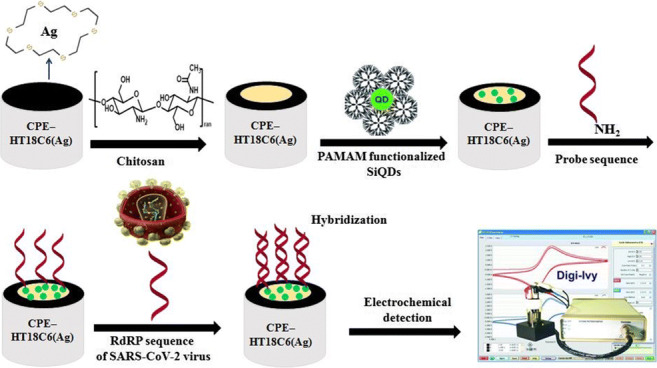
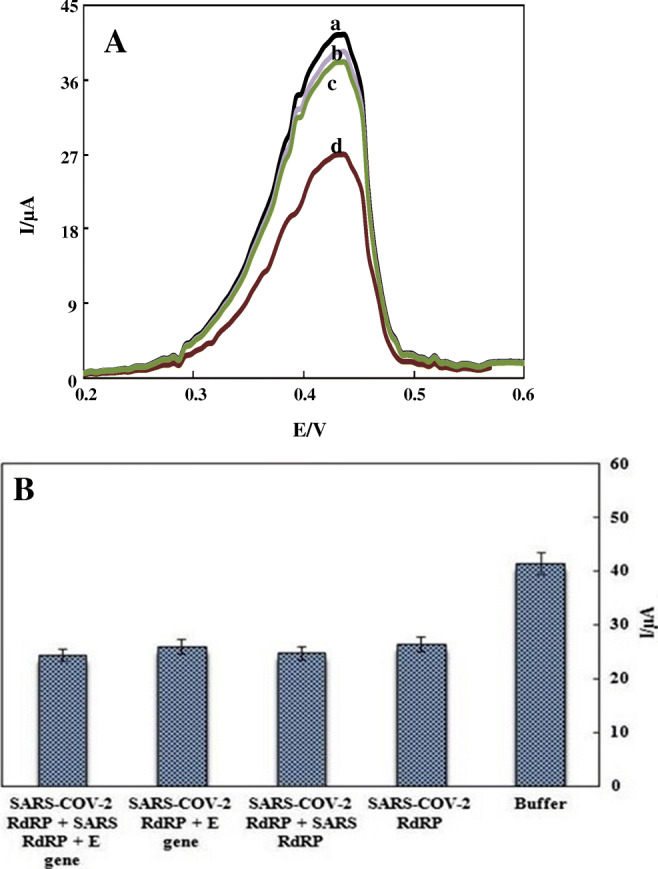
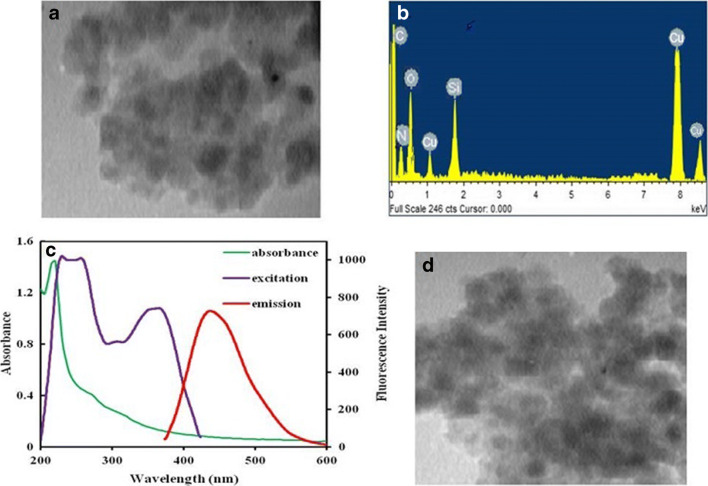
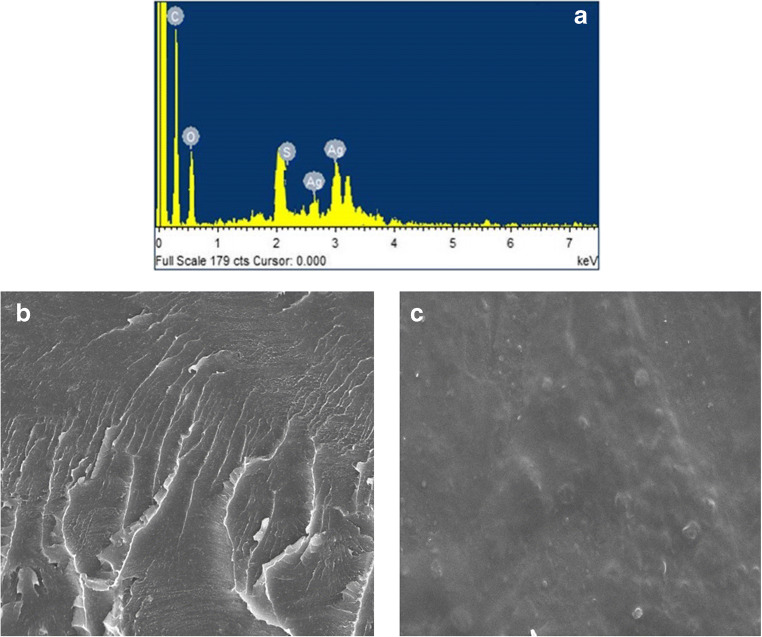
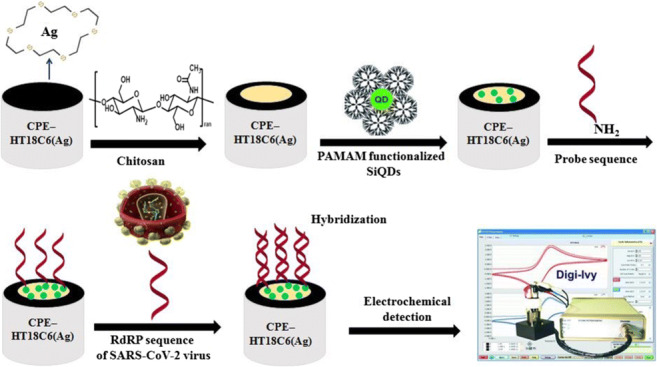
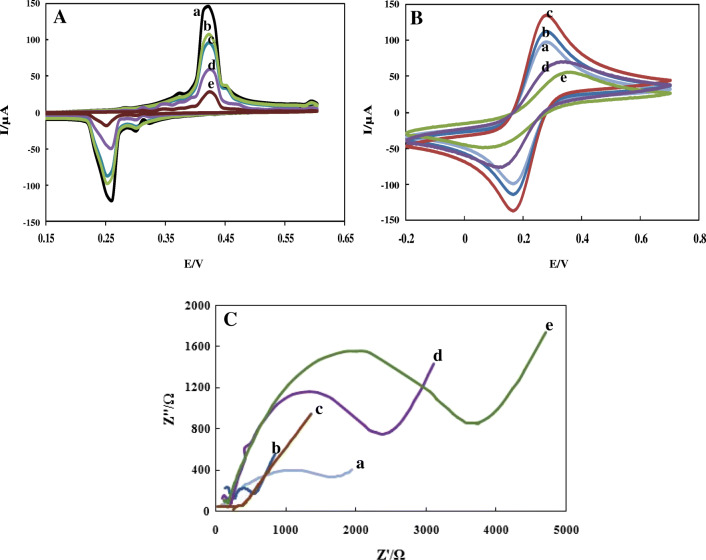
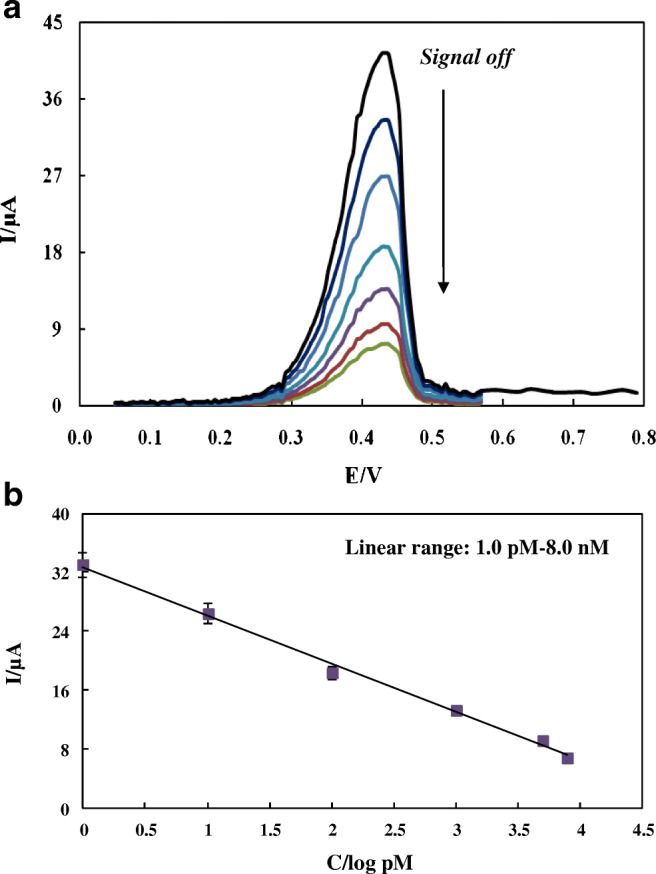
A voltammetric genosensor has been developed for the early diagnosis of COVID-19 by determination of RNA-dependent RNA polymerase (RdRP) sequence as a specific target of novel coronavirus. The severe acute respiratory syndrome coronavirus-2 (SARS-CoV-2) uses an RdRP for the replication of its genome and the transcription of its genes. Here, the silver ions (Ag) in the hexathia-18-crown-6 (HT18C6) were used for the first time as a redox probe. Then, the HT18C6(Ag) incorporated carbon paste electrode (CPE) was further modified with chitosan and PAMAM dendrimer-coated silicon quantum dots (SiQDs@PAMAM) for immobilization of probe sequences (aminated oligonucleotides). The current intensity of differential pulse voltammetry using the redox probe was found to decrease with increasing the concentration of target sequence. Based on such signal-off trend, the proposed genosensor exhibited a good linear response to SARS-CoV-2 RdRP in the concentration range 1.0 pM-8.0 nM with a regression equation I (μA) = - 6.555 log [RdRP sequence] (pM) + 32.676 (R = 0.995) and a limit of detection (LOD) of 0.3 pM. The standard addition method with different spike concentrations of RdRP sequence in human sputum samples showed a good recovery for real sample analysis (> 95%). Therefore, the developed voltammetric genosensor can be used to determine SARS-CoV-2 RdRP sequence in sputum samples. PAMAM-functionalized SiQDs were used as a versatile electrochemical platform for the SARS-CoV-2 RdRP detection based on a signal off sensing strategy. In this study, for the first time, the silver ions (Ag) in the hexathia-18-crown-6 carrier were applied as an electrochemical probe.
一种基于测定 RNA 依赖性 RNA 聚合酶(RdRP)序列的伏安法基因传感器已被开发用于 COVID-19 的早期诊断,该序列是新型冠状病毒的特定靶点。严重急性呼吸系统综合征冠状病毒 2(SARS-CoV-2)利用 RdRP 复制其基因组并转录其基因。在这里,首次将十六硫代-18-冠-6(HT18C6)中的银离子(Ag)用作氧化还原探针。然后,进一步用壳聚糖和 PAMAM 树枝状大分子包裹的硅量子点(SiQDs@PAMAM)修饰 HT18C6(Ag) 碳糊电极(CPE)以固定探针序列(氨基化寡核苷酸)。使用氧化还原探针的差分脉冲伏安法的电流强度发现随着目标序列浓度的增加而降低。基于这种信号关闭趋势,所提出的基因传感器对 SARS-CoV-2 RdRP 在 1.0 pM-8.0 nM 的浓度范围内表现出良好的线性响应,回归方程 I(μA)= - 6.555 log [RdRP 序列](pM)+ 32.676(R = 0.995),检测限(LOD)为 0.3 pM。在人痰样中加入不同浓度的 RdRP 序列的标准加入法显示出对实际样品分析的良好回收率(>95%)。因此,开发的伏安法基因传感器可用于检测痰样中的 SARS-CoV-2 RdRP 序列。基于信号关闭感应策略,PAMAM 功能化的 SiQDs 被用作 SARS-CoV-2 RdRP 检测的通用电化学平台。在这项研究中,首次将十六硫代-18-冠-6 载体中的银离子(Ag)应用于电化学探针。