Shen Ruiting, Yin Peng, Yao Hua, Chen Lu, Chang Xinyu, Li Huanrong, Hou Xiaolin
Department of Veterinary Medicine, Beijing University of Agriculture, Beijing, 102206, People's Republic of China.
Institute of Microbiology Chinese Academy of Sciences, Beijing, People's Republic of China.
J Inflamm Res. 2021 Mar 5;14:711-718. doi: 10.2147/JIR.S299163. eCollection 2021.
Inflammation is the driving force of many inflammatory and autoimmune diseases, Pyroptosis is a process of cell death in response to excessive inflammation. Punicalin has been reported to have anti-inflammatory effects. However, the anti-pyroptosis is unknown. Hence, this study was aimed to research the inhibition of MG on LPS/ATP-induced pyroptosis in vitro.
Lipopolysaccharide (LPS)/ATP were used to simulate mouse J774A.1 cells to mimic the inflammatory response and the role of punicalin was examined. The secretion of proinflammatory cytokines was analyzed using enzyme-linked immunosorbent assay (ELISA). The expression of nucleotide-binding oligomerization domain-like receptor containing pyrin domain 3 (NLRP3), apoptosis-associated speck-like protein containing a caspase activation and recruitment domain (ASC), caspase-1, and GSDMD-N in LPS/ATP-stimulated cells were examined by Western blot. N-acetylcysteine (NAC) was used to validate the role of Punicalin.
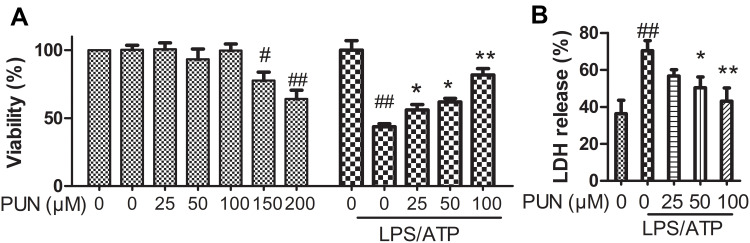
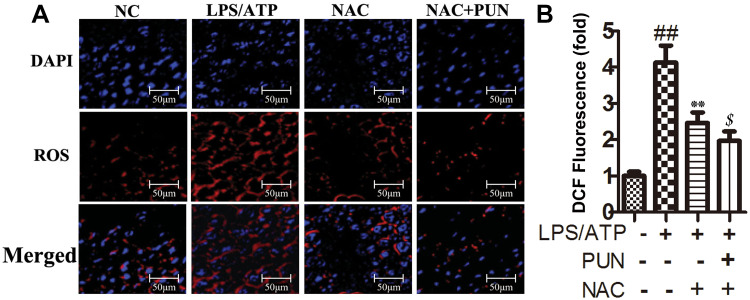
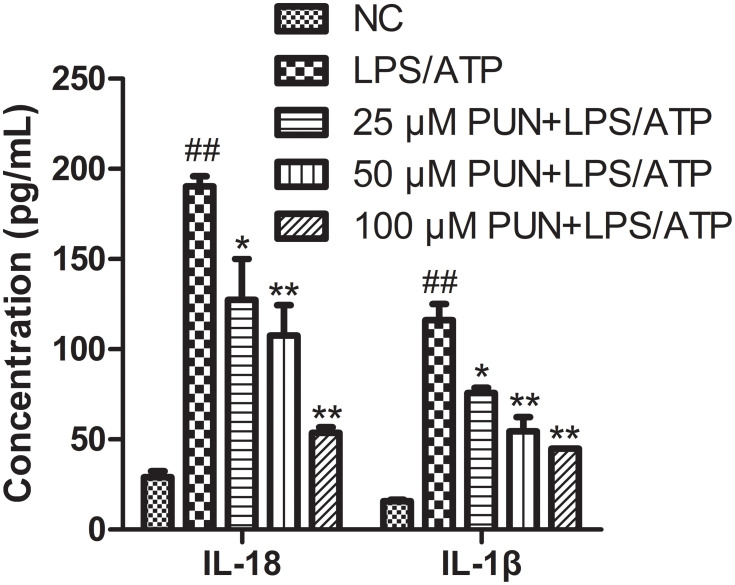
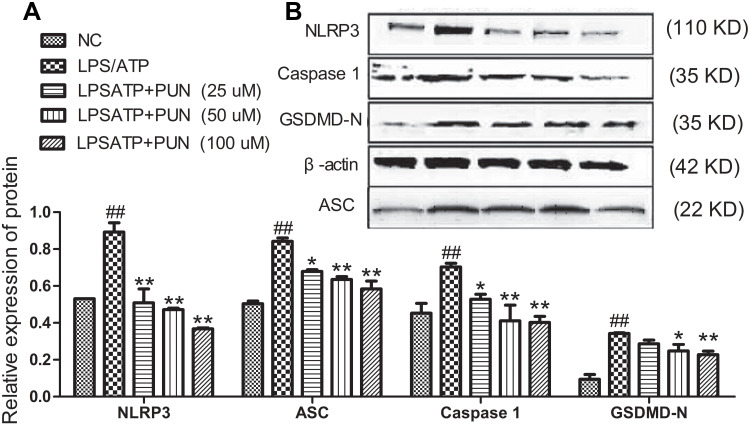
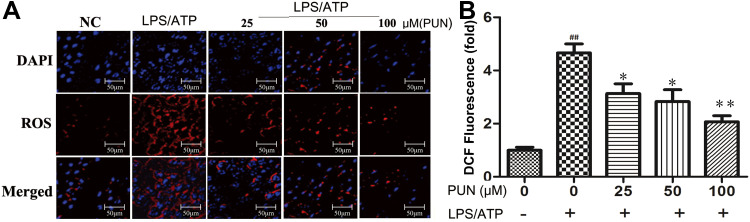
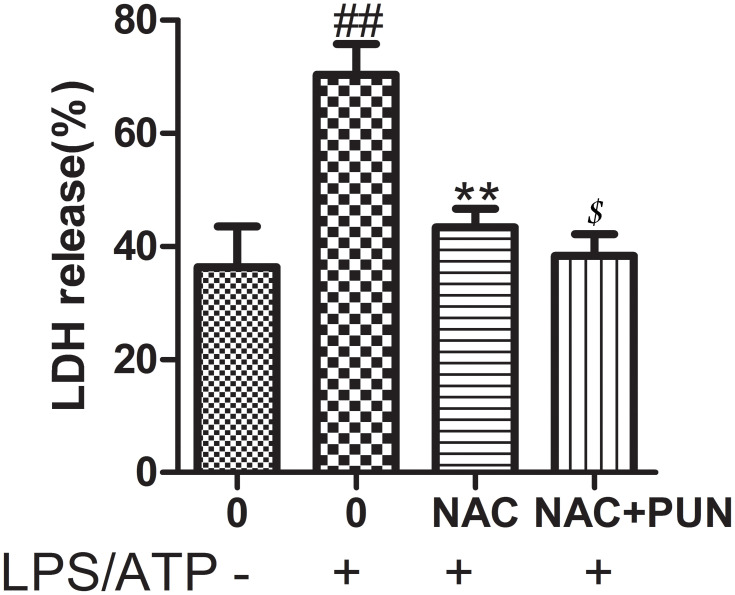
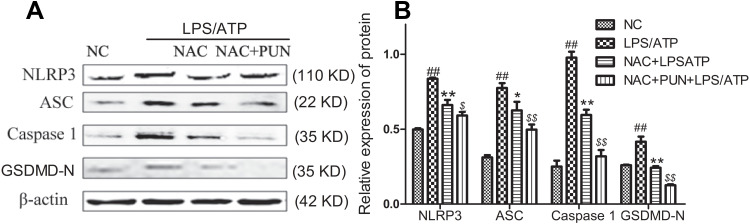
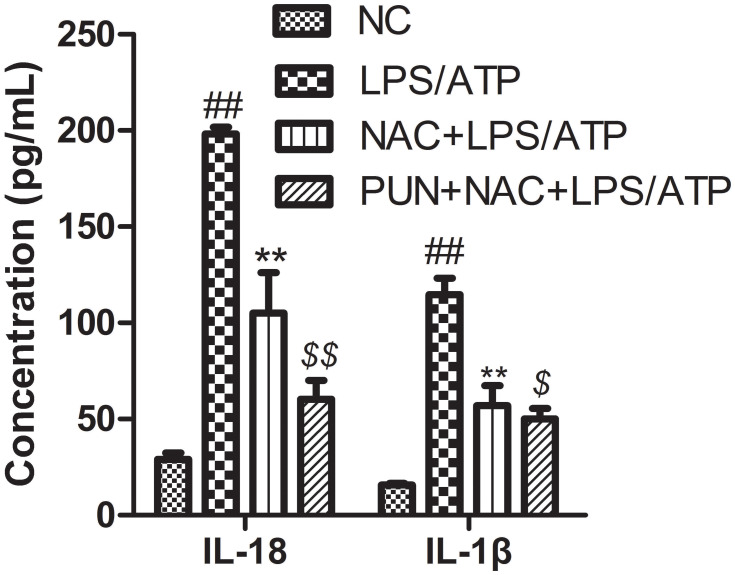
Punicalin significantly blocked the production of endogenous ROS, reduced LPS/ATP-induced activation of NLRP3, caspase 1, ASC and GSDMD-N, IL-1b and IL-18 protein levels. Furthermore, N-acetylcysteine (NAC), an ROS scavenger, inhibited the LPS/ATP-stimulated activation of NLRP3 inflammasome mediated inflammation and pyroptosis.
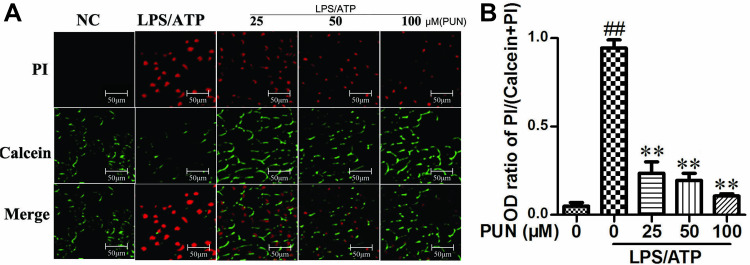
Punicalin ameliorates LPS/ATP-induced pyroptosis in J774A.1 macrophages, the mechanism may involve downregulation of the ROS/NLRP3 inflammasome signaling pathway.
炎症是许多炎症性和自身免疫性疾病的驱动力,细胞焦亡是细胞对过度炎症反应的死亡过程。据报道,石榴皮苷具有抗炎作用。然而,其抗细胞焦亡作用尚不清楚。因此,本研究旨在探讨石榴皮苷对LPS/ATP诱导的体外细胞焦亡的抑制作用。
使用脂多糖(LPS)/ATP模拟小鼠J774A.1细胞以模拟炎症反应,并检测石榴皮苷的作用。采用酶联免疫吸附测定(ELISA)分析促炎细胞因子的分泌。通过蛋白质免疫印迹法检测LPS/ATP刺激的细胞中含吡咯结构域的NOD样受体3(NLRP3)、含半胱天冬酶激活和募集结构域的凋亡相关斑点样蛋白(ASC)、半胱天冬酶-1和GSDMD-N的表达。使用N-乙酰半胱氨酸(NAC)验证石榴皮苷的作用。
石榴皮苷显著阻断内源性活性氧的产生,降低LPS/ATP诱导的NLRP3、半胱天冬酶1、ASC和GSDMD-N的激活,以及IL-1β和IL-18蛋白水平。此外,活性氧清除剂N-乙酰半胱氨酸(NAC)抑制LPS/ATP刺激的NLRP3炎性小体介导炎症和细胞焦亡的激活。
石榴皮苷改善LPS/ATP诱导的J774A.1巨噬细胞焦亡,其机制可能涉及下调活性氧/NLRP3炎性小体信号通路。