Yu Shibo, Wang Xiaowen, Zhu Lizhe, Xie Peiling, Zhou Yudong, Jiang Siyuan, Chen Heyan, Liao Xiaoqin, Pu Shengyu, Lei Zhenzhen, Wang Bin, Ren Yu
Department of Breast Surgery, the First Affiliated Hospital of Xi'an Jiaotong University, Xi'an, China.
Department of Second Breast surgery, the Affiliated Tumor Hospital of Xinjiang Medical University, Urumqi, China.
Ann Transl Med. 2021 Feb;9(4):330. doi: 10.21037/atm-20-7600.
Metabolic pathways play an essential role in breast cancer. However, the role of metabolism-related genes in the early diagnosis of breast cancer remains unknown.
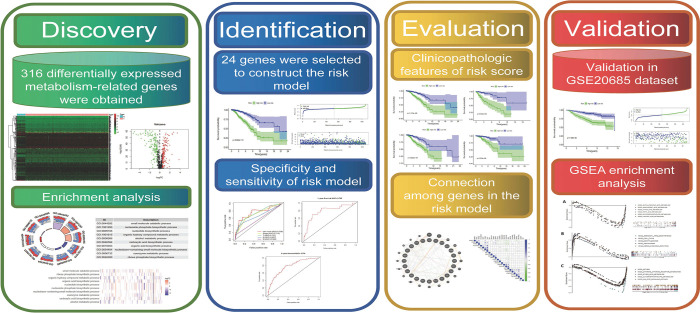
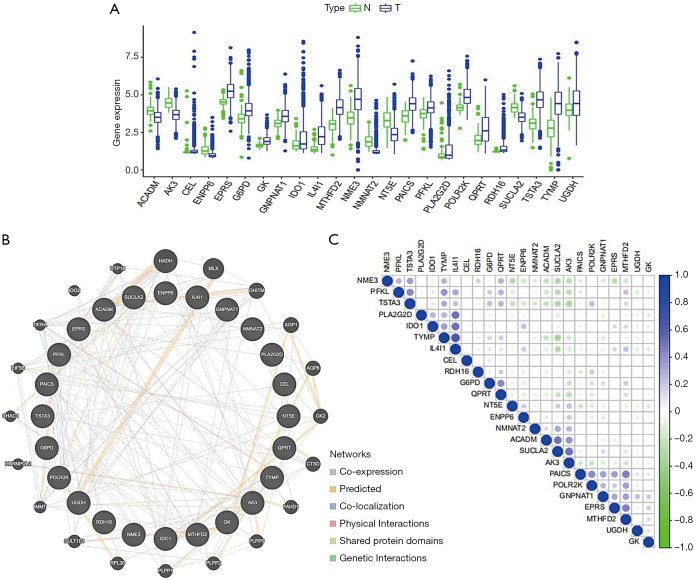
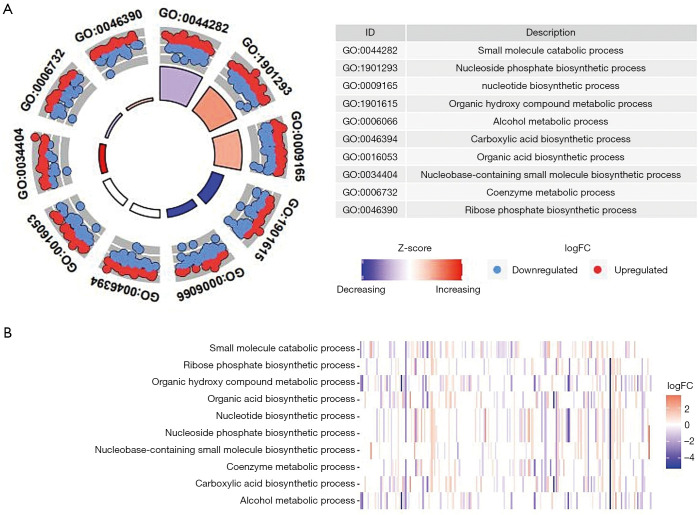
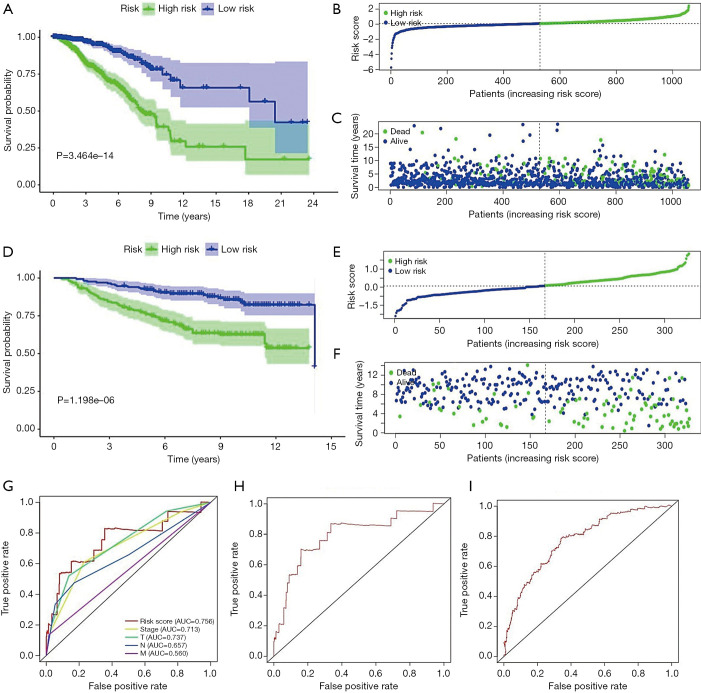
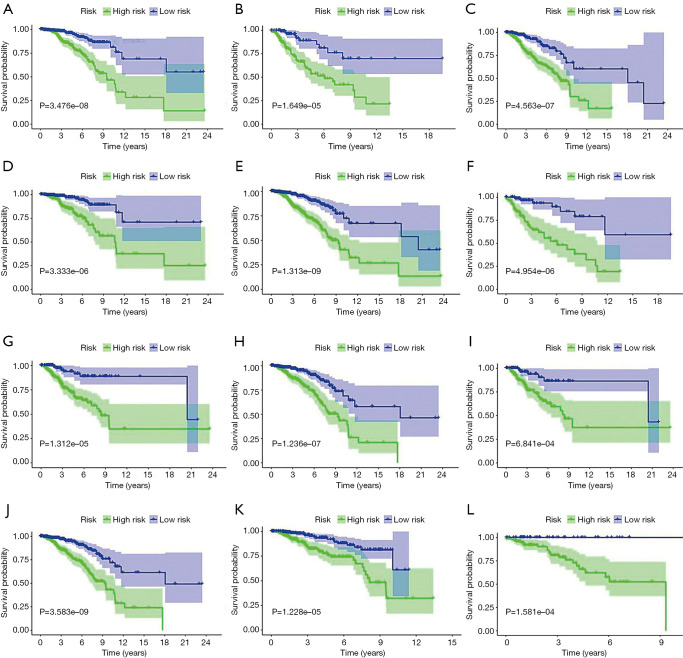
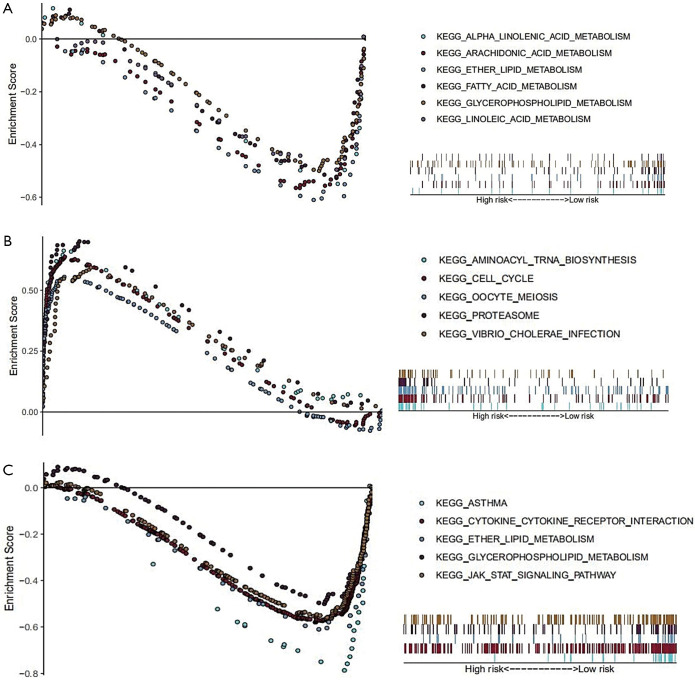
In our study, RNA sequencing (RNA-seq) expression data and clinicopathological information from The Cancer Genome Atlas (TCGA) and GSE20685 were obtained. Univariate cox regression and least absolute shrinkage and selection operator (LASSO) regression analyses were performed on the differentially expressed metabolism-related genes. Then, the formula of the metabolism-related risk model was composed, and the risk score of each patient was calculated. The breast cancer patients were divided into high-risk and low-risk groups with a cutoff of the median expression value of the risk score, and the prognostic analysis was also used to analyze the survival time between these two groups. In the end, we also analyzed the expression, interaction, and correlation among genes in the metabolism-related gene risk model.
The results from the prognostic analysis indicated that the survival was significantly poorer in the high-risk group than in the low-risk group in both TCGA and GSE20685 datasets. In addition, after adjusting for different clinicopathological features in multivariate analysis, the metabolism-related risk model remained an independent prognostic indicator in TCGA dataset.
In summary, we systematically developed a potential metabolism-related gene risk model for predicting prognosis in breast cancer patients.
代谢途径在乳腺癌中起着至关重要的作用。然而,代谢相关基因在乳腺癌早期诊断中的作用仍不清楚。
在我们的研究中,获取了来自癌症基因组图谱(TCGA)和GSE20685的RNA测序(RNA-seq)表达数据及临床病理信息。对差异表达的代谢相关基因进行单变量cox回归和最小绝对收缩和选择算子(LASSO)回归分析。然后,构建代谢相关风险模型公式,并计算每位患者的风险评分。将乳腺癌患者按风险评分中位数截断值分为高风险组和低风险组,并进行预后分析以分析两组之间的生存时间。最后,我们还分析了代谢相关基因风险模型中基因的表达、相互作用及相关性。
预后分析结果表明,在TCGA和GSE20685数据集中,高风险组的生存率显著低于低风险组。此外,在多变量分析中调整不同临床病理特征后,代谢相关风险模型在TCGA数据集中仍然是一个独立的预后指标。
总之,我们系统地开发了一种潜在的代谢相关基因风险模型,用于预测乳腺癌患者的预后。