Ye Zaisheng, Zheng Miao, Zeng Yi, Wei Shenghong, Huang He, Wang Yi, Liu Qinying, Lin Zhitao, Chen Shu, Zheng Qiuhong, Chen Luchuan
Department of Gastrointestinal Surgical Oncology, Fujian Cancer Hospital & Fujian Medical University Cancer Hospital, Fuzhou, China.
Department of Clinical Laboratory, Fujian Provincial Maternity and Children Hospital, Affiliated Hospital of Fujian Medical University, Fuzhou, China.
Front Oncol. 2021 Jun 21;11:612952. doi: 10.3389/fonc.2021.612952. eCollection 2021.
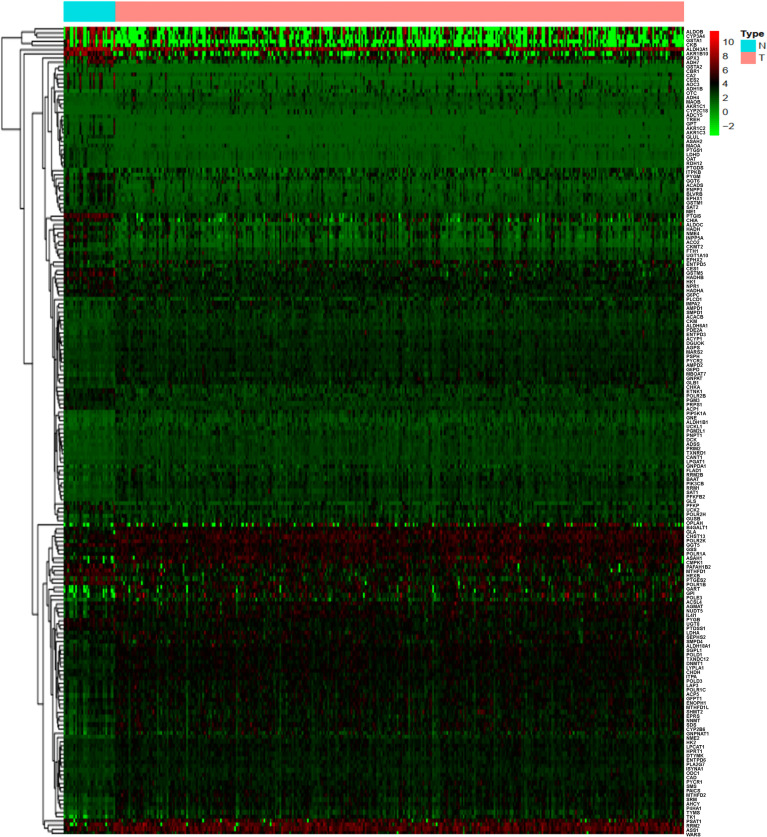
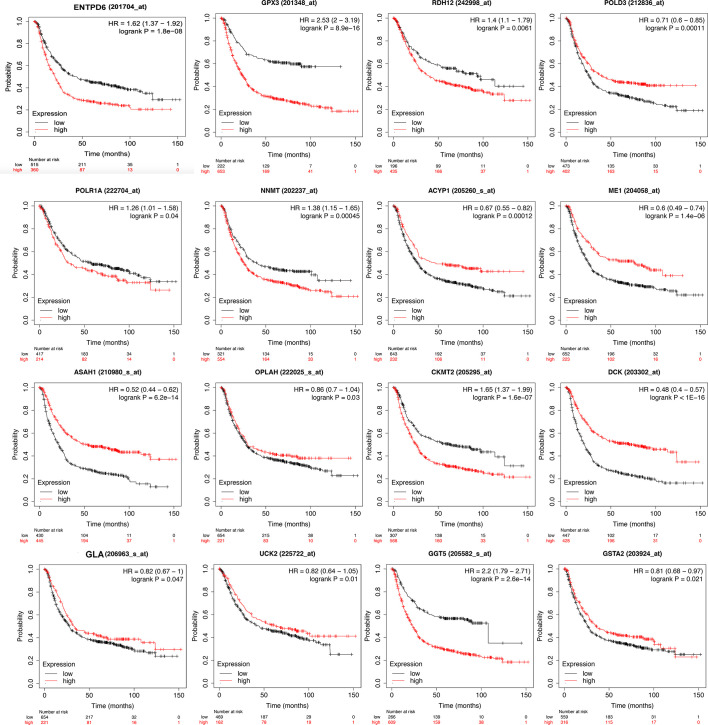
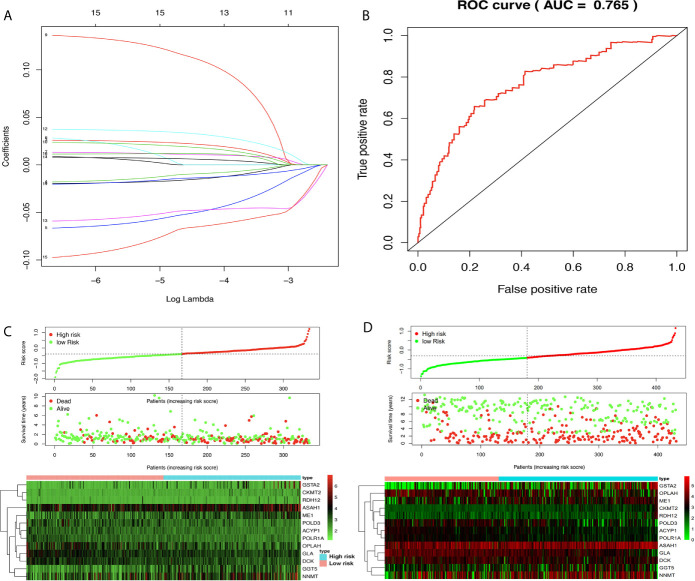
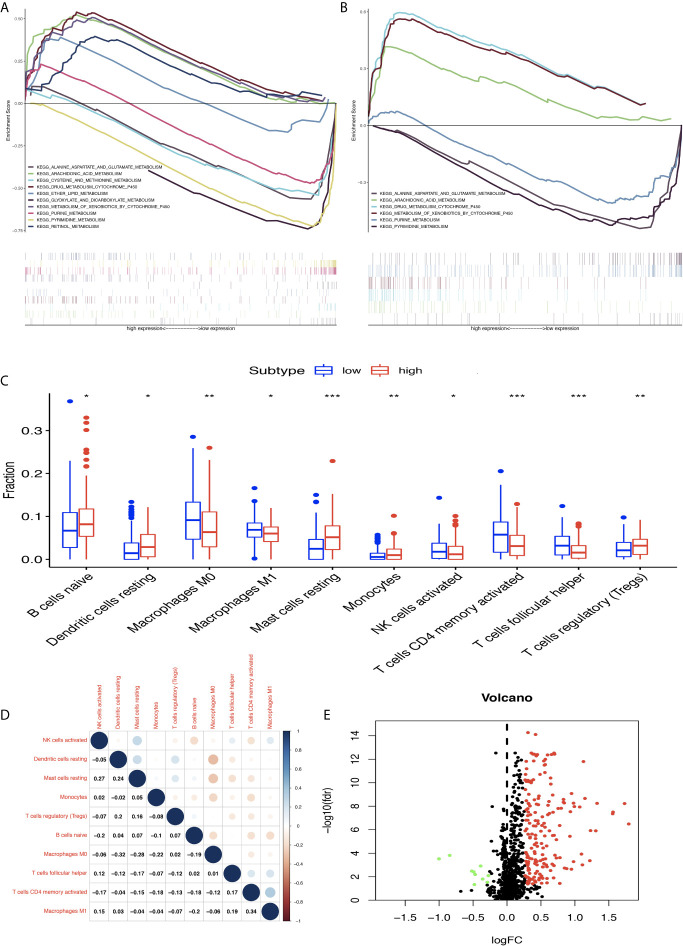
Patients with advanced stomach adenocarcinoma (STAD) commonly show high mortality and poor prognosis. Increasing evidence has suggested that basic metabolic changes may promote the growth and aggressiveness of STAD; therefore, identification of metabolic prognostic signatures in STAD would be meaningful. An integrative analysis was performed with 407 samples from The Cancer Genome Atlas (TCGA) and 433 samples from Gene Expression Omnibus (GEO) to develop a metabolic prognostic signature associated with clinical and immune features in STAD using Cox regression analysis and least absolute shrinkage and selection operator (LASSO). The different proportions of immune cells and differentially expressed immune-related genes (DEIRGs) between high- and low-risk score groups based on the metabolic prognostic signature were evaluated to describe the association of cancer metabolism and immune response in STAD. A total of 883 metabolism-related genes in both TCGA and GEO databases were analyzed to obtain 184 differentially expressed metabolism-related genes (DEMRGs) between tumor and normal tissues. A 13-gene metabolic signature (, , , , , , , , , , , , and was constructed for prognostic prediction of STAD. Sixteen survival-related DEMRGs were significantly related to the overall survival of STAD and the immune landscape in the tumor microenvironment. Univariate and multiple Cox regression analyses and the nomogram proved that a metabolism-based prognostic risk score (MPRS) could be an independent risk factor. More importantly, the results were mutually verified using TCGA and GEO data. This study provided a metabolism-related gene signature for prognostic prediction of STAD and explored the association between metabolism and the immune microenvironment for future research, thereby furthering the understanding of the crosstalk between different molecular mechanisms in human STAD. Some prognosis-related metabolic pathways have been revealed, and the survival of STAD patients could be predicted by a risk model based on these pathways, which could serve as prognostic markers in clinical practice.
晚期胃腺癌(STAD)患者通常死亡率高且预后较差。越来越多的证据表明,基础代谢变化可能促进STAD的生长和侵袭性;因此,识别STAD中的代谢预后特征具有重要意义。利用Cox回归分析和最小绝对收缩和选择算子(LASSO),对来自癌症基因组图谱(TCGA)的407个样本和来自基因表达综合数据库(GEO)的433个样本进行综合分析,以开发与STAD临床和免疫特征相关的代谢预后特征。基于代谢预后特征评估高风险和低风险评分组之间免疫细胞的不同比例和差异表达的免疫相关基因(DEIRGs),以描述STAD中癌症代谢与免疫反应的关联。对TCGA和GEO数据库中的总共883个代谢相关基因进行分析,以获得肿瘤组织和正常组织之间184个差异表达的代谢相关基因(DEMRGs)。构建了一个13基因的代谢特征(,,,,,,,,,,,,和)用于STAD的预后预测。16个与生存相关的DEMRGs与STAD的总生存期以及肿瘤微环境中的免疫格局显著相关。单因素和多因素Cox回归分析以及列线图证明,基于代谢的预后风险评分(MPRS)可能是一个独立的危险因素。更重要的是,使用TCGA和GEO数据对结果进行了相互验证。本研究为STAD的预后预测提供了一个与代谢相关的基因特征,并探索了代谢与免疫微环境之间的关联,以供未来研究,从而进一步加深对人类STAD中不同分子机制之间相互作用的理解。揭示了一些与预后相关的代谢途径,基于这些途径的风险模型可以预测STAD患者的生存情况,这可以作为临床实践中的预后标志物。