Reproductive Medical Center, Department of Obstetrics and Gynecology, Peking University International Hospital, Beijing, 102206, China.
Center of Reproductive Medicine and Genetics, Seventh Medical Center of PLA General Hospital, Beijing 100027, China.
JBRA Assist Reprod. 2021 Apr 27;25(2):266-271. doi: 10.5935/1518-0557.20200094.
To investigate if high anti-Müllerian hormone (AMH) concentration is a useful tool to predict the outcome of assisted reproductive treatment.
Retrospective cohort study involving 520 patients who underwent IVF/ICSI procedures in a university hospital. We measured the serum AMH level on day 3 of the menstrual cycle. Based on AMH levels, we divided the patients into three groups as follows: low (<25th percentile) AMH group, average (25th to 75th percentile) AMH group and high (>75th percentile) AMH group. We recorded the fertilization rate (FR), the number of oocytes retrieved, the number of good quality embryos (GQEs) and the clinical pregnancy rate (CPR).
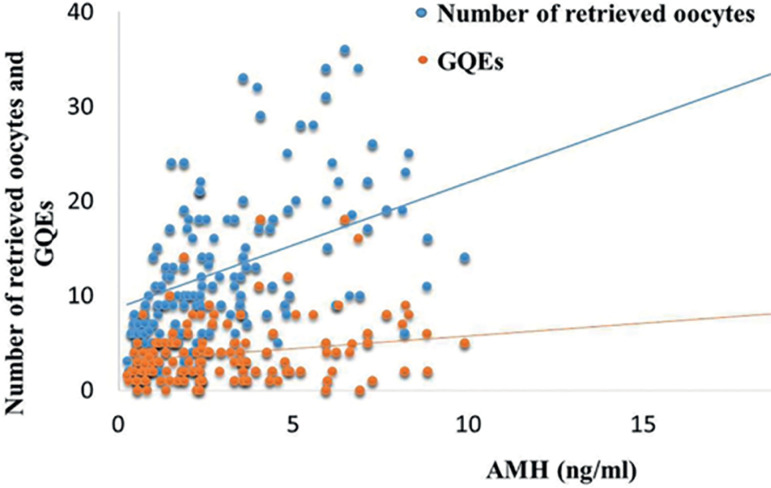
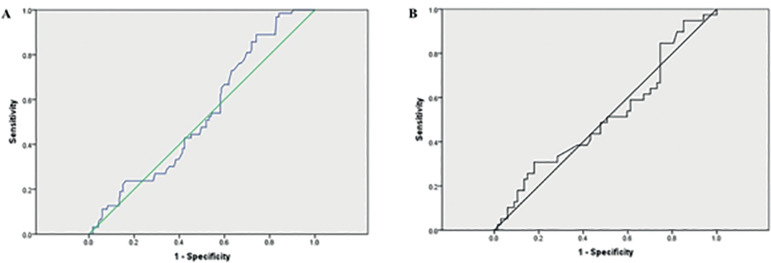
There was no difference between the three AMH groups in terms of maternal age, body mass index (BMI), follicle-stimulating hormone (FSH), estradiol (E2), luteinizing hormone (LH) and testosterone (T) in the IVF/ICSI cycles. The women in the high serum AMH group had a higher number of retrieved oocytes than those in the low or average AMH groups (p < 0.01) in the IVF/ICSI cycles. Compared with the low or average AMH groups, the women with high AMH levels had a higher number of good quality embryos (GQEs) in the IVF/ICSI cycles (p < 0.01). However, high AMH women had no significantly higher clinical pregnancy rate (CPR) compared to the women in the low or average AMH groups. In addition, for the prediction of CPR, the AMH levels alone were not an independent predictor of CPR for IVF and ICSI cycles in the ROC curve analysis.
High anti-Müllerian hormone levels are an independent predictor of the number of retrieved oocytes and good quality embryos (GQEs), but might not reflect the likelihood of higher clinical pregnancy rates (CPR) in IVF/ICSI treatment.
探讨高抗苗勒管激素(AMH)浓度是否可作为预测辅助生殖治疗结局的有用工具。
回顾性队列研究,纳入在一所大学医院接受体外受精/卵胞浆内单精子注射(IVF/ICSI)的 520 例患者。我们在月经周期第 3 天测量血清 AMH 水平。根据 AMH 水平,我们将患者分为三组:低(<第 25 百分位数)AMH 组、平均(第 25 至 75 百分位数)AMH 组和高(>第 75 百分位数)AMH 组。我们记录受精率(FR)、获卵数、优质胚胎数(GQE)和临床妊娠率(CPR)。
三组 AMH 患者的母体年龄、体质量指数(BMI)、卵泡刺激素(FSH)、雌二醇(E2)、黄体生成素(LH)和睾酮(T)在 IVF/ICSI 周期中均无差异。在 IVF/ICSI 周期中,高血清 AMH 组的获卵数多于低或平均 AMH 组(p<0.01)。与低或平均 AMH 组相比,高 AMH 组的 IVF/ICSI 周期中的优质胚胎数(GQE)更多(p<0.01)。然而,高 AMH 组的临床妊娠率(CPR)与低或平均 AMH 组相比没有显著升高。此外,ROC 曲线分析显示,在预测 CPR 方面,AMH 水平本身并不是 IVF 和 ICSI 周期 CPR 的独立预测因子。
高 AMH 水平是获卵数和优质胚胎数(GQE)的独立预测因子,但可能不能反映 IVF/ICSI 治疗中更高临床妊娠率(CPR)的可能性。