Beijer Institute of Ecological Economics, Royal Swedish Academy of Sciences, Stockholm, Sweden.
Global Economic Dynamics and the Biosphere Programme (GEDB), Royal Swedish Academy of Sciences, Stockholm, Sweden.
Ambio. 2021 Apr;50(4):834-869. doi: 10.1007/s13280-021-01544-8. Epub 2021 Mar 14.
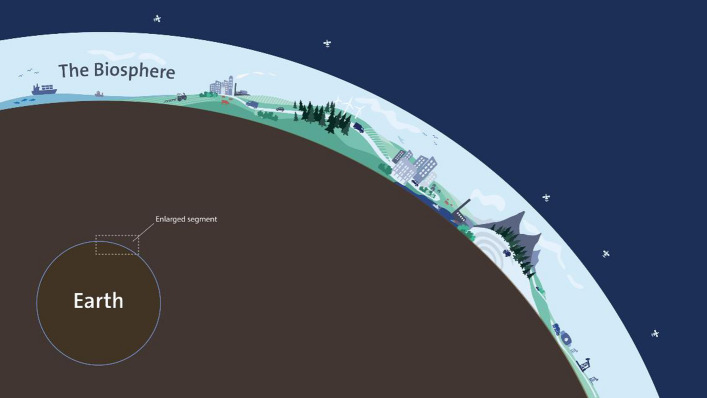
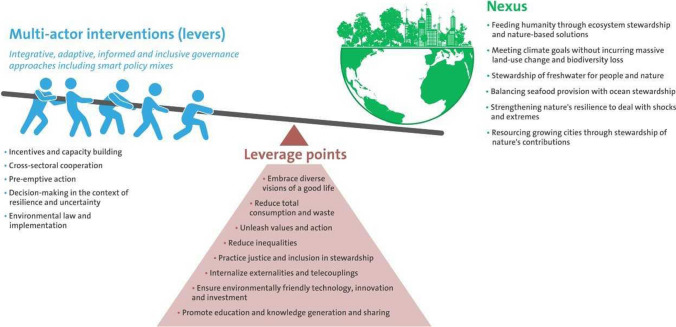
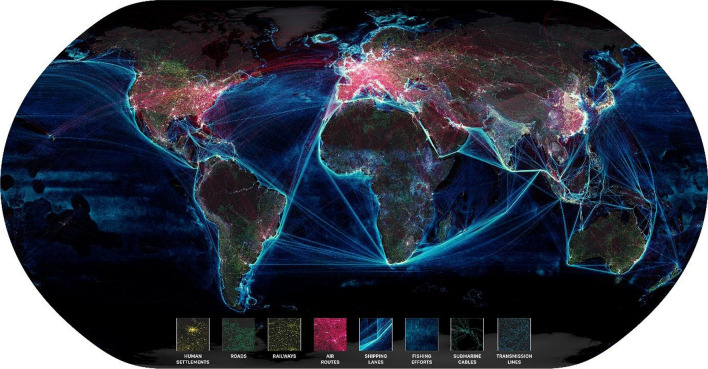
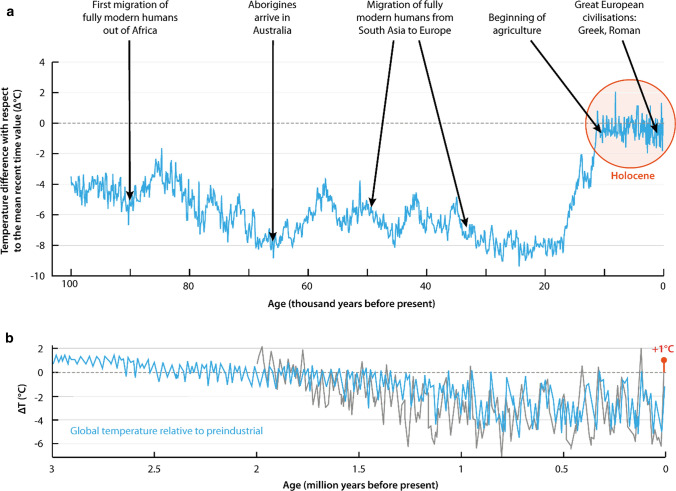
The COVID-19 pandemic has exposed an interconnected and tightly coupled globalized world in rapid change. This article sets the scientific stage for understanding and responding to such change for global sustainability and resilient societies. We provide a systemic overview of the current situation where people and nature are dynamically intertwined and embedded in the biosphere, placing shocks and extreme events as part of this dynamic; humanity has become the major force in shaping the future of the Earth system as a whole; and the scale and pace of the human dimension have caused climate change, rapid loss of biodiversity, growing inequalities, and loss of resilience to deal with uncertainty and surprise. Taken together, human actions are challenging the biosphere foundation for a prosperous development of civilizations. The Anthropocene reality-of rising system-wide turbulence-calls for transformative change towards sustainable futures. Emerging technologies, social innovations, broader shifts in cultural repertoires, as well as a diverse portfolio of active stewardship of human actions in support of a resilient biosphere are highlighted as essential parts of such transformations.
新冠疫情暴露出一个紧密相连、快速变化的全球化世界。本文为理解和应对全球可持续性和有弹性的社会的这种变化奠定了科学基础。我们提供了一个系统的概述,说明人与自然在生物圈中动态交织和嵌入的现状,将冲击和极端事件视为这一动态的一部分;人类已成为塑造整个地球系统未来的主要力量;人类活动的规模和速度导致了气候变化、生物多样性的迅速丧失、不平等加剧以及应对不确定性和意外的恢复力丧失。总之,人类活动正在挑战文明繁荣发展的生物圈基础。人类世的现实——系统范围动荡加剧——要求向可持续的未来进行变革。新兴技术、社会创新、文化剧目更广泛的转变,以及多样化的积极管理人类活动组合以支持有弹性的生物圈,都是这些转变的重要组成部分。