Department of Surgery, Máxima Medical Center, De Run 4600, Veldhoven, 5504 DB, The Netherlands.
Research School NUTRIM, Department of Surgery, Maastricht University Medical Center, Maastricht, the Netherlands.
Nutr J. 2021 Mar 14;20(1):27. doi: 10.1186/s12937-021-00688-3.
As result of bariatric surgery, patients are susceptible to protein deficiency which can result in undesirable lean body mass (LBM) loss. Consumption of high-protein diets or supplements could counteract this, but evidence about the effect is scarce. This paper systematically reviewed the literature to determine the effect of additional protein intake (≥60 g/day) on LBM preservation in post-bariatric patients.
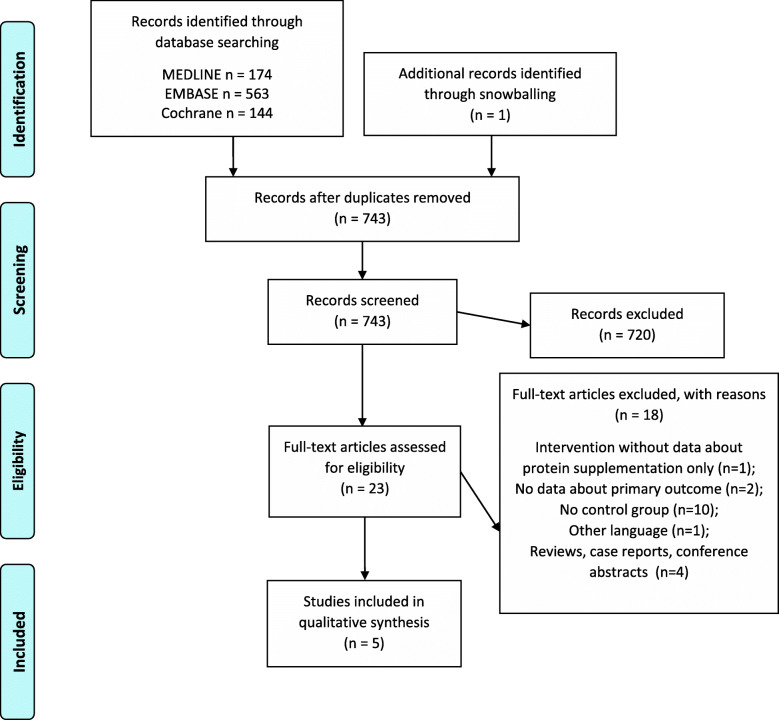
An electronic search of PubMed, EMBASE and the Cochrane Library was conducted. Studies were included if patients received a high-protein diet or protein supplements for at least one month, and LBM was assessed. The primary outcome was difference in mean LBM loss between the experimental (protein) and control group. Secondary outcomes were differences in body fat mass, total body water, body mass index and resting metabolic rate.
Two of the five included studies (n = 223) showed that consumption of proteins resulted in significant LBM preservation. Only one study reported a significant difference in the reduction of body fat mass and resting metabolic rate in favour of a high-protein diet, but none of the studies showed a significant difference in total body water loss or body mass index change between the two groups.
This paper showed inconclusive evidence for LBM preservation due to protein supplementation or a high-protein diet in post-bariatric patients. This outcome might be subjected to certain limitations, including a lack of blinding and a low compliance rate reported in the included studies. More specific and personalized recommendations regarding protein intake may need to be established by high quality research. Studies investigating the quantity (g/day) and quality (whey, casein or soy) of proteins are also needed.
由于减重手术的原因,患者容易出现蛋白质缺乏,这可能导致不理想的去脂体重(LBM)损失。食用高蛋白饮食或补充剂可能会对此产生影响,但目前这方面的证据很少。本文系统地回顾了文献,以确定额外摄入蛋白质(≥60g/天)对减重后患者 LBM 保存的影响。
对 PubMed、EMBASE 和 Cochrane 图书馆进行电子检索。如果患者接受高蛋白饮食或蛋白质补充剂至少一个月,并且评估了 LBM,则纳入研究。主要结局是实验组(蛋白质)和对照组之间 LBM 损失的平均差异。次要结局是体脂质量、总体水量、体重指数和静息代谢率的差异。
五项研究中有两项(n=223)表明,蛋白质的消耗导致 LBM 显著保存。只有一项研究报告说,高蛋白饮食在减少体脂质量和静息代谢率方面有显著差异,但没有一项研究显示两组之间的总体水量损失或体重指数变化有显著差异。
由于蛋白质补充或高蛋白饮食,本文对减重后患者的 LBM 保存提供了不确定的证据。由于纳入研究报告的存在一定局限性,包括缺乏盲法和低依从率,这一结果可能会受到影响。可能需要通过高质量的研究来制定更具体和个性化的蛋白质摄入建议。也需要研究蛋白质的数量(g/天)和质量(乳清、酪蛋白或大豆)。