Svedung Wettervik Teodor M, Lewén Anders, Enblad Per
Department of Neuroscience, Section of Neurosurgery, Uppsala University, Uppsala, Sweden.
Front Neurol. 2021 Feb 24;12:638132. doi: 10.3389/fneur.2021.638132. eCollection 2021.
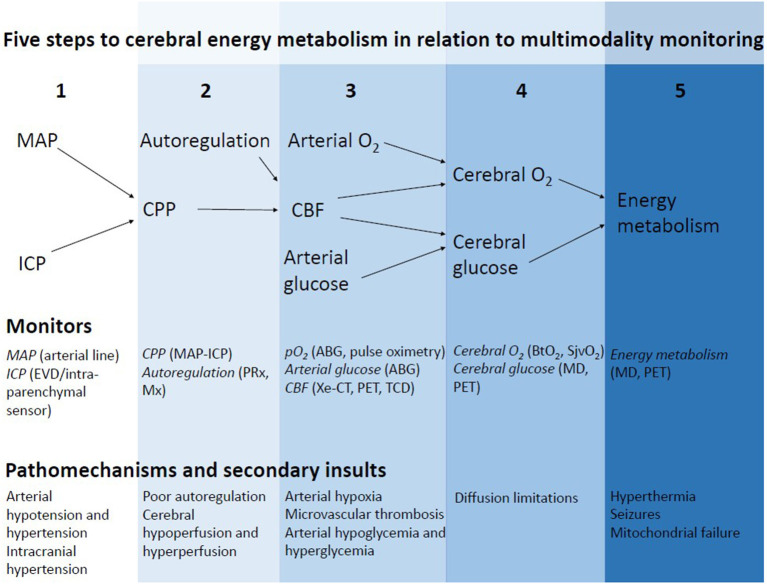
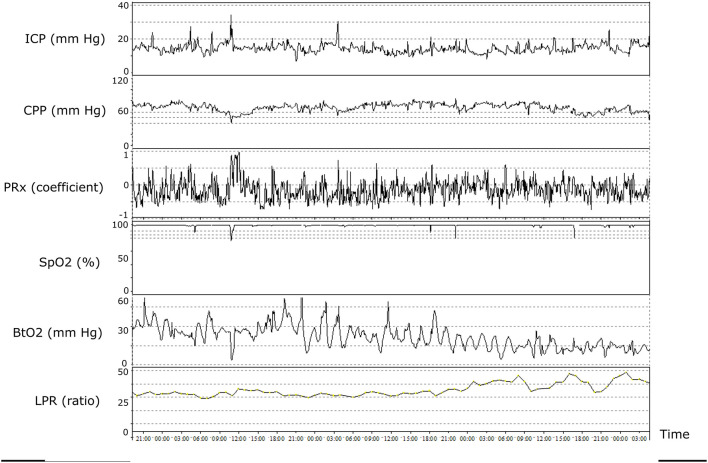
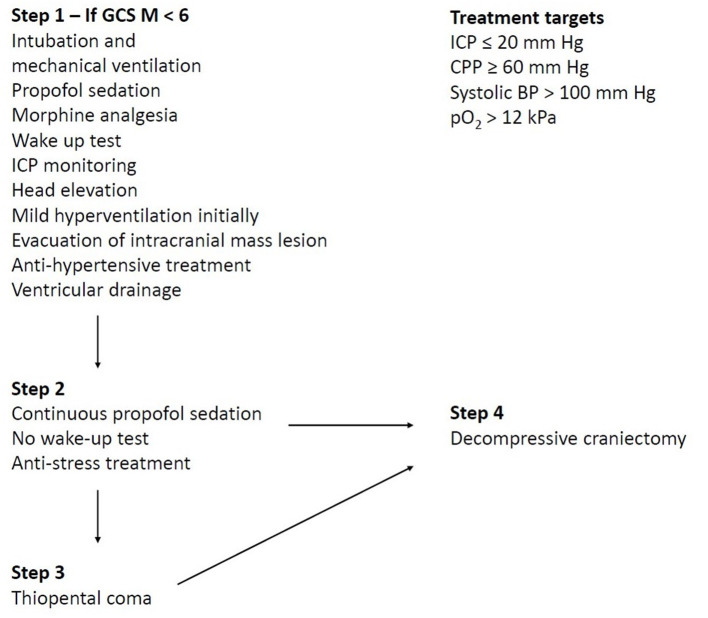
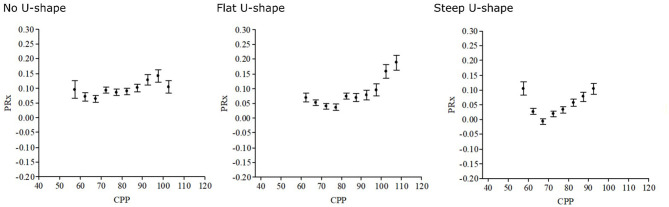
Neurointensive care (NIC) has contributed to great improvements in clinical outcomes for patients with severe traumatic brain injury (TBI) by preventing, detecting, and treating secondary insults and thereby reducing secondary brain injury. Traditional NIC management has mainly focused on generally applicable escalated treatment protocols to avoid high intracranial pressure (ICP) and to keep the cerebral perfusion pressure (CPP) at sufficiently high levels. However, TBI is a very heterogeneous disease regarding the type of injury, age, comorbidity, secondary injury mechanisms, etc. In recent years, the introduction of multimodality monitoring, including, e.g., pressure autoregulation, brain tissue oxygenation, and cerebral energy metabolism, in addition to ICP and CPP, has increased the understanding of the complex pathophysiology and the physiological effects of treatments in this condition. In this article, we will present some potential future approaches for more individualized patient management and fine-tuning of NIC, taking advantage of multimodal monitoring to further improve outcome after severe TBI.
神经重症监护(NIC)通过预防、检测和治疗继发性损伤,从而减少继发性脑损伤,为重度创伤性脑损伤(TBI)患者的临床预后带来了显著改善。传统的NIC管理主要侧重于普遍适用的逐步升级治疗方案,以避免高颅内压(ICP)并将脑灌注压(CPP)维持在足够高的水平。然而,TBI在损伤类型、年龄、合并症、继发性损伤机制等方面是一种非常异质性的疾病。近年来,除了ICP和CPP监测外,引入多模态监测,如压力自动调节、脑组织氧合和脑能量代谢,增加了对这种情况下复杂病理生理学和治疗生理效应的理解。在本文中,我们将介绍一些未来可能的方法,利用多模态监测来进一步改善重度TBI后的预后,实现更个性化的患者管理和NIC的精细调整。