Shcherbakova Larisa, Mikityuk Oleg, Arslanova Lenara, Stakheev Alexander, Erokhin Denis, Zavriev Sergey, Dzhavakhiya Vitaly
Laboratory of Physiological Plant Pathology, All-Russian Research Institute of Phytopathology, Moscow, Russia.
Department of Molecular Biology, All-Russian Research Institute of Phytopathology, Moscow, Russia.
Front Microbiol. 2021 Feb 25;12:629429. doi: 10.3389/fmicb.2021.629429. eCollection 2021.
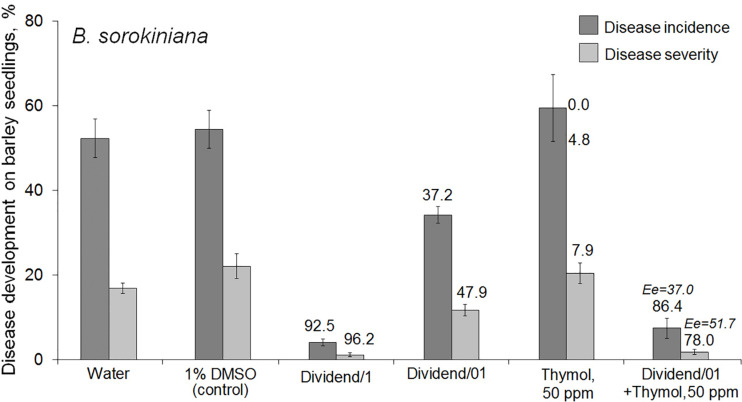
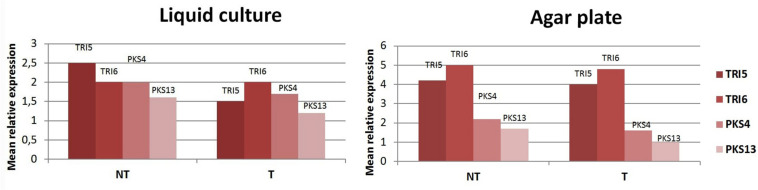
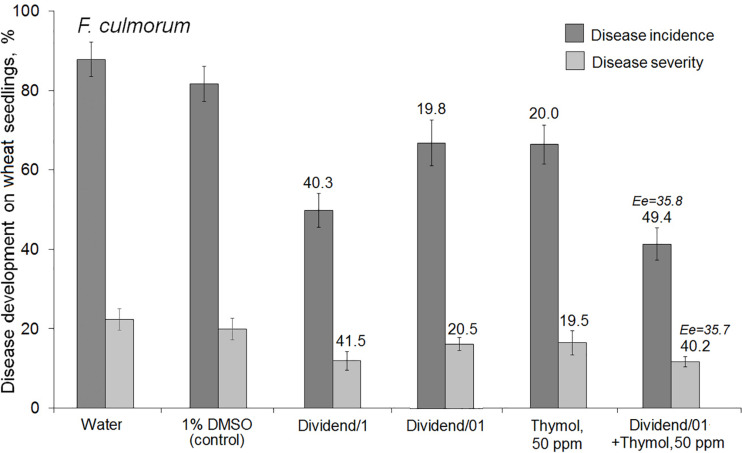
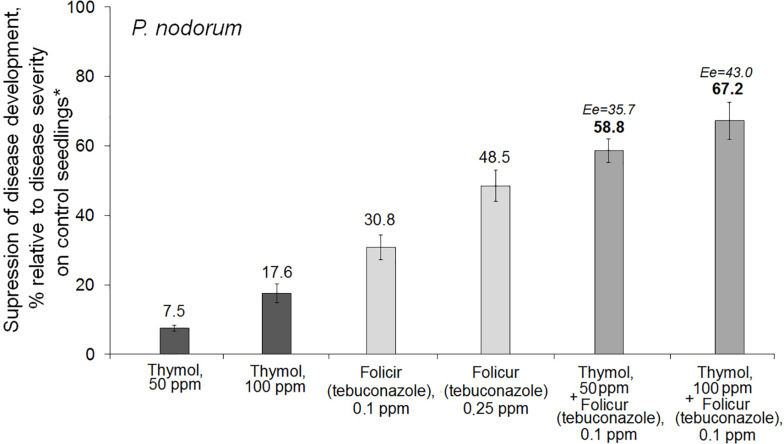
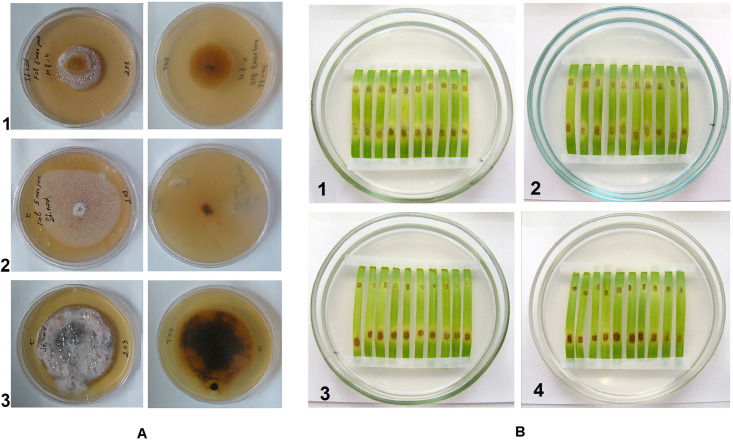
Thymol, a secondary plant metabolite possessing antifungal and chemosensitizing activities, disrupts cell wall or membrane integrity and interferes with ergosterol biosynthesis. Thymol also functions as a redox-active compound inducing generation of reactive oxygen species and lipid peroxidation in fungal cells. Previously, we showed thymol significantly enhanced the growth inhibitory effect of difenoconazole against and . More recently, we demonstrated a possibility to use thymol to overcome the resistance of a strain able to grow on difenoconazole-containing media. However, potential for thymol to serve as a chemosensitizing agent in seed or plant treatments, to provide an effective suppression of the above-mentioned plant pathogens by triazole fungicides applied in lowered dosages, had yet to be tested. In the work presented here, we showed combined treatments of naturally infected barley seeds with thymol and difenoconazole (Dividend 030 FS) synergistically exacerbated the protective effect against common root rot agent, , and other fungi ( spp. and spp.). Similarly, co-applied treatment of wheat seeds, artificially inoculated with , resulted in equivalent reduction of disease incidence on barley seedlings as application of Dividend, alone, at a ten-fold higher dosage. In foliar treatments of wheat seedlings, thymol combined with Folicur 250 EC (a.i. tebuconazole) enhanced sensitivity of , a glume/leaf blotch pathogen, to the fungicide and provided a significant mitigation of disease severity on treated seedlings, compared to controls, without increasing Folicur dosages. Folicur co-applied with thymol was also significantly more effective against a strain of tolerant to Folicur alone. No additional deoxynivalenol or zearalenone production was found when a toxigenic was cultured in a nutrient medium containing thymol at a concentration used for chemosensitization of root rot agents. Accordingly, exposure to thymol at the sensitizing concentration did not up-regulate key genes associated with the biosynthesis of trichothecene or polyketide mycotoxins in this pathogen. Further studies using field trials are necessary to determine if thymol-triazole co-applications result in sensitization of seed- and foliar-associated plant pathogenic fungi, and if thymol affects production of fusarial toxins under field conditions.
百里香酚是一种具有抗真菌和化学增敏活性的次生植物代谢产物,它会破坏细胞壁或细胞膜的完整性,并干扰麦角甾醇的生物合成。百里香酚还作为一种氧化还原活性化合物,可诱导真菌细胞中活性氧的产生和脂质过氧化。此前,我们发现百里香酚能显著增强苯醚甲环唑对[具体菌种1]和[具体菌种2]的生长抑制作用。最近,我们证明了利用百里香酚克服能在含苯醚甲环唑培养基上生长的[某种菌株]耐药性的可能性。然而,百里香酚作为种子或植物处理中的化学增敏剂,以较低剂量施用三唑类杀菌剂来有效抑制上述植物病原体的潜力尚未得到测试。在本文所述的工作中,我们发现用百里香酚和苯醚甲环唑(Dividend 030 FS)联合处理自然感染的大麦种子,可协同增强对常见根腐病菌[具体菌种3]以及其他真菌([菌种4]属和[菌种5]属)的保护作用。同样,对人工接种[具体菌种6]的小麦种子进行联合处理,与单独施用剂量高十倍的Dividend相比,能同等程度地降低大麦幼苗的发病率。在小麦幼苗的叶面处理中,百里香酚与富力库250 EC(有效成分戊唑醇)联合使用,可增强颖壳/叶斑病菌[具体菌种7]对该杀菌剂的敏感性,与对照相比,在不增加富力库剂量的情况下,显著减轻了处理幼苗的病害严重程度。与单独使用富力库相比,富力库与百里香酚联合使用对一株耐富力库的[具体菌种8]菌株也更有效。当在用于根腐病菌化学增敏的浓度下,在含有百里香酚的营养培养基中培养产毒素的[具体菌种9]时,未发现脱氧雪腐镰刀菌烯醇或玉米赤霉烯酮的额外产生。因此,在致敏浓度下接触百里香酚不会上调该病原体中与单端孢霉烯族毒素或聚酮类霉菌毒素生物合成相关的关键基因。有必要通过田间试验进行进一步研究,以确定百里香酚 - 三唑类联合应用是否会使与种子和叶面相关的植物病原真菌致敏,以及百里香酚在田间条件下是否会影响镰刀菌毒素的产生。