Swain Harekrushna, Adak Totan, Mukherjee Arup K, Sarangi Sarmistha, Samal Pankajini, Khandual Ansuman, Jena Rupalin, Bhattacharyya Pratap, Naik Soumendra K, Mehetre Sayaji T, Baite Mathew S, Kumar M Sunil, Zaidi Najam Waris
Crop Protection Division, ICAR-National Rice Research Institute, Cuttack, India.
Department of Botany and Biotechnology, Ravenshaw University, Cuttack, India.
Front Microbiol. 2021 Feb 26;12:633881. doi: 10.3389/fmicb.2021.633881. eCollection 2021.
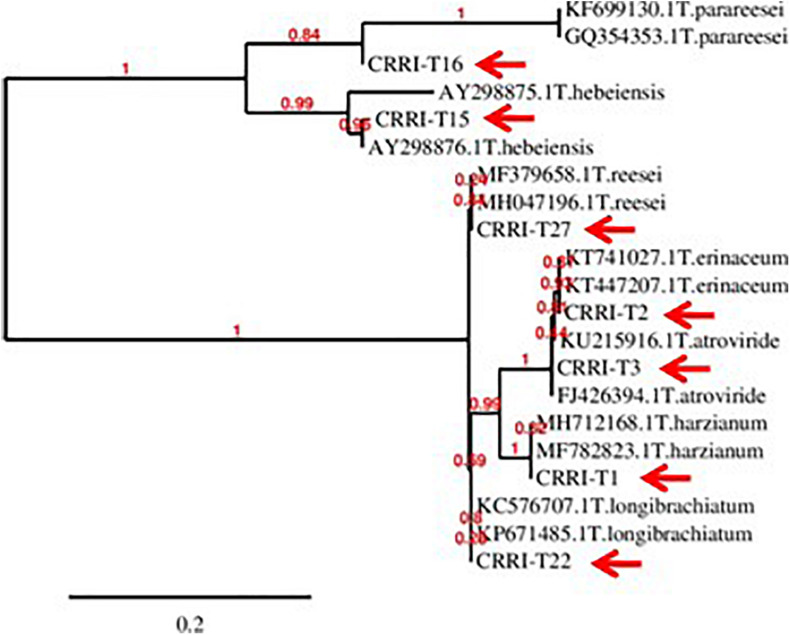
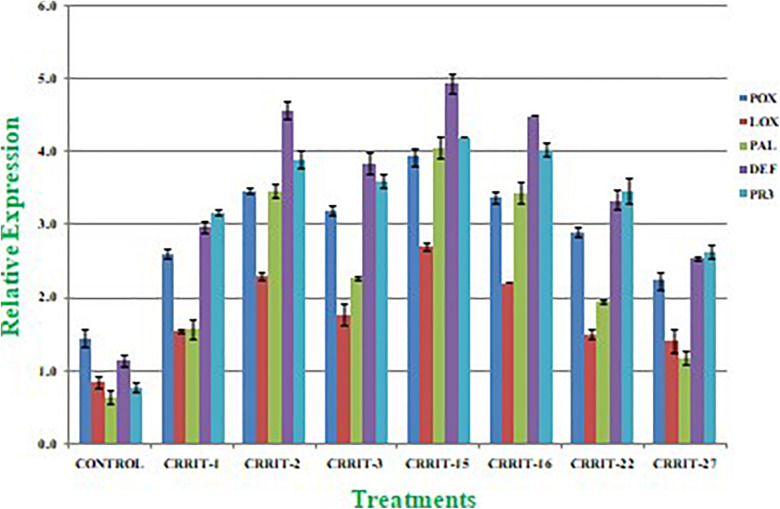
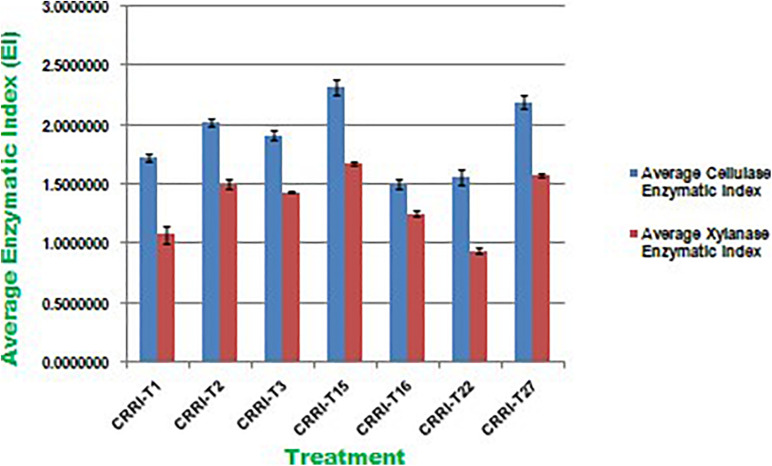
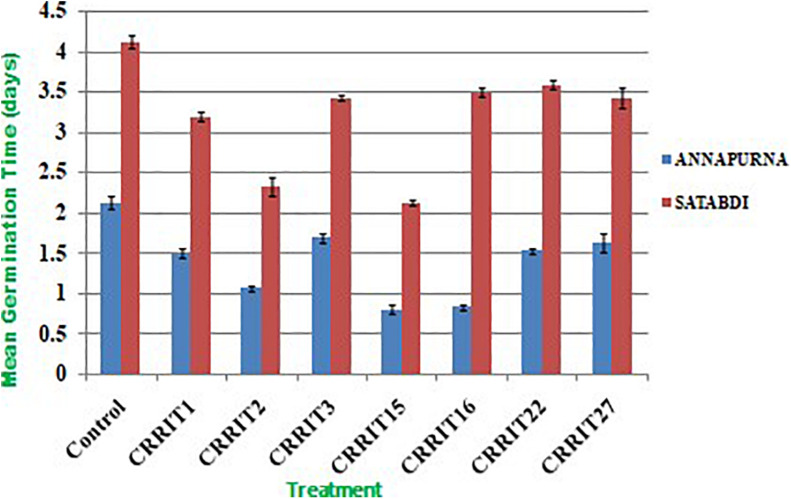
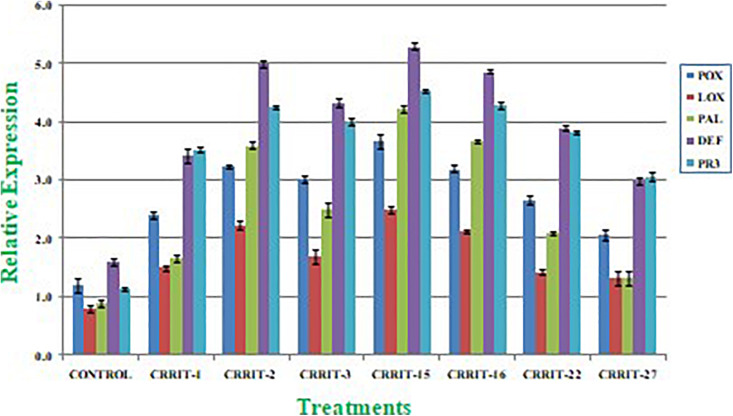
This study is a unique report of the utilization of strains collected from even tree barks for rice plant growth, its health management, and paddy straw degradation. Seven different spp. of were characterized according to morphological and molecular tools. Two of the isolated strains, namely and , outperformed the other strains. Both of the strains controlled four important rice pathogens, i.e., (100%), (84.17%), (66.67%), and (76.25%). Seed bio-priming with respective strains reduced the mean germination time, enhanced the seedling vigor and total chlorophyll content which could be related to the higher yield observed in two rice varieties; Annapurna and Satabdi. All the seven strains accelerated the decomposition of rice straw by producing higher straw degrading enzymes like total cellulase (0.97-2.59 IU/mL), endoglucanase (0.53-0.75 IU/mL), xylanase (145.35-201.35 nkat/mL), and laccase (2.48-12.60 IU/mL). They also produced higher quantities of indole acetic acid (19.19-46.28 μg/mL), soluble phosphate (297.49-435.42 μg/mL), and prussic acid (0.01-0.37 μg/mL) which are responsible for plant growth promotion and the inhibition of rice pathogen populations. Higher expression of defense enzymes like catalase (≥250% both in shoot and root), peroxidase (≥150% in root and ≥100% in shoot), superoxide dismutase (≥ 150% in root and ≥100% in shoot), polyphenol oxidase (≥160% in shoot and ≥120% in shoot), and total phenolics (≥200% in root and ≥250% in shoot) as compared to the control indicates stress tolerance ability to rice crop. The expression of the aforementioned enzymes were confirmed by the expression of corresponding defense genes like PAL (>3-fold), DEFENSIN (>1-fold), POX (>1.5-fold), LOX (>1-fold), and PR-3 (>2-fold) as compared to the non-treated control plants. This investigation demonstrates that strains obtained from tree bark could be considered to be utilized for the sustainable health management of rice crop.
本研究是一份关于利用从偶数树皮收集的菌株促进水稻植株生长、进行健康管理及降解稻草的独特报告。根据形态学和分子工具对7种不同的[菌株名称]进行了表征。分离出的两种菌株,即[菌株1名称]和[菌株2名称],表现优于其他菌株。这两种菌株对四种重要的水稻病原菌均有防治效果,即[病原菌1名称](防治率100%)、[病原菌2名称](防治率84.17%)、[病原菌3名称](防治率66.67%)和[病原菌4名称](防治率76.25%)。用相应的[菌株名称]进行种子生物引发可缩短平均发芽时间,增强幼苗活力和总叶绿素含量,这可能与两个水稻品种(安纳布尔纳和萨塔迪)的高产有关。所有七种菌株通过产生更高水平的稻草降解酶,如总纤维素酶(0.97 - 2.59 IU/mL)、内切葡聚糖酶(0.53 - 0.75 IU/mL)、木聚糖酶(145.35 - 201.35 nkat/mL)和漆酶(2.48 - 12.60 IU/mL),加速了稻草的分解。它们还产生了更高量的吲哚乙酸(19.19 - 46.28 μg/mL)、可溶性磷酸盐(297.49 - 435.42 μg/mL)和氢氰酸(0.01 - 0.37 μg/mL),这些物质有助于促进植物生长并抑制水稻病原菌种群。与对照相比,过氧化氢酶(地上部和根部均≥250%)、过氧化物酶(根部≥150%,地上部≥100%)、超氧化物歧化酶(根部≥150%,地上部≥100%)、多酚氧化酶(地上部≥160%,地上部≥120%)和总酚类(根部≥200%,地上部≥250%)等防御酶的更高表达表明水稻作物具有胁迫耐受能力。与未处理的对照植株相比,上述酶的表达通过相应防御基因如苯丙氨酸解氨酶(>3倍)、防御素(>1倍)、过氧化物酶(>1.5倍)、脂氧合酶(>1倍)和病程相关蛋白3(>2倍)的表达得到证实。本研究表明,从树皮获得的[菌株名称]可被认为用于水稻作物的可持续健康管理。