Yao Xin, Guo Hailin, Zhang Kaixuan, Zhao Mengyu, Ruan Jingjun, Chen Jie
College of Agronomy, Guizhou University, Guiyang, China.
Science and Technology Innovation Development Center of Bijie City, Bijie, China.
Front Microbiol. 2023 May 3;14:1160551. doi: 10.3389/fmicb.2023.1160551. eCollection 2023.
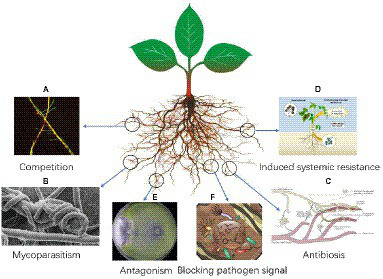
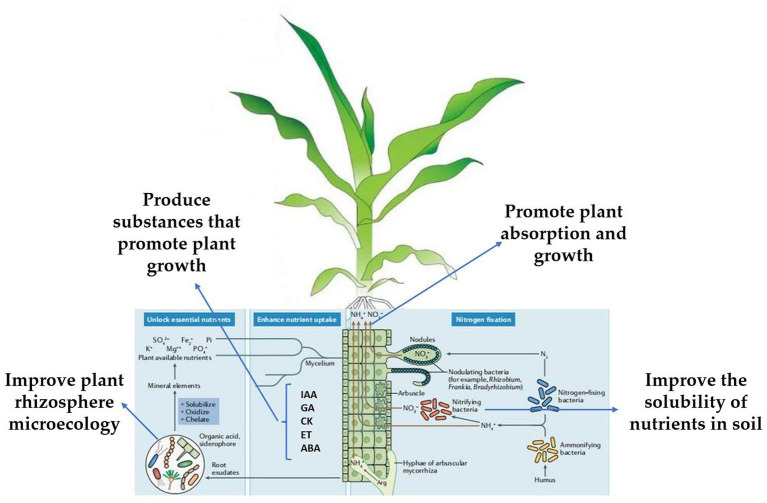
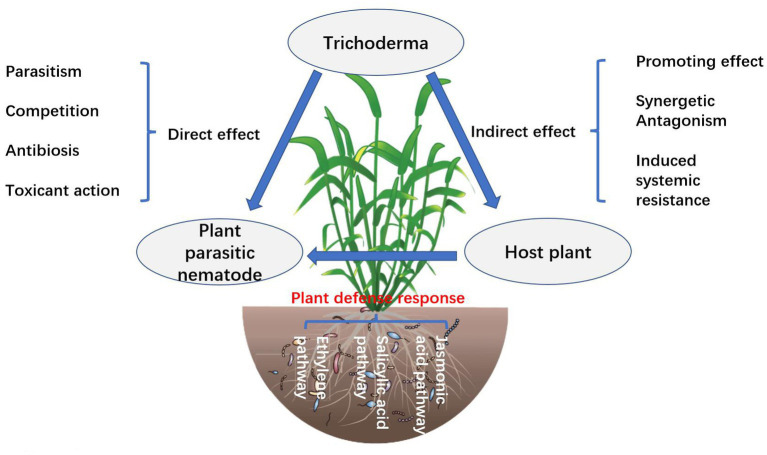
is mainly used to control soil-borne diseases as well as some leaf and panicle diseases of various plants. can not only prevent diseases but also promotes plant growth, improves nutrient utilization efficiency, enhances plant resistance, and improves agrochemical pollution environment. spp. also behaves as a safe, low-cost, effective, eco-friendly biocontrol agent for different crop species. In this study, we introduced the biological control mechanism of in plant fungal and nematode disease, including competition, antibiosis, antagonism, and mycoparasitism, as well as the mechanism of promoting plant growth and inducing plant systemic resistance between and plants, and expounded on the application and control effects of in the control of various plant fungal and nematode diseases. From an applicative point of view, establishing a diversified application technology for is an important development direction for its role in the sustainable development of agriculture.
主要用于防治多种植物的土传病害以及一些叶部和穗部病害。不仅能预防病害,还能促进植物生长,提高养分利用效率,增强植物抗性,改善农药污染环境。[具体菌种名称]对不同作物品种而言也是一种安全、低成本、有效、环保的生物防治剂。在本研究中,我们介绍了[具体菌种名称]在植物真菌和线虫病害中的生物防治机制,包括竞争、抗生、拮抗和重寄生作用,以及[具体菌种名称]与植物之间促进植物生长和诱导植物系统抗性的机制,并阐述了[具体菌种名称]在防治各种植物真菌和线虫病害中的应用及防治效果。从应用角度来看,建立[具体菌种名称]的多元化应用技术是其在农业可持续发展中发挥作用的重要发展方向。