Department of Pediatric Pneumology and Allergy, University Children's Hospital Regensburg (KUNO) at Hospital St. Hedwig of the Order of St. John, Regensburg, Germany.
Department of Internal Medicine II, University Hospital Tübingen, University of Tübingen, Tübingen, Germany.
Front Immunol. 2021 Feb 25;12:636061. doi: 10.3389/fimmu.2021.636061. eCollection 2021.
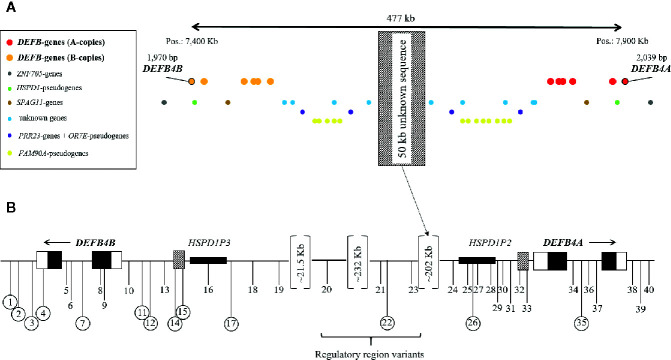
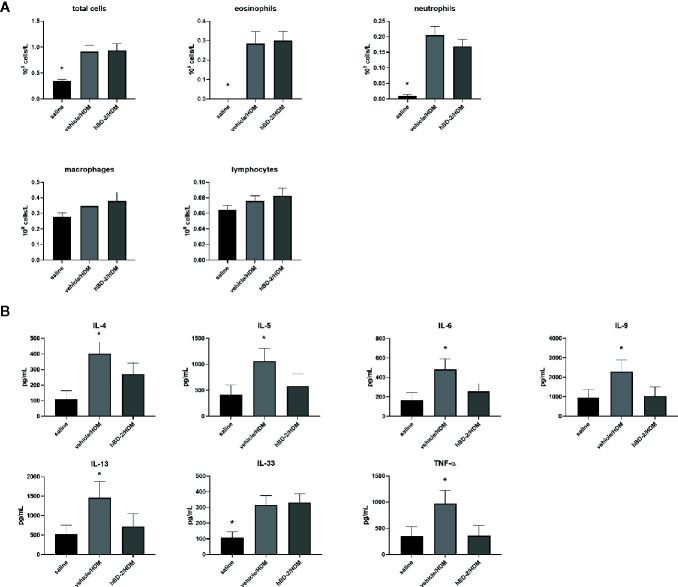
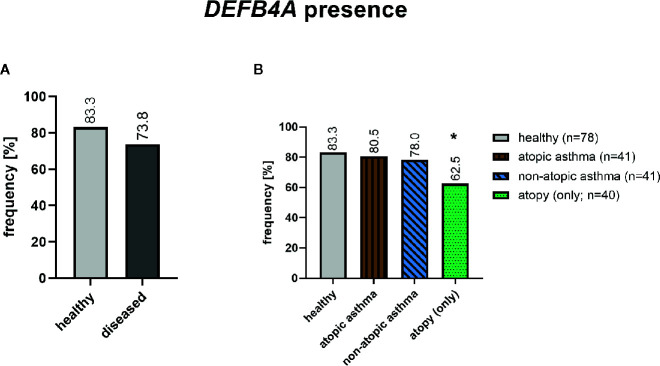
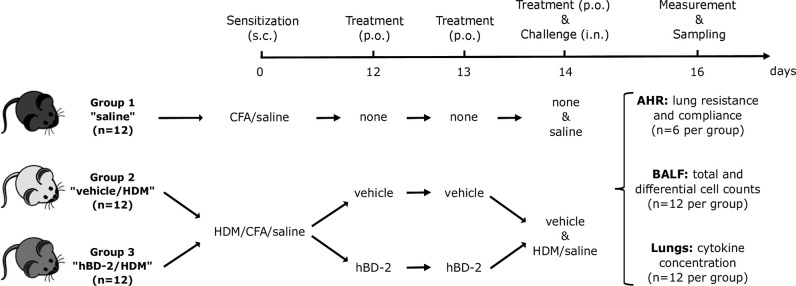
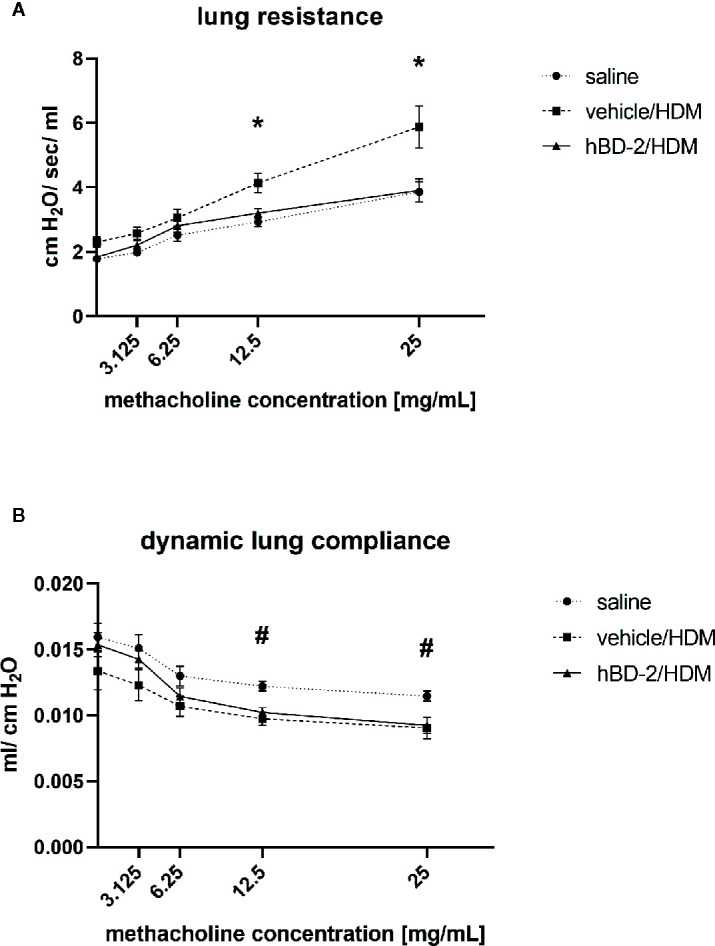
Asthma and allergies are complex, chronic inflammatory diseases in which genetic and environmental factors are crucial. Protection against asthma and allergy development in the context of farming environment is established by early animal contact, unpasteurized milk consumption and gut microbiota maturation. The human β-defensin 2 (hBD-2) is a host defense peptide present almost exclusively in epithelial tissues, with pronounced immunomodulatory properties, which has recently been shown to ameliorate asthma and IBD in animal models. We hypothesized that adequate hBD-2 secretion plays a role in the protection against asthma and allergy development and that genetic variations in the complex gene locus coding for hBD-2 may be a risk factor for developing these diseases, if as a consequence, hBD-2 is insufficiently produced. We used MALDI-TOF MS genotyping, sequencing and a RFLP assay to study the genetic variation including mutations, polymorphisms and copy number variations in the locus harboring both genes coding for hBD-2 ( and . We administered hBD-2 orally in a mouse model of house dust mite (HDM)-asthma before allergy challenge to explore its prophylactic potential, thereby mimicking a protective farm effect. Despite the high complexity of the region harboring and we identified numerous genetic variants to be associated with asthma and allergy in the GABRIELA Ulm population of 1,238 children living in rural areas, including rare mutations, polymorphisms and a lack of the . Furthermore, we found that prophylactic oral administration of hBD-2 significantly curbed lung resistance and pulmonary inflammation in our HDM mouse model. These data indicate that inadequate genetic capacity for hBD-2 is associated with increased asthma and allergy risk while adequate and early hBD-2 administration (in a mouse model) prevents atopic asthma. This suggests that hBD-2 could be involved in the protective farm effect and may be an excellent candidate to confer protection against asthma development.
哮喘和过敏是复杂的慢性炎症性疾病,其中遗传和环境因素至关重要。在农业环境中,通过早期接触动物、饮用未经巴氏消毒的牛奶和肠道微生物成熟来预防哮喘和过敏的发展。人β防御素 2(hBD-2)是一种存在于上皮组织中的宿主防御肽,具有明显的免疫调节特性,最近已被证明可改善动物模型中的哮喘和 IBD。我们假设,足够的 hBD-2 分泌在预防哮喘和过敏发展中发挥作用,并且编码 hBD-2 的复杂基因座中的遗传变异可能是这些疾病的危险因素,如果因此,hBD-2 的产生不足。我们使用 MALDI-TOF MS 基因分型、测序和 RFLP 检测来研究包含编码 hBD-2 的两个基因(和)的基因座中的遗传变异,包括突变、多态性和拷贝数变异。我们在屋尘螨(HDM)-哮喘的小鼠模型中口服给予 hBD-2,在过敏挑战之前进行预防,以探索其预防潜力,从而模拟保护性农场效应。尽管包含和的区域具有高度复杂性,但我们在居住在农村地区的 1238 名儿童的 GABRIELA Ulm 人群中发现了许多与哮喘和过敏相关的遗传变异,包括罕见突变、多态性和缺乏。此外,我们发现预防性口服给予 hBD-2 可显著抑制我们的 HDM 小鼠模型中的肺阻力和肺部炎症。这些数据表明,hBD-2 的遗传能力不足与哮喘和过敏风险增加相关,而早期给予足够的 hBD-2(在小鼠模型中)可预防特应性哮喘。这表明 hBD-2 可能参与保护性农场效应,并且可能是预防哮喘发展的极佳候选物。