Boklund Anette, Gortázar Christian, Pasquali Paolo, Roberts Helen, Nielsen Søren Saxmose, Stahl Karl, Stegeman Arjan, Baldinelli Francesca, Broglia Alessandro, Van Der Stede Yves, Adlhoch Cornelia, Alm Erik, Melidou Angeliki, Mirinaviciute Grazina
EFSA J. 2021 Mar 3;19(3):e06459. doi: 10.2903/j.efsa.2021.6459. eCollection 2021 Mar.
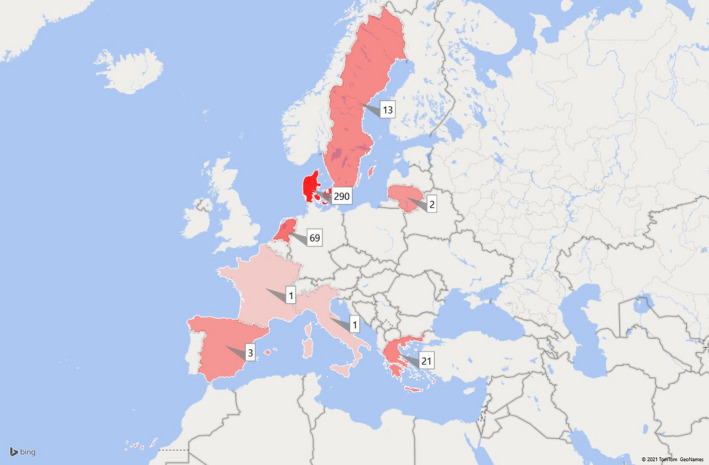
American mink and ferret are highly susceptible to severe acute respiratory syndrome coronavirus 2 (SARS-CoV-2), but no information is available for other mustelid species. SARS-CoV-2 spreads very efficiently within mink farms once introduced, by direct and indirect contact, high within-farm animal density increases the chance for transmission. Between-farm spread is likely to occur once SARS-CoV-2 is introduced, short distance between SARS-CoV-2 positive farms is a risk factor. As of 29 January 2021, SARS-CoV-2 virus has been reported in 400 mink farms in eight countries in the European Union. In most cases, the likely introduction of SARS-CoV-2 infection into farms was infected humans. Human health can be at risk by mink-related variant viruses, which can establish circulation in the community, but so far these have not shown to be more transmissible or causing more severe impact compared with other circulating SARS-CoV-2. Concerning animal health risk posed by SARS-CoV-2 infection the animal species that may be included in monitoring plans are American mink, ferrets, cats, raccoon dogs, white-tailed deer and Rhinolophidae bats. All mink farms should be considered at risk of infection; therefore, the monitoring objective should be early detection. This includes passive monitoring (in place in the whole territory of all countries where animals susceptible to SARS-CoV-2 are bred) but also active monitoring by regular testing. First, frequent testing of farm personnel and all people in contact with the animals is recommended. Furthermore randomly selected animals (dead or sick animals should be included) should be tested using reverse transcriptase-polymerase chain reaction (RT-PCR), ideally at weekly intervals (i.e. design prevalence approximately 5% in each epidemiological unit, to be assessed case by case). Suspected animals (dead or with clinical signs and a minimum five animals) should be tested for confirmation of SARS-CoV-2 infection. Positive samples from each farm should be sequenced to monitor virus evolution and results publicly shared.
美国水貂和雪貂对严重急性呼吸综合征冠状病毒2(SARS-CoV-2)高度易感,但关于其他鼬科动物的信息尚无。一旦引入,SARS-CoV-2在水貂养殖场内通过直接和间接接触传播效率极高,养殖场内动物密度高增加了传播机会。一旦引入SARS-CoV-2,农场间传播很可能发生,SARS-CoV-2阳性农场之间距离短是一个风险因素。截至2021年1月29日,欧盟8个国家的400个水貂养殖场已报告SARS-CoV-2病毒。在大多数情况下,SARS-CoV-2感染养殖场很可能是由受感染的人类引入的。与水貂相关的变异病毒可能会对人类健康构成风险,这些病毒可在社区中传播,但到目前为止,与其他传播的SARS-CoV-2相比,它们并未表现出更强的传播性或造成更严重的影响。关于SARS-CoV-2感染带来的动物健康风险,监测计划中可能包括的动物物种有美国水貂、雪貂、猫、貉、白尾鹿和菊头蝠科蝙蝠。所有水貂养殖场都应被视为有感染风险;因此,监测目标应为早期检测。这包括被动监测(在所有养殖易感染SARS-CoV-2动物的国家的整个领土内进行)以及通过定期检测进行的主动监测。首先,建议对养殖场工作人员和所有接触动物的人员进行频繁检测。此外,应使用逆转录聚合酶链反应(RT-PCR)对随机选择的动物(应包括死亡或患病动物)进行检测,理想情况下每周检测一次(即每个流行病学单位的设计患病率约为5%,需逐案评估)。对疑似动物(死亡或有临床症状且至少5只动物)应进行检测以确认是否感染SARS-CoV-2。每个养殖场的阳性样本都应进行测序,以监测病毒进化并公开共享结果。