Nam Daleum, Kim Ami, Han Sun Jung, Lee Sung-Ik, Park Sung-Hye, Seol Wongi, Son Ilhong, Ho Dong Hwan
InAm Neuroscience Research Center, Gunpo, Republic of Korea.
Department of Neurology, Sanbon Medical Center, College of Medicine, Wonkwang University, Gunpo-si, Republic of Korea.
Anim Cells Syst (Seoul). 2021 Feb 17;25(1):28-36. doi: 10.1080/19768354.2021.1883735.
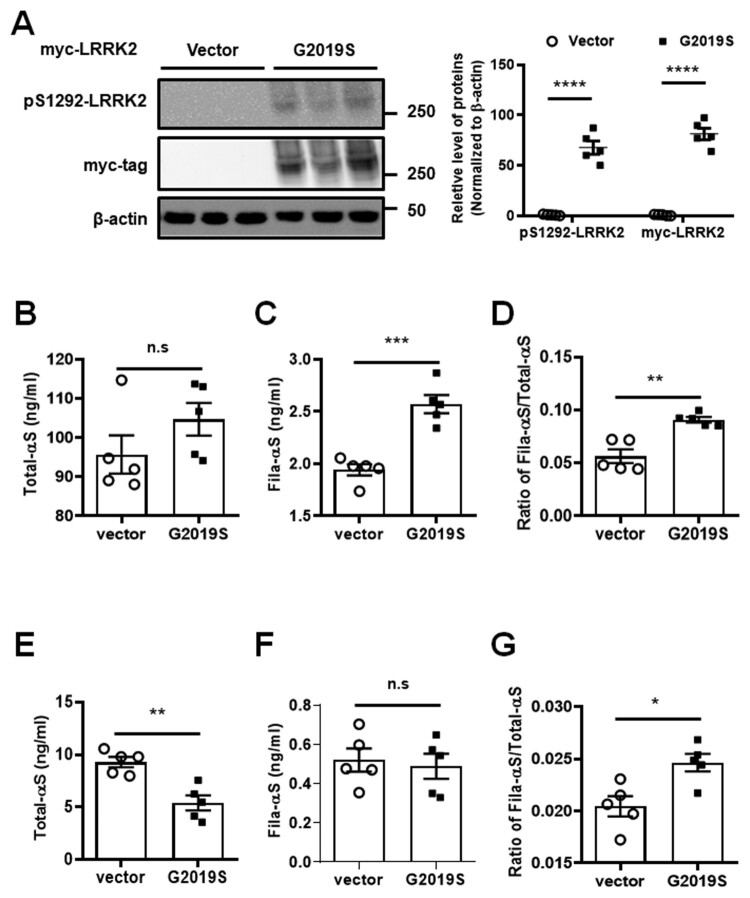
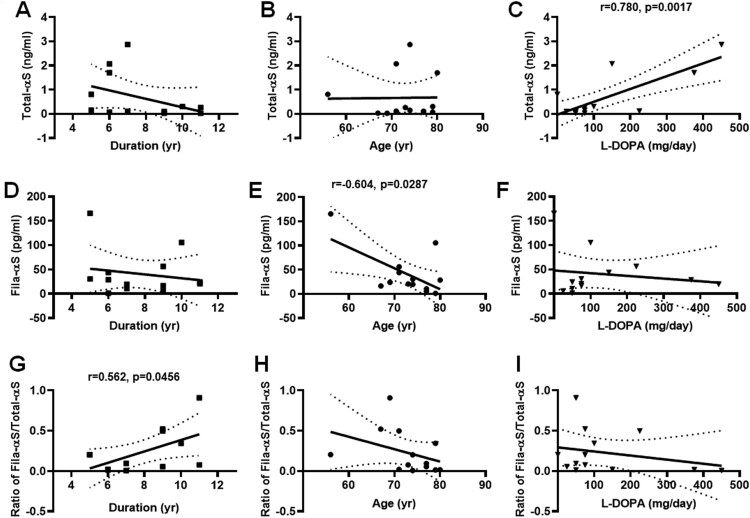
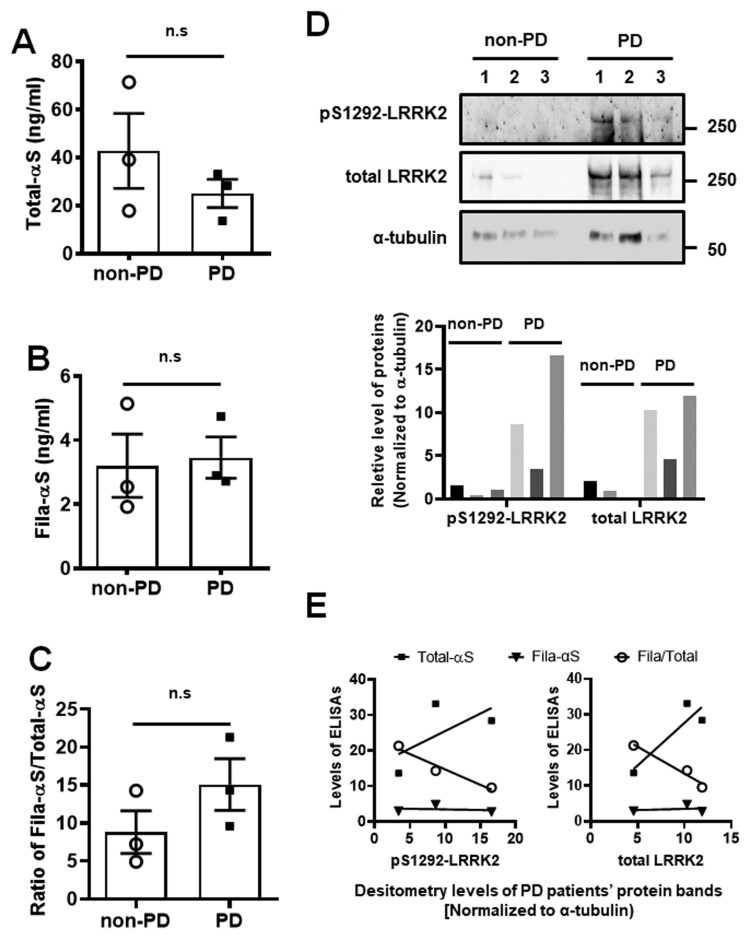
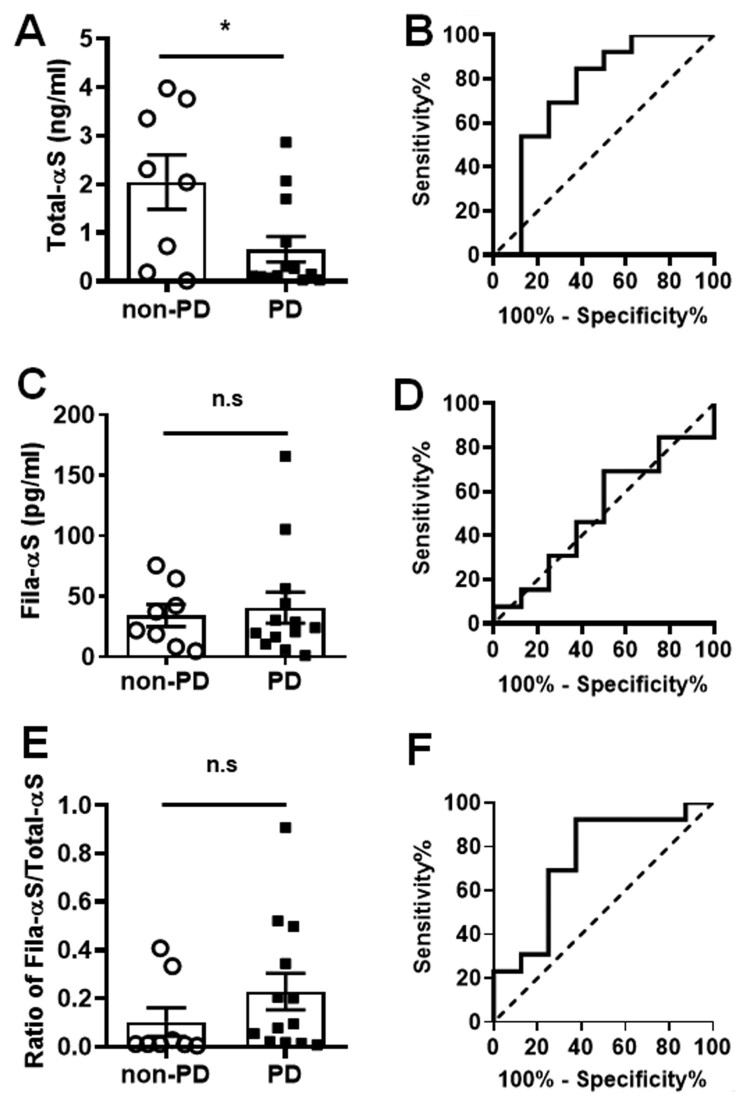
Research on Parkinson's disease (PD) has been focused on the development of PD diagnostic tools as much as the development of PD therapeutics. Several genetic culprits of PD, including DJ-1, Leucine-rich repeat kinase 2 (LRRK2), and α-synuclein (α-syn), have been investigated as markers of PD in human biofluids. Unfortunately, the approaches to develop PD diagnostic tools are impractical, and there is a considerable demand for an appropriate marker of PD. The measurement of α-syn in biofluids has recently been made more accurate by examining monomers and aggregates separately using enzyme-linked immunosorbent assay (ELISA). Previously, we reported on the development of two types of sandwich ELISA for total α-syn and MJFR-14-6-4-2 antibody-specific α-syn fibrillar oligomers. The pathogenic LRRK2 G2019S mutation is related to increased α-syn secretion in the extracellular space. We tested our established ELISA using differentiated SH-SH5Y cells transfected with LRRK2 G2019S. The secretory levels of fibrillar oligomeric α-syn divided by total α-syn were significantly increased in LRRK2 G2019S-expressing cells. Additionally, substantia nigra lysates or concentrated urine from PD patients and non-PD subjects were analyzed. We observed ambiguous changes in the levels of total or fibrillar oligomeric α-syn and their ratio between PD and non-PD. Despite the insignificant increase in the relative levels of fibrillar oligomeric α-syn to total α-syn in PD, the duration of disease progression after diagnosis significantly corresponded to the relative levels of fibrillar oligomeric α-syn to total α-syn in the urine. These results might provide greater understanding for the next stage of development of α-syn ELISAs.
帕金森病(PD)的研究一直聚焦于PD诊断工具的开发以及PD治疗方法的研发。包括DJ-1、富含亮氨酸重复激酶2(LRRK2)和α-突触核蛋白(α-syn)在内的几种PD致病基因,已被作为人类生物流体中PD的标志物进行研究。遗憾的是,开发PD诊断工具的方法并不实用,因此对合适的PD标志物有相当大的需求。最近,通过使用酶联免疫吸附测定(ELISA)分别检测单体和聚集体,生物流体中α-syn的测量变得更加准确。此前,我们报道了两种用于检测总α-syn和MJFR-14-6-4-2抗体特异性α-syn纤维状寡聚体的夹心ELISA的开发。致病性LRRK2 G2019S突变与细胞外空间中α-syn分泌增加有关。我们使用转染了LRRK2 G2019S的分化SH-SH5Y细胞测试了我们建立的ELISA。在表达LRRK2 G2019S的细胞中,纤维状寡聚体α-syn与总α-syn的分泌水平之比显著增加。此外,还分析了PD患者和非PD受试者的黑质裂解物或浓缩尿液。我们观察到PD与非PD之间总α-syn或纤维状寡聚体α-syn水平及其比例的变化不明确。尽管PD中纤维状寡聚体α-syn与总α-syn的相对水平增加不显著,但诊断后疾病进展的持续时间与尿液中纤维状寡聚体α-syn与总α-syn的相对水平显著相关。这些结果可能为α-syn ELISA的下一阶段开发提供更深入的理解。