Bharti Sandhya, Rasool Fazle
Department of Zoology, Fish Physiology and Ecotoxicology Laboratory, Babasaheb Bhimrao Ambedkar University, Lucknow, 226 025, India.
Department of Zoology, Babasaheb Bhimrao Ambedkar University, Lucknow, 226 025, India.
Toxicol Rep. 2021 Feb 25;8:443-455. doi: 10.1016/j.toxrep.2021.02.018. eCollection 2021.
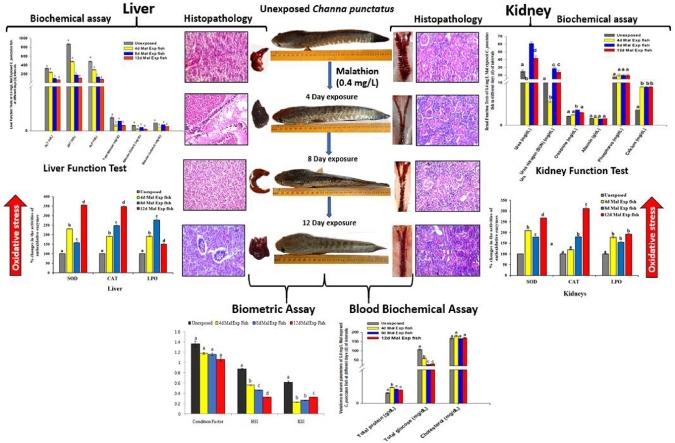
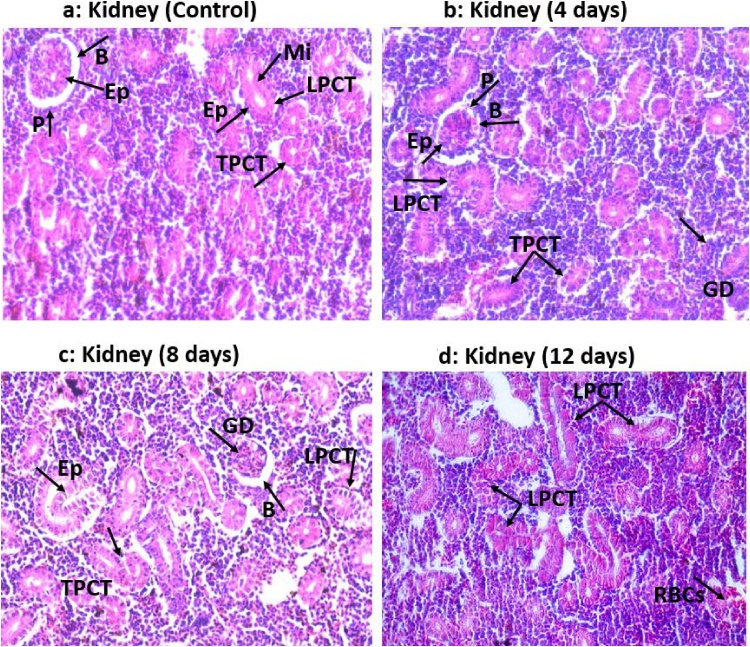
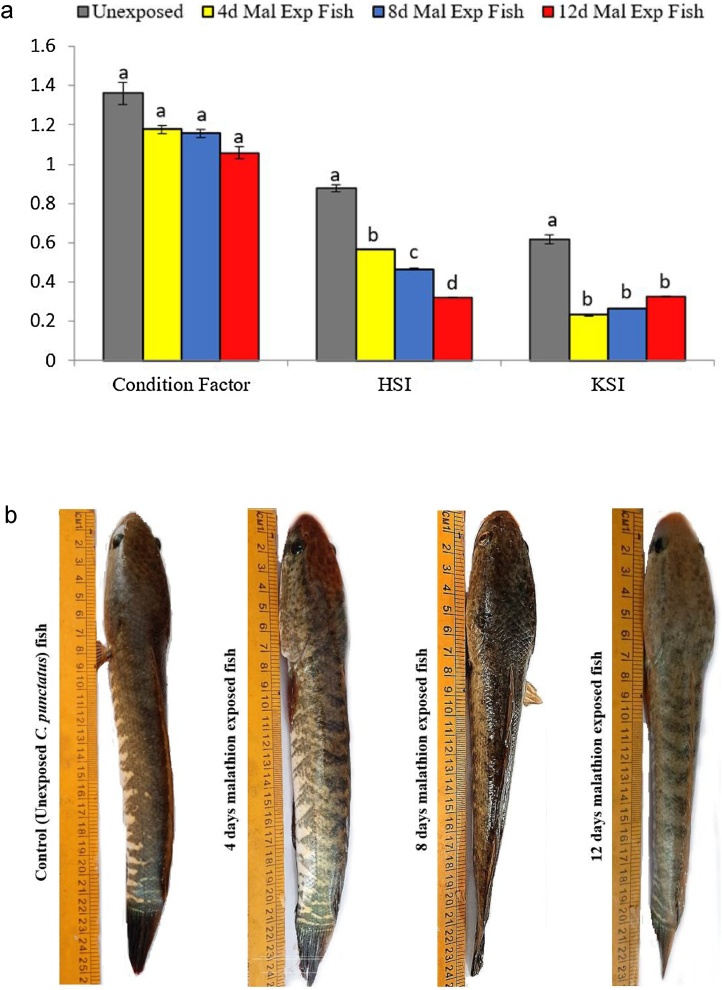
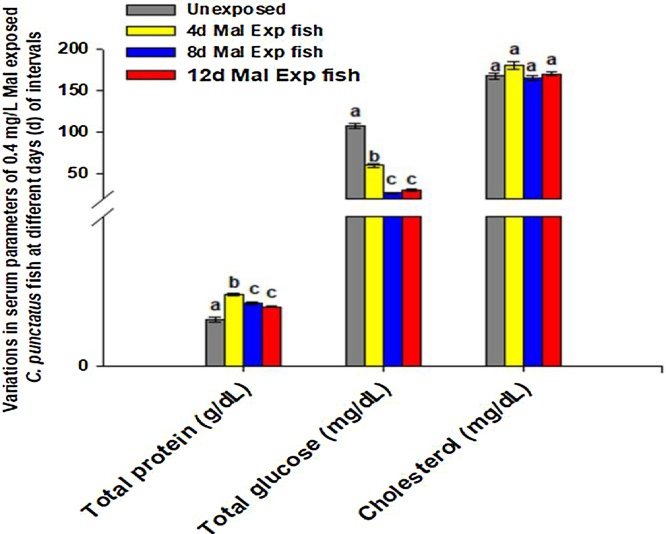
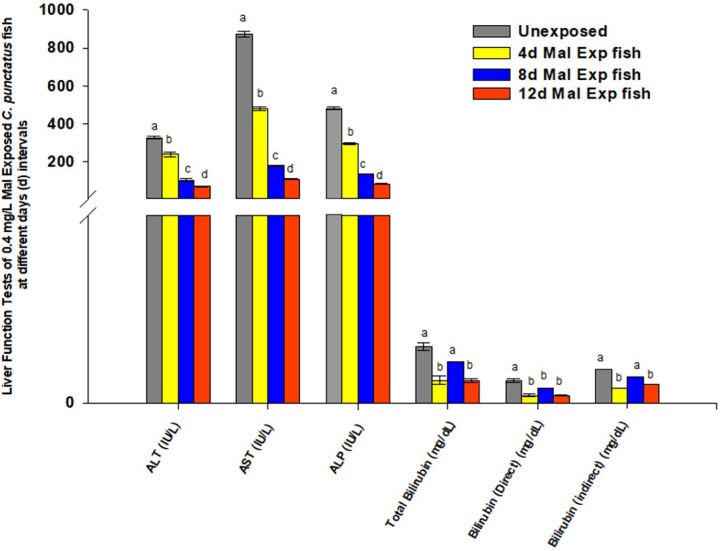
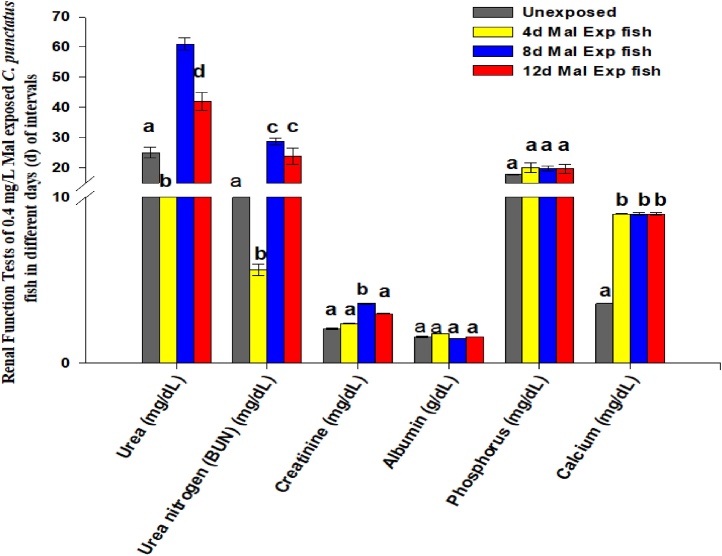
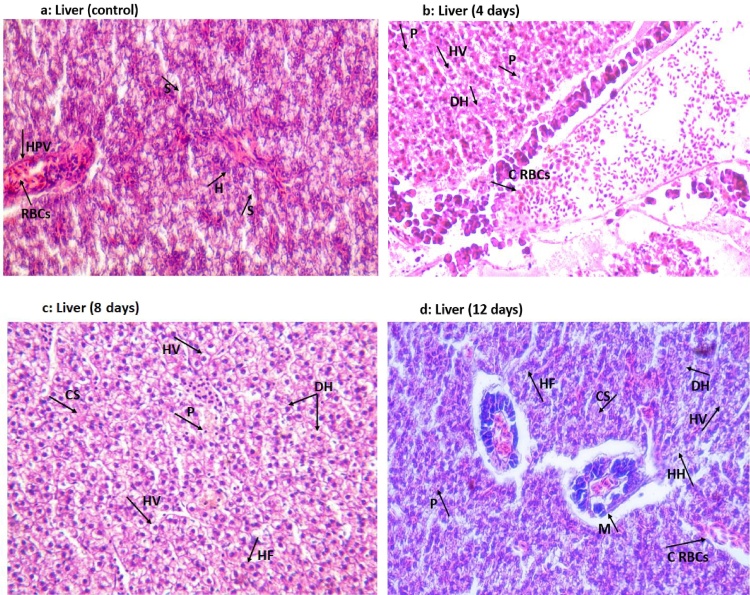
The intensive application of pesticides without proper disposal management has led their excess residues to reach the neighbouring aquatic ecosystem and its inhabitants mainly fish. In natural water body pesticides get diluted, and therefore to study the silent toxic effect, a low dose of malathion (0.4 mg/L; 1/20th of 96-h LC value) for the different duration (1, 4, 8, 12 days) was evaluated through biochemical and histopathological biomarkers of the blood and hepatorenal tissues of . With the increase in pesticide exposure periods, the biometric indices: Condition Factor (K), HSI and KSI and hepatorenal tissues weight decreased. Among the biochemical alterations in malathion exposed fish, serum glucose levels reduced by 72.23 % while protein amounts increased by 29.03 % in 12 days malathion exposed fish. Other parameters, viz., cholesterol, albumin, and phosphorous, remained the same as control fish after malathion exposure. Though serum bilirubin (total and direct) followed a biphasic response, it reduced by 60 % after 12 days of malathion exposure compared to control. Biochemical changes are reflecting the induction of compensatory energy mechanism to cope up with the malathion stress. The transaminases and ALP biomarker enzymes used for liver functionality test declined in the order of AST > ALP > ALT in a time-dependent manner in malathion exposed fish serum, indicating liver injuries in fish due to malathion. The elevated levels of urea, BUN, creatinine, and Ca in the serum of 12 days of malathion exposed fish revealed renal dysfunction. In the treated fish, antioxidative (SOD and CAT) and LPO activities were significantly higher in the liver followed by the kidney than their controls. Further, histological examination registered progressive damages in the hepatorenal tissues of malathion exposed fish with the increased exposure periods compared to control. Thus, even a small dose of malathion in water could severely deteriorate the structure and function of tissue on its prolonged exposure, and therefore utmost care should be taken to prevent their seepage into the water bodies.
农药的大量使用且缺乏妥善的处置管理,致使其过量残留进入邻近的水生生态系统及其生物,主要是鱼类。在天然水体中,农药会被稀释,因此,为研究其潜在的毒性效应,通过对鱼的血液以及肝肾组织的生化和组织病理学生物标志物进行检测,评估了不同暴露时长(1天、4天、8天、12天)下低剂量马拉硫磷(0.4毫克/升;96小时半数致死浓度值的1/20)的影响。随着农药暴露时间的增加,生物计量指标:肥满度系数(K)、肝体指数(HSI)和肾体指数(KSI)以及肝肾组织重量均下降。在马拉硫磷暴露的鱼中,生化指标发生了变化,在暴露12天的鱼中,血清葡萄糖水平降低了72.23%,而蛋白质含量增加了29.03%。其他参数,即胆固醇、白蛋白和磷,在马拉硫磷暴露后与对照鱼保持一致。虽然血清胆红素(总胆红素和直接胆红素)呈现双相反应,但与对照相比,马拉硫磷暴露12天后降低了60%。生化变化反映了机体诱导补偿能量机制以应对马拉硫磷胁迫。用于肝功能测试的转氨酶和碱性磷酸酶生物标志物酶在马拉硫磷暴露的鱼血清中随时间呈AST>ALP>ALT的顺序下降,表明马拉硫磷导致鱼的肝脏损伤。暴露于马拉硫磷12天的鱼血清中尿素、血尿素氮、肌酐和钙水平升高,表明肾功能障碍。在处理过的鱼中,肝脏的抗氧化(超氧化物歧化酶和过氧化氢酶)和脂质过氧化活性显著高于肾脏,且均高于各自的对照组。此外,组织学检查显示,与对照相比,随着暴露时间的增加,马拉硫磷暴露的鱼的肝肾组织出现渐进性损伤。因此,即使水中的马拉硫磷剂量很小,长期接触也会严重损害组织的结构和功能,因此应格外小心防止其渗入水体。