Zavlis Orestis, Butter Sarah, Bennett Kate, Hartman Todd K, Hyland Philip, Mason Liam, McBride Orla, Murphy Jamie, Gibson-Miller Jilly, Levita Liat, Martinez Anton P, Shevlin Mark, Stocks Thomas V A, Vallières Frédérique, Bentall Richard P
University of Sheffield, Sheffield, UK.
University of Liverpool, Liverpool, UK.
Psychol Med. 2021 Mar 16:1-9. doi: 10.1017/S0033291721000635.
The coronavirus disease 2019 (COVID-19) emergency has led to numerous attempts to assess the impact of the pandemic on population mental health. The findings indicate an increase in depression and anxiety but have been limited by the lack of specificity about which aspects of the pandemic (e.g. viral exposure or economic threats) have led to adverse mental health outcomes.
Network analyses were conducted on data from wave 1 (N = 2025, recruited 23 March-28 March 2020) and wave 2 (N = 1406, recontacts 22 April-1 May 2020) of the COVID-19 Psychological Research Consortium Study, an online longitudinal survey of a representative sample of the UK adult population. Our models included depression (PHQ-9), generalized anxiety (GAD-7) and trauma symptoms (ITQ); and measures of COVID-specific anxiety, exposure to the virus in self and close others, as well as economic loss due to the pandemic.
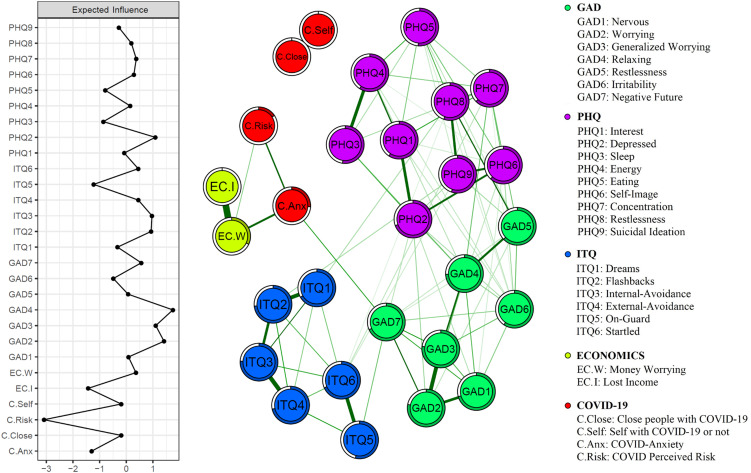
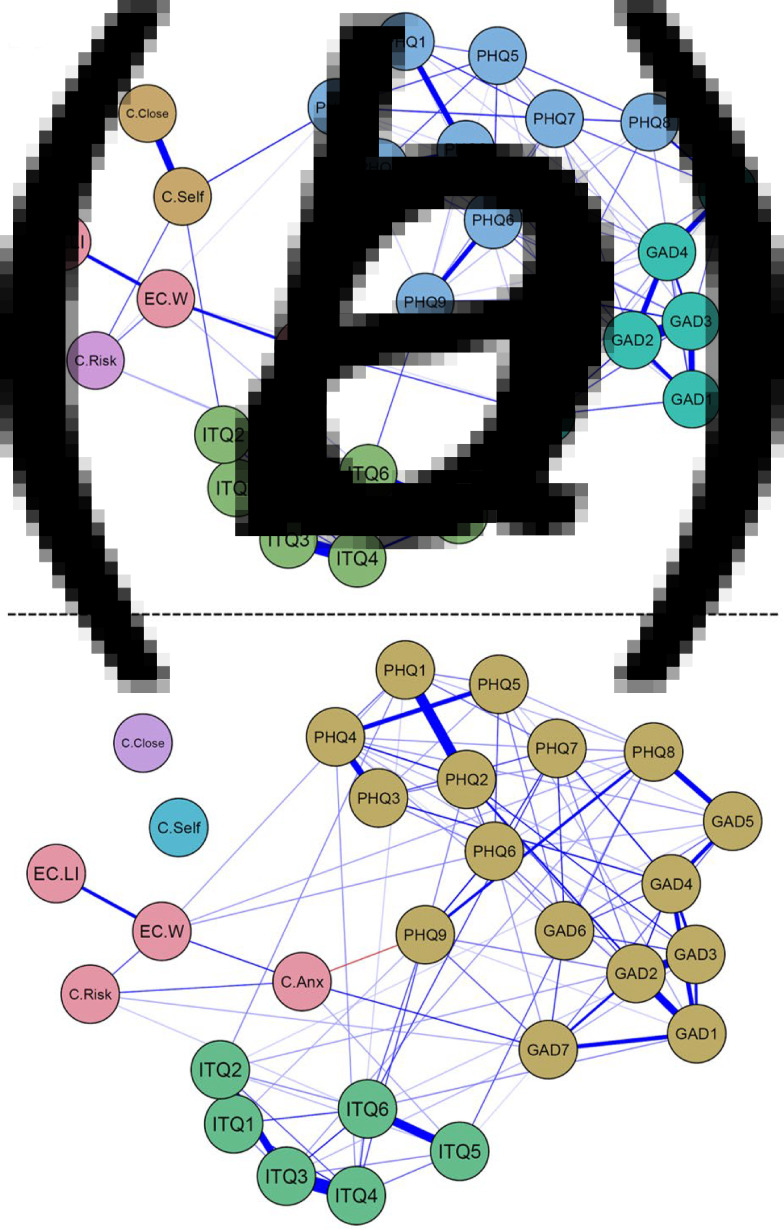
A mixed graphical model at wave 1 identified a potential pathway from economic adversity to anxiety symptoms via COVID-specific anxiety. There was no association between viral exposure and symptoms. Ising network models using clinical cut-offs for symptom scores at each wave yielded similar findings, with the exception of a modest effect of viral exposure on trauma symptoms at wave 1 only. Anxiety and depression symptoms formed separate clusters at wave 1 but not wave 2.
The psychological impact of the pandemic evolved in the early phase of lockdown. COVID-related anxiety may represent the mechanism through which economic consequences of the pandemic are associated with psychiatric symptoms.
2019年冠状病毒病(COVID-19)疫情引发了众多评估该大流行对人群心理健康影响的尝试。研究结果表明抑郁和焦虑有所增加,但由于缺乏关于大流行的哪些方面(如病毒暴露或经济威胁)导致了不良心理健康结果的特异性,这些研究受到了限制。
对COVID-19心理研究联盟研究的第1波(N = 2025,于2020年3月23日至3月28日招募)和第2波(N = 1406,于2020年4月22日至5月1日再次联系)数据进行了网络分析,该研究是对英国成年人口代表性样本的在线纵向调查。我们的模型包括抑郁(PHQ-9)、广泛性焦虑(GAD-7)和创伤症状(ITQ);以及特定于COVID的焦虑、自身及密切接触者的病毒暴露情况,以及大流行导致的经济损失的测量指标。
第1波的混合图形模型确定了一条从经济逆境通过特定于COVID的焦虑到焦虑症状的潜在途径。病毒暴露与症状之间没有关联。在每一波使用症状评分临床临界值的伊辛网络模型得出了类似的结果,但仅第1波病毒暴露对创伤症状有适度影响这一情况除外。焦虑和抑郁症状在第1波形成了单独的聚类,但在第2波没有。
大流行的心理影响在封锁的早期阶段有所演变。与COVID相关的焦虑可能代表了大流行的经济后果与精神症状相关联的机制。